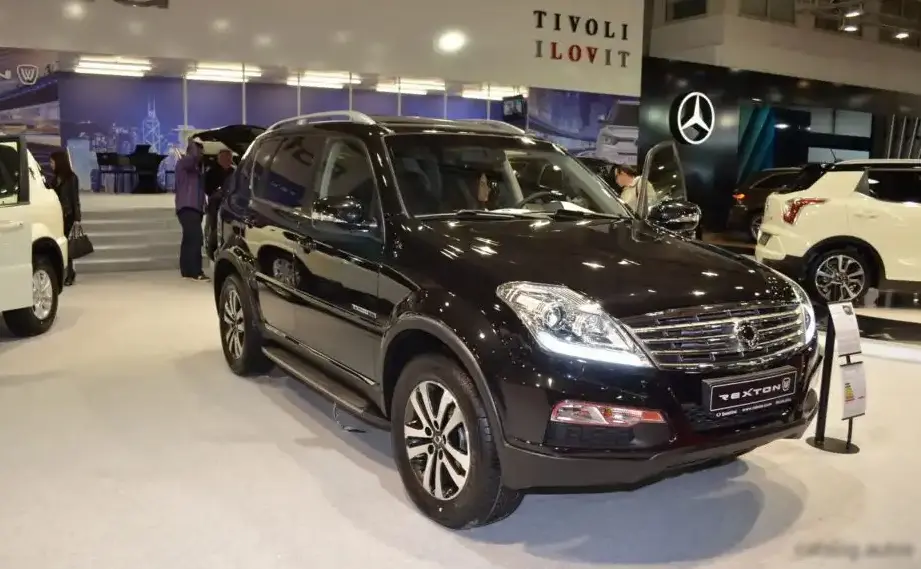
The SsangYong Rexton I RX 290 TD, produced from 2001 to 2006, represented SsangYong’s entry into the mid-size SUV market. Built upon a traditional body-on-frame construction, the Rexton aimed to offer a robust and capable vehicle, particularly appealing to those seeking towing capacity and off-road ability. The RX 290 TD variant, equipped with a 2.9-liter turbocharged diesel engine producing 120 horsepower, served as a core model within the initial Rexton lineup, positioned as a balance between affordability and capability. It was a key offering for SsangYong as they attempted to establish a foothold in the increasingly competitive SUV segment, particularly in European markets where diesel engines were favored.
Technical Specifications
| Brand | SsangYong |
| Model | Rexton |
| Generation | Rexton I |
| Type (Engine) | RX 290 TD (120 Hp) |
| Start of production | 2001 |
| End of production | 2006 |
| Powertrain Architecture | Internal Combustion engine |
| Body type | SUV |
| Seats | 5 |
| Doors | 5 |
| Fuel consumption (urban) | 12.5 l/100 km (18.8 US mpg, 22.6 UK mpg, 8 km/l) |
| Fuel consumption (extra urban) | 7.2 l/100 km (32.7 US mpg, 39.2 UK mpg, 13.9 km/l) |
| Fuel consumption (combined) | 9.3 l/100 km (25.3 US mpg, 30.4 UK mpg, 10.8 km/l) |
| Fuel Type | Diesel |
| Acceleration 0 – 100 km/h | 17 sec |
| Acceleration 0 – 62 mph | 17 sec |
| Acceleration 0 – 60 mph | 16.2 sec |
| Maximum speed | 160 km/h (99.42 mph) |
| Weight-to-power ratio | 15.4 kg/Hp, 64.9 Hp/tonne |
| Weight-to-torque ratio | 7.4 kg/Nm, 135.1 Nm/tonne |
| Power | 120 Hp @ 4000 rpm |
| Power per litre | 41.8 Hp/l |
| Torque | 250 Nm @ 2200 rpm (184.39 lb.-ft. @ 2200 rpm) |
| Engine layout | Front, Longitudinal |
| Engine displacement | 2874 cm3 (175.38 cu. in.) |
| Number of cylinders | 5 |
| Engine configuration | Inline |
| Cylinder Bore | 89 mm (3.5 in.) |
| Piston Stroke | 92.4 mm (3.64 in.) |
| Compression ratio | 22:1 |
| Number of valves per cylinder | 2 |
| Fuel injection system | Precombustion chamber injection |
| Engine aspiration | Turbocharger, Intercooler |
| Valvetrain | DOHC |
| Kerb Weight | 1850 kg (4078.55 lbs.) |
| Max. weight | 2550 kg (5621.79 lbs.) |
| Max load | 700 kg (1543.24 lbs.) |
| Trunk (boot) space – minimum | 500 l (17.66 cu. ft.) |
| Trunk (boot) space – maximum | 1920 l (67.8 cu. ft.) |
| Fuel tank capacity | 80 l (21.13 US gal, 17.6 UK gal) |
| Length | 4720 mm (185.83 in.) |
| Width | 1870 mm (73.62 in.) |
| Height | 1760 mm (69.29 in.) |
| Wheelbase | 2820 mm (111.02 in.) |
| Front track | 1550 mm (61.02 in.) |
| Rear (Back) track | 1540 mm (60.63 in.) |
| Drive wheel | All wheel drive (4×4) |
| Number of gears and type of gearbox | 5 gears, manual transmission |
| Front suspension | Double wishbone |
| Rear suspension | Coil spring |
| Front brakes | Ventilated discs |
| Rear brakes | Disc |
| Assisting systems | ABS (Anti-lock braking system) |
| Steering type | Steering rack and pinion |
| Power steering | Hydraulic Steering |
| Tires size | 235/70 R16 |
Powertrain & Engine Architecture
The RX 290 TD’s heart was the 2.9-liter (2874 cc) inline-five cylinder diesel engine. This engine, often identified by engine codes such as XLD290, utilized a precombustion chamber injection system. This system, common in older diesel designs, involved injecting fuel into a small pre-chamber within the cylinder head, where it partially combusted before igniting the main charge. This aided in smoother combustion and reduced engine noise compared to direct injection systems of the time. A turbocharger with an intercooler was employed to boost power output, bringing the engine’s peak output to 120 horsepower at 4000 rpm and 250 Nm (184 lb-ft) of torque at 2200 rpm. The engine featured a double overhead camshaft (DOHC) valvetrain with two valves per cylinder. The five-speed manual transmission was the standard offering for the RX 290 TD, delivering power to all four wheels via a part-time four-wheel-drive system.
Driving Characteristics
The 120 hp RX 290 TD offered adequate, but not exhilarating, performance. Acceleration from 0 to 60 mph took around 16.2 seconds, and top speed was limited to 99.42 mph. The engine’s torque peak at 2200 rpm provided reasonable pulling power for everyday driving and towing, but the engine felt strained at higher speeds. The five-speed manual transmission was well-matched to the engine’s characteristics, offering a usable spread of gears. Compared to higher-powered Rexton variants, such as those equipped with the later 2.7-liter Mercedes-Benz sourced engines, the RX 290 TD felt noticeably slower. However, it offered a more economical driving experience and a simpler, potentially more reliable powertrain.
Equipment & Trim Levels
The RX 290 TD typically came with a fairly basic level of equipment, reflecting its position as an entry-level model. Standard features generally included air conditioning, power windows, central locking, and an AM/FM radio. Interior upholstery was typically cloth. Optional extras included leather seats, a sunroof, and upgraded audio systems. The dashboard layout was functional but lacked the sophistication of more modern SUVs. The focus was on practicality and durability rather than luxury.
Chassis & Braking
The Rexton I utilized a traditional body-on-frame construction, providing a robust and durable chassis. The front suspension featured a double wishbone setup, while the rear employed a coil spring arrangement. This suspension configuration aimed to balance ride comfort with off-road capability. Braking duties were handled by ventilated discs at the front and solid discs at the rear. An Anti-lock Braking System (ABS) was standard, enhancing safety. The steering system was a hydraulic rack and pinion setup, providing reasonably precise steering feel.
Market Reception & Comparison
The RX 290 TD received mixed reviews. Critics generally praised its robust construction, spacious interior, and capable four-wheel-drive system. However, the engine was often criticized for being underpowered, particularly when fully loaded or towing. Fuel economy was considered reasonable for a vehicle of its size and type, averaging around 25.3 US mpg in combined driving. Compared to competitors like the Hyundai Terracan or the Kia Sorento, the Rexton offered a more rugged and utilitarian experience, but lacked the refinement and performance of some rivals. The 120 hp diesel was often seen as a compromise, with buyers seeking more power often opting for the later, more expensive engine options.
Legacy
The SsangYong Rexton I RX 290 TD, while not a sales blockbuster, established SsangYong as a player in the SUV market. The 2.9-liter diesel engine, while not known for its blistering performance, proved to be relatively durable and reliable, provided it was properly maintained. In the used car market, these vehicles are now relatively affordable and appeal to buyers seeking a capable and robust SUV for work or leisure. Parts availability can be a challenge, but the engine’s simplicity makes it relatively straightforward to repair for experienced mechanics. The RX 290 TD represents a significant step in SsangYong’s history, showcasing their commitment to building tough and capable vehicles.