
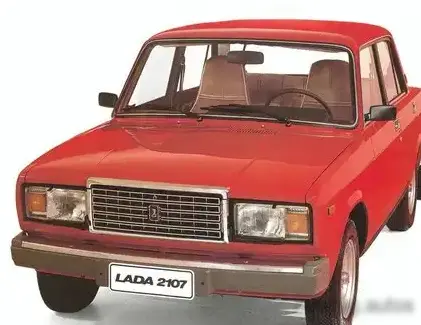
The Lada 2107, often simply referred to as the “Seven,” was a rear-wheel-drive sedan produced by Soviet and later Russian automaker AvtoVAZ from 1982 to 2012. It represented a significant modernization of the earlier Lada 2105, itself based on the Fiat 124, and became one of the most popular cars in the Eastern Bloc and beyond. The 1.5-liter, 72 horsepower variant was a mainstay of the lineup throughout much of its production run, serving as the entry-level model and offering a balance of affordability and practicality. It was positioned as the most accessible option within the 2107 range, appealing to buyers prioritizing basic transportation over performance or luxury.
Technical Specifications
| Brand | Lada |
| Model | 2107 |
| Generation | 2107 |
| Type (Engine) | 1.5 (72 Hp) |
| Start of production | 1982 |
| End of production | 2012 |
| Powertrain Architecture | Internal Combustion engine |
| Body type | Sedan |
| Seats | 5 |
| Doors | 4 |
| Fuel consumption (urban) | 9.2 l/100 km (25.6 US mpg) |
| Fuel Type | Petrol (Gasoline) |
| Acceleration 0 – 100 km/h | 17 sec |
| Acceleration 0 – 62 mph | 17 sec |
| Acceleration 0 – 60 mph | 16.2 sec |
| Maximum speed | 150 km/h (93.21 mph) |
| Weight-to-power ratio | 14.7 kg/Hp |
| Weight-to-torque ratio | 10.2 kg/Nm |
| Power | 72 Hp @ 5600 rpm |
| Power per litre | 49.6 Hp/l |
| Torque | 104 Nm @ 3400 rpm (76.71 lb.-ft. @ 3400 rpm) |
| Engine layout | Front, Longitudinal |
| Engine displacement | 1451 cm3 (88.55 cu. in.) |
| Number of cylinders | 4 |
| Engine configuration | Inline |
| Cylinder Bore | 76 mm (2.99 in.) |
| Piston Stroke | 80 mm (3.15 in.) |
| Compression ratio | 8.5:1 |
| Number of valves per cylinder | 2 |
| Fuel injection system | Carburettor |
| Engine aspiration | Naturally aspirated engine |
| Valvetrain | OHC |
| Kerb Weight | 1060 kg (2336.9 lbs.) |
| Max. weight | 1460 kg (3218.75 lbs.) |
| Max load | 400 kg (881.85 lbs.) |
| Trunk (boot) space – maximum | 325 l (11.48 cu. ft.) |
| Fuel tank capacity | 39 l (10.3 US gal | 8.58 UK gal) |
| Length | 4145 mm (163.19 in.) |
| Width | 1620 mm (63.78 in.) |
| Height | 1435 mm (56.5 in.) |
| Wheelbase | 2424 mm (95.43 in.) |
| Front track | 1365 mm (53.74 in.) |
| Rear (Back) track | 1321 mm (52.01 in.) |
| Drivetrain Architecture | The Internal combustion engine (ICE) drives the rear wheels of the vehicle. |
| Drive wheel | Rear wheel drive |
| Number of gears and type of gearbox | 4 gears, manual transmission |
| Front suspension | Double wishbone |
| Rear suspension | Coil spring |
| Front brakes | Disc |
| Rear brakes | Drum |
| Steering type | Worm-reduction unit |
| Tires size | 175/70 SR13 |
Powertrain & Engine Architecture
The heart of the Lada 2107 1.5 was the 1451cc inline-four cylinder engine. This engine, designated with various codes depending on the year of manufacture, was a relatively simple design, utilizing a single overhead camshaft (OHC) and two valves per cylinder. Fuel delivery was handled by a carburetor – typically a K-126G or similar – a technology increasingly outdated by the 1980s but chosen for its simplicity and cost-effectiveness. The engine produced 72 horsepower at 5600 rpm and 104 Nm (76.71 lb-ft) of torque at 3400 rpm. The engine was mounted longitudinally in the front of the vehicle, driving the rear wheels. The standard transmission was a four-speed manual gearbox, known for its robust construction but somewhat imprecise shift quality. The 1.5-liter engine’s design was a direct descendant of the Fiat 124’s engine, though with numerous modifications and improvements over the decades.
Driving Characteristics
The 1.5-liter engine in the 2107 provided adequate, but not exhilarating, performance. Acceleration from 0 to 60 mph took around 16.2 seconds, and top speed was limited to approximately 93 mph. The four-speed manual transmission featured relatively widely spaced gear ratios, requiring frequent shifting to maintain optimal engine speed. Compared to the more powerful 1.6-liter versions or the later fuel-injected models, the 1.5 felt noticeably slower, particularly when fully loaded or climbing hills. However, the lower engine output also contributed to better fuel economy, making it a popular choice for everyday commuting. The rear-wheel-drive layout provided a predictable handling balance, though the car was prone to oversteer if pushed hard. The steering, utilizing a worm-reduction unit, was heavy but provided decent feedback.
Equipment & Trim Levels
The 1.5-liter 2107 typically represented the base trim level. Standard equipment included cloth upholstery, basic instrumentation (speedometer, fuel gauge, temperature gauge), and a heater. Power steering, electric windows, and central locking were generally not available on this variant, though they could be found on higher-spec models. Optional extras included a radio, upgraded interior trim, and a sunroof. The interior was functional and durable, but lacked the refinement of more modern vehicles. The dashboard layout was simple and straightforward, with clearly labeled controls.
Chassis & Braking
The Lada 2107 utilized a body-on-frame construction, providing a robust and durable chassis. The front suspension consisted of a double wishbone setup, while the rear suspension employed a coil spring arrangement. Braking was provided by disc brakes at the front and drum brakes at the rear. The braking system was adequate for normal driving conditions, but lacked the stopping power of more modern vehicles. The car’s relatively light weight (around 2337 lbs) helped to offset the limitations of the braking system. Stabilizer bars were typically absent on the base 1.5-liter model.
Market Reception & Comparison
The Lada 2107 1.5 was widely regarded as a practical and affordable vehicle, particularly in markets where cost was a primary consideration. Critics often praised its durability and ease of maintenance, but criticized its outdated technology and relatively poor performance. Compared to the 1.6-liter versions, the 1.5 offered lower running costs but sacrificed performance. The 1.6-liter models, while more expensive, provided a noticeable improvement in acceleration and overall driving experience. The 1.5-liter version was often favored by drivers who prioritized fuel economy and reliability over outright speed.
Legacy
The Lada 2107, and particularly the 1.5-liter variant, holds a significant place in automotive history, representing a bygone era of simple, robust, and affordable transportation. While no longer in production, the 2107 remains a common sight on the roads of Eastern Europe and other regions where it was once popular. The 1.5-liter engine, while not particularly powerful or sophisticated, proved to be remarkably durable and reliable, with many examples still running today. In the used car market, the 2107 1.5 is valued for its affordability and ease of repair, making it a popular choice for enthusiasts and those seeking a classic, no-frills vehicle. Its simple design makes it relatively easy for home mechanics to maintain and repair, contributing to its enduring appeal.
