
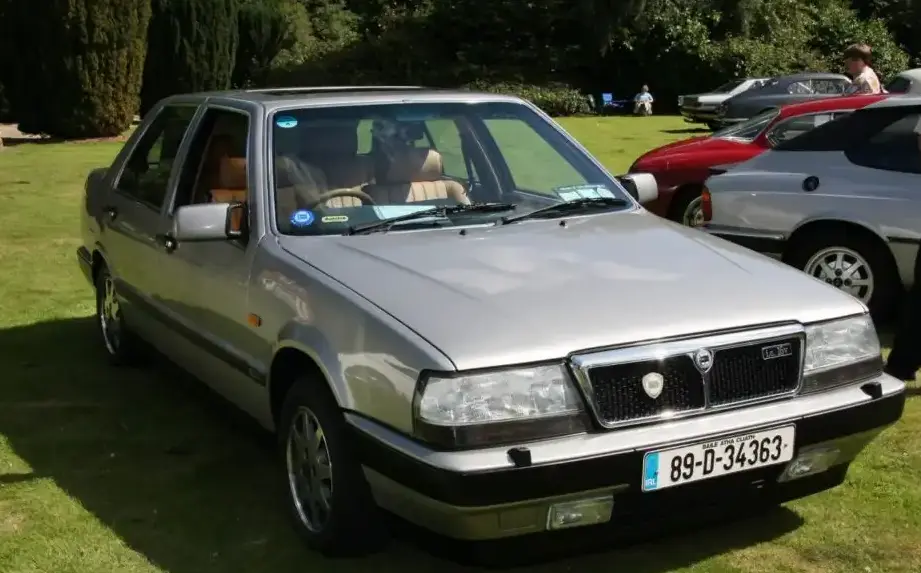
The Lancia Thema (834) 2500 Turbo DS, produced between 1992 and 1994, represents a late-stage evolution of the second-generation Thema, a flagship sedan intended to compete with executive cars from German manufacturers. This variant, powered by a turbocharged diesel engine, occupied a specific niche within the Thema lineup, offering a blend of performance and fuel economy geared towards drivers prioritizing long-distance comfort. It was part of the 834 series, which represented a significant refresh of the original Thema launched in 1984, incorporating updated styling and mechanical improvements. The 2500 Turbo DS was positioned as a premium offering within the diesel range, sitting above the naturally aspirated diesel models.
Technical Specifications
| Brand | Lancia |
| Model | Thema |
| Generation | Thema (834) |
| Type (Engine) | 2500 Turbo DS (105 Hp) |
| Start of production | 1992 |
| End of production | 1994 |
| Powertrain Architecture | Internal Combustion engine |
| Body type | Sedan |
| Fuel Type | Diesel |
| Power | 105 Hp |
| Engine Model/Code | 8144.97S |
| Engine aspiration | Turbocharger |
| Engine oil capacity | 6.4 l (6.76 US qt | 5.63 UK qt) |
| Coolant capacity | 9.6 l (10.14 US qt | 8.45 UK qt) |
Powertrain & Engine Architecture
The heart of the Thema 2500 Turbo DS is the 8144.97S engine, a 2.5-liter inline-five cylinder diesel engine. This engine utilizes a turbocharger with an intercooler to boost power output to 105 horsepower. The engine employs direct injection, a relatively advanced technology for diesel engines of the early 1990s, contributing to improved fuel efficiency and reduced emissions. The direct injection system, coupled with the turbocharger, allowed for a higher compression ratio, maximizing energy extraction from the fuel. The engine’s valvetrain consists of a single overhead camshaft operating two valves per cylinder. While not a particularly high-revving engine, the turbocharger provides a significant increase in torque compared to naturally aspirated diesel options. The Thema 2500 Turbo DS was exclusively offered with a four-speed automatic transmission. This transmission, while providing convenience, was not known for its particularly quick shifts or sporting character. It was selected for its smoothness and suitability for long-distance cruising, aligning with the car’s intended role as a comfortable grand tourer.
Driving Characteristics
The driving experience in the Thema 2500 Turbo DS is characterized by relaxed performance and a focus on comfort. The 105 hp output, while not overwhelming, provides adequate power for highway cruising and overtaking maneuvers. The turbocharger delivers a noticeable surge in power once it spools up, but there is some degree of turbo lag present. The four-speed automatic transmission contributes to a smooth, if somewhat unhurried, driving experience. Gear ratios are optimized for fuel efficiency and comfortable cruising rather than outright acceleration. Compared to the more powerful gasoline-powered Thema variants (like the 2.0-liter inline-four or the V6 models), the 2500 Turbo DS offers significantly less outright performance. However, it surpasses the naturally aspirated diesel models in both power and torque. Compared to manual transmission diesel Thema models, the automatic version sacrifices some responsiveness and driver engagement for ease of use.
Equipment & Trim Levels
The 2500 Turbo DS trim level represented a well-equipped version of the Thema. Standard features typically included central locking, electric windows, power steering, and an adjustable steering column. The interior was typically upholstered in a high-quality cloth or leather, depending on optional packages. Dashboard configuration featured a comprehensive instrument cluster with gauges for engine temperature, fuel level, and speedometer. Optional extras available for the 2500 Turbo DS included a sunroof, upgraded audio system, and climate control. The Thema generally offered a luxurious interior environment, with attention paid to sound insulation and ride comfort. The exterior styling of the 2500 Turbo DS was largely consistent with other Thema models, featuring a sleek, aerodynamic design. However, it often included unique badging to denote its engine specification.
Chassis & Braking
The Thema 834 utilized an independent suspension system all around, featuring MacPherson struts at the front and semi-trailing arms at the rear. This suspension setup provided a comfortable ride quality, absorbing bumps and irregularities in the road surface effectively. Stabilizer bars were fitted to both the front and rear axles to reduce body roll during cornering. The braking system consisted of disc brakes at the front and drum brakes at the rear. While adequate for normal driving conditions, the rear drum brakes were a point of criticism compared to the all-disc setups found on some higher-performance Thema variants. The Thema’s chassis was designed to provide a balance between comfort and handling, prioritizing stability and ride quality over sporty dynamics.
Market Reception & Comparison
The Lancia Thema 2500 Turbo DS was generally well-received by automotive critics, particularly for its comfortable ride, refined interior, and fuel-efficient diesel engine. However, the four-speed automatic transmission was sometimes criticized for its lack of responsiveness. Compared to its rivals, such as the BMW 5 Series and Mercedes-Benz E-Class, the Thema offered a unique blend of Italian style and engineering. Fuel economy was a strong point for the 2500 Turbo DS, offering significantly better mileage than the gasoline-powered models. Reliability was generally considered to be average for a European car of its era, with some owners reporting issues with the turbocharger and fuel injection system. Compared to the naturally aspirated diesel Thema, the Turbo DS offered a noticeable performance improvement, making it a more appealing option for drivers who frequently traveled long distances.
Legacy
The Lancia Thema 2500 Turbo DS, while not a high-volume seller, holds a unique place in Lancia’s history as a sophisticated and comfortable executive sedan. The 8144.97S engine, while not known for its longevity in some applications, proved to be reasonably durable when properly maintained. Today, the Thema 2500 Turbo DS is a relatively rare sight on the road, appealing to collectors and enthusiasts who appreciate its distinctive styling and Italian character. Parts availability can be a challenge, as with many older European cars, but a dedicated community of owners and specialists exists to support the preservation of these vehicles. The car represents a final flourish of Lancia’s ambition to compete in the premium sedan segment, before the brand’s fortunes declined in the following years. The combination of a turbocharged diesel engine and an automatic transmission, while not groundbreaking at the time, offered a compelling package for drivers seeking a comfortable and fuel-efficient long-distance cruiser.
