
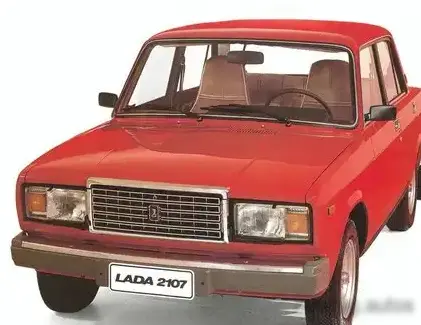
The Lada 2107, often simply referred to as the “Vaz 2107” or “Zhiguli” in some markets, was a rear-wheel drive sedan produced by Soviet/Russian automaker AvtoVAZ from 1982 to 2012. Representing the final evolution of the original Fiat 124-based design, the 2107 served as the flagship model of the Lada lineup for many years, particularly in Eastern Europe and developing markets. The 1.5-liter, 75 horsepower variant was a mainstay of the range, offering a balance of affordability and practicality. It occupied the entry to mid-level position within the 2107 series, sitting below the more powerful fuel-injected models but above any potential stripped-down base trims.
Technical Specifications
| Brand | Lada |
| Model | 2107 |
| Generation | 2107 |
| Type (Engine) | 1.5 (75 Hp) |
| Start of production | 1982 |
| End of production | 2012 |
| Powertrain Architecture | Internal Combustion engine |
| Body type | Sedan |
| Seats | 5 |
| Doors | 4 |
| Fuel consumption (urban) | 9.5 l/100 km (24.8 US mpg) |
| Fuel consumption (extra urban) | 7.8 l/100 km (30.2 US mpg) |
| Fuel consumption (combined) | 8.5 l/100 km (27.7 US mpg) |
| Fuel Type | Petrol (Gasoline) |
| Acceleration 0 – 100 km/h | 17 sec |
| Acceleration 0 – 62 mph | 17 sec |
| Acceleration 0 – 60 mph | 16.2 sec |
| Maximum speed | 150 km/h (93.21 mph) |
| Weight-to-power ratio | 13.8 kg/Hp |
| Weight-to-torque ratio | 10 kg/Nm |
| Power | 75 Hp @ 5600 rpm |
| Power per litre | 51.7 Hp/l |
| Torque | 103 Nm @ 3400 rpm (75.97 lb.-ft. @ 3400 rpm) |
| Engine layout | Front, Longitudinal |
| Engine Model/Code | 2103 |
| Engine displacement | 1451 cm3 (88.55 cu. in.) |
| Number of cylinders | 4 |
| Engine configuration | Inline |
| Cylinder Bore | 76 mm (2.99 in.) |
| Piston Stroke | 80 mm (3.15 in.) |
| Compression ratio | 8.5:1 |
| Number of valves per cylinder | 2 |
| Fuel injection system | Carburettor |
| Engine aspiration | Naturally aspirated |
| Valvetrain | ohv |
| Kerb Weight | 1035 kg (2281.78 lbs.) |
| Max. weight | 1430 kg (3152.61 lbs.) |
| Max load | 395 kg (870.83 lbs.) |
| Trunk (boot) space – minimum | 280 l (9.89 cu. ft.) |
| Trunk (boot) space – maximum | 325 l (11.48 cu. ft.) |
| Fuel tank capacity | 43 l (11.36 US gal) |
| Length | 4145 mm (163.19 in.) |
| Width | 1620 mm (63.78 in.) |
| Height | 1440 mm (56.69 in.) |
| Wheelbase | 2424 mm (95.43 in.) |
| Front track | 1365 mm (53.74 in.) |
| Rear (Back) track | 1321 mm (52.01 in.) |
| Drivetrain Architecture | Rear wheel drive |
| Number of gears | 4 |
| Gearbox type | Manual transmission |
| Front suspension | Double wishbone |
| Rear suspension | Dependent spring suspension |
| Front brakes | Disc |
| Rear brakes | Drum |
| Steering type | Worm-reduction unit |
| Tires size | 175/70 R13 |
| Wheel rims size | 5.5j x 13 |
Powertrain & Engine Architecture
The heart of the Lada 2107 1.5 was the 2103 engine, a 1.5-liter inline-four cylinder unit. This engine was itself a derivative of the Fiat 124’s engine, heavily modified and produced under license in the Soviet Union. The 75 horsepower output was achieved through a relatively low compression ratio of 8.5:1 and a simple overhead valve (OHV) valvetrain. Fuel delivery was handled by a carburetor – typically a K-126G or similar – a technology considered outdated by the 1980s but favored for its simplicity and ease of maintenance. The engine’s longitudinal front-engine, rear-wheel-drive layout was a hallmark of the design, contributing to its traditional driving feel. The four-speed manual transmission was the standard offering for this variant, known for its robust construction but relatively long throws and lack of refinement compared to more modern gearboxes.
Driving Characteristics
The 2107 1.5 offered modest performance. Acceleration to 60 mph took around 16.2 seconds, and top speed was limited to approximately 93 mph. The carburetor contributed to a somewhat sluggish throttle response, and the engine needed to be revved to extract its maximum power. Compared to the fuel-injected versions of the 2107, or even the later 1.6-liter variants, the 1.5 felt noticeably underpowered, especially when fully loaded or tackling inclines. The four-speed gearbox, while durable, had widely spaced gear ratios, requiring frequent shifting. However, the rear-wheel-drive configuration provided a balanced handling characteristic, and the relatively simple mechanicals made it a forgiving car to drive.
Equipment & Trim Levels
The 1.5-liter 2107 typically came with a fairly basic level of equipment. Standard features included cloth upholstery, a simple dashboard layout with analog gauges, and basic exterior trim. Options were available, such as upgraded seat fabrics, a more sophisticated radio, and even a sunroof. However, the 1.5 was generally positioned as the value-oriented trim, with fewer standard luxuries than the higher-spec models. The interior was functional and durable, prioritizing practicality over aesthetics.
Chassis & Braking
The 2107 utilized a traditional body-on-frame construction, contributing to its robust feel. The front suspension employed a double wishbone setup, while the rear suspension featured a dependent spring arrangement. This combination provided a comfortable ride, albeit with some body roll in corners. Braking was accomplished via disc brakes at the front and drum brakes at the rear. The braking system was adequate for the car’s performance, but lacked the stopping power and modulation of more modern systems. Steering was via a worm-reduction unit, which provided a heavy but direct feel.
Market Reception & Comparison
The Lada 2107 1.5 was a popular choice in its target markets due to its affordability, reliability, and ease of maintenance. Critics often praised its durability and simple construction, but also noted its outdated technology and lack of refinement. Compared to the fuel-injected 2107 variants, the 1.5 offered lower performance and slightly worse fuel economy. However, it was significantly cheaper to purchase and maintain, making it an attractive option for budget-conscious buyers. The 1.5 also contrasted with the diesel-powered Ladas, offering a smoother, quieter driving experience, albeit with less torque.
Legacy
The Lada 2107, and particularly the 1.5-liter variant, holds a significant place in automotive history, representing a bygone era of simple, robust, and affordable transportation. While no longer in production, the 2107 remains a common sight on the roads of Eastern Europe and other developing countries. The 2103 engine, despite its age, is known for its durability and relative simplicity, making it a favorite among enthusiasts and mechanics. In the used car market, the 2107 1.5 is valued for its low purchase price and ease of repair, but potential buyers should be aware of the car’s age and the potential for rust and mechanical wear. It’s a vehicle that embodies a specific period of automotive engineering and continues to be appreciated for its straightforward design and enduring reliability.
