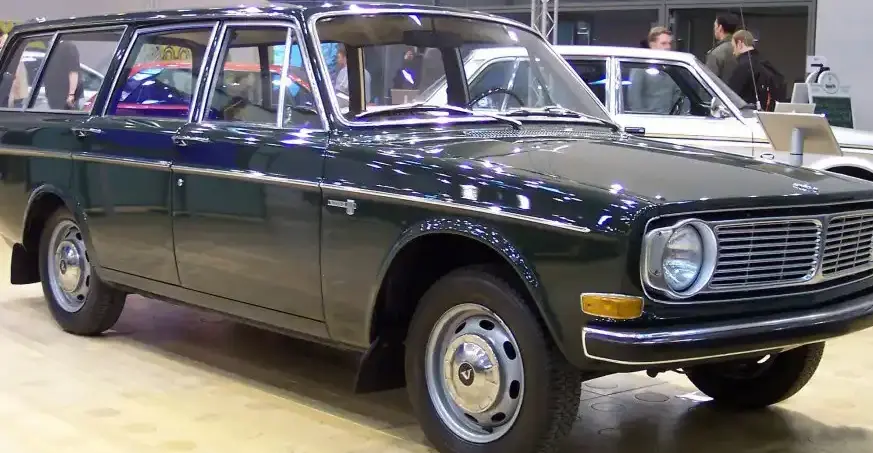
The Volvo 140 series, encompassing the 142 and 144 models, represented a significant step forward for the Swedish automaker, debuting in 1966 and continuing production through 1974. The 2.0-liter (82 horsepower) variant, powered by the B20A engine, was a mainstay of the lineup, particularly during the early years of production. This model served as a practical and reliable family sedan, embodying Volvo’s growing reputation for safety and durability. It occupied a middle ground in the 140 range, offering a balance between affordability and performance, positioned below the more powerful 144S and above the base 1.6-liter models. The 140 series was built on a rear-wheel-drive platform, a configuration Volvo would maintain for several more years, and it played a crucial role in establishing Volvo as a globally recognized automotive brand.
Technical Specifications
| Brand | Volvo |
| Model | 140 |
| Generation | 140 (142, 144) |
| Type (Engine) | 2.0 (82 Hp) |
| Start of Production | 1968 |
| End of Production | 1974 |
| Powertrain Architecture | Internal Combustion Engine |
| Body Type | Sedan |
| Fuel Type | Petrol (Gasoline) |
| Power | 82 Hp |
| Engine Model/Code | B20A |
| Engine Aspiration | Naturally Aspirated |
| Engine Oil Capacity | 3.8 l (4.02 US qt | 3.34 UK qt) |
| Coolant Capacity | 10 l (10.57 US qt | 8.8 UK qt) |
| Fuel Tank Capacity | 58 l (15.32 US gal | 12.76 UK gal) |
Powertrain & Engine Architecture
The heart of the Volvo 140 2.0 was the B20A engine, a 1,986 cc (121.1 cubic inch) inline-four cylinder powerplant. This engine was a development of Volvo’s earlier B18 engine, benefiting from increased displacement and refined internal components. The B20A featured a cast iron block and cylinder head, with a single overhead camshaft operating pushrods to actuate the valves. Fuel delivery was managed by a Solex carburetor, a common setup for the era. The engine produced 82 horsepower at 5,200 rpm and 118 lb-ft of torque at 3,000 rpm. While not a high-performance engine, it was known for its smooth operation and robust construction. The transmission paired with the B20A in this variant was typically a three-speed automatic with overdrive, offering a comfortable driving experience. This automatic transmission, while providing convenience, did impact acceleration compared to the available four-speed manual gearbox.
Driving Characteristics
The Volvo 140 2.0 with the automatic transmission delivered a comfortable, if not particularly sporty, driving experience. Acceleration was adequate for everyday driving, but the automatic transmission’s gear ratios were geared more towards fuel efficiency than outright performance. The overdrive function helped to reduce engine speed at highway speeds, improving fuel economy and reducing noise. Compared to the manual transmission versions, the automatic 2.0 was noticeably slower in acceleration and passing maneuvers. The suspension, consisting of independent front suspension with coil springs and a solid rear axle with leaf springs, provided a reasonably comfortable ride, although it could feel somewhat bouncy on uneven surfaces. Steering was relatively heavy, typical of cars from this period, but offered good feedback.
Equipment & Trim Levels
The 140 2.0 automatic typically came with a fairly standard level of equipment for the late 1960s and early 1970s. Standard features included cloth upholstery, basic instrumentation (speedometer, fuel gauge, temperature gauge), and a heater. Options included a radio, whitewall tires, and upgraded interior trim. The 144 model, generally considered the more upscale version, often included additional chrome trim and more comfortable seating. The 142, a two-door coupe, was marketed towards a slightly younger demographic and often featured a sportier interior. The automatic transmission was often paired with a more luxurious interior package, including upgraded seat fabrics and woodgrain trim on the dashboard.
Chassis & Braking
The Volvo 140 series utilized a robust body-on-frame construction, contributing to its reputation for safety and durability. The chassis featured independent front suspension with coil springs and a solid rear axle with leaf springs. Braking was initially accomplished with drum brakes on all four wheels, but later models (particularly from 1970 onwards) were often equipped with front disc brakes, providing improved stopping power. The 2.0 variant, being a mid-range model, typically featured drum brakes all around. Steering was a recirculating ball system, offering a relatively direct feel but requiring some effort at low speeds. The car’s relatively heavy weight (around 2,700 lbs) contributed to its stable handling characteristics.
Market Reception & Comparison
The Volvo 140 2.0 automatic was generally well-received by automotive critics and consumers alike. It was praised for its reliability, safety features (including seat belts and a collapsible steering column, groundbreaking for the time), and comfortable ride. However, the automatic transmission was sometimes criticized for detracting from the car’s performance. Compared to the manual transmission versions, the automatic 2.0 offered lower fuel economy and slower acceleration. It also lagged behind the more powerful 144S in terms of performance. However, it provided a more accessible entry point into the Volvo 140 range, appealing to buyers who prioritized comfort and convenience over outright speed. Fuel economy averaged around 18-22 mpg, which was competitive for the era.
Legacy
The Volvo 140 series, and the 2.0 variant in particular, has earned a strong reputation for long-term reliability. Many examples are still on the road today, a testament to the quality of their construction. The B20A engine is known for its durability and relatively simple maintenance requirements. While parts availability can be a challenge, a dedicated community of Volvo enthusiasts ensures that replacement parts are still accessible. In the used car market, the 140 2.0 automatic is often sought after by collectors and enthusiasts who appreciate its classic styling, robust construction, and historical significance. It represents a pivotal moment in Volvo’s history, marking the company’s transition from a niche manufacturer to a globally recognized automotive brand. The car’s enduring appeal lies in its blend of practicality, safety, and understated Swedish design.