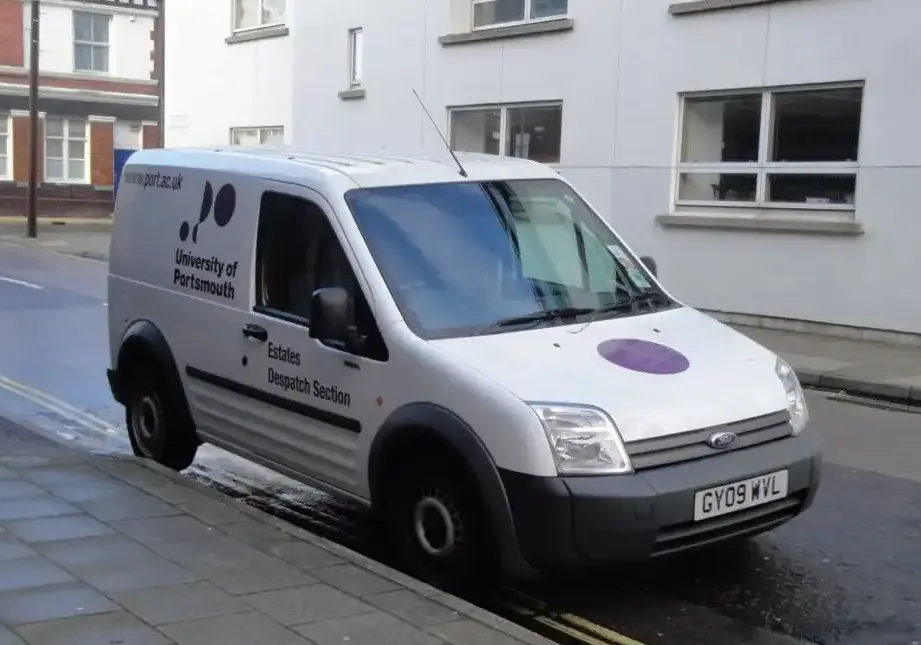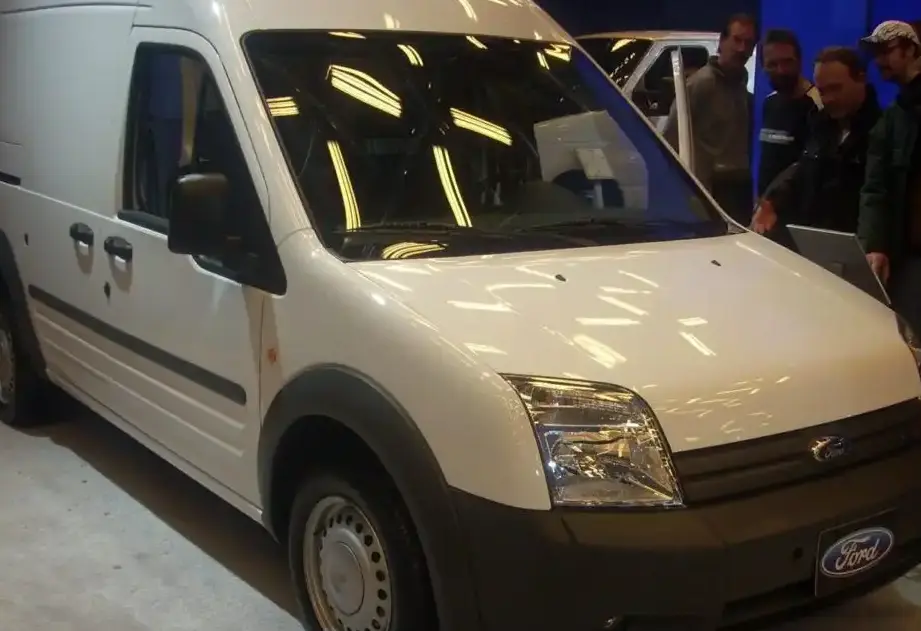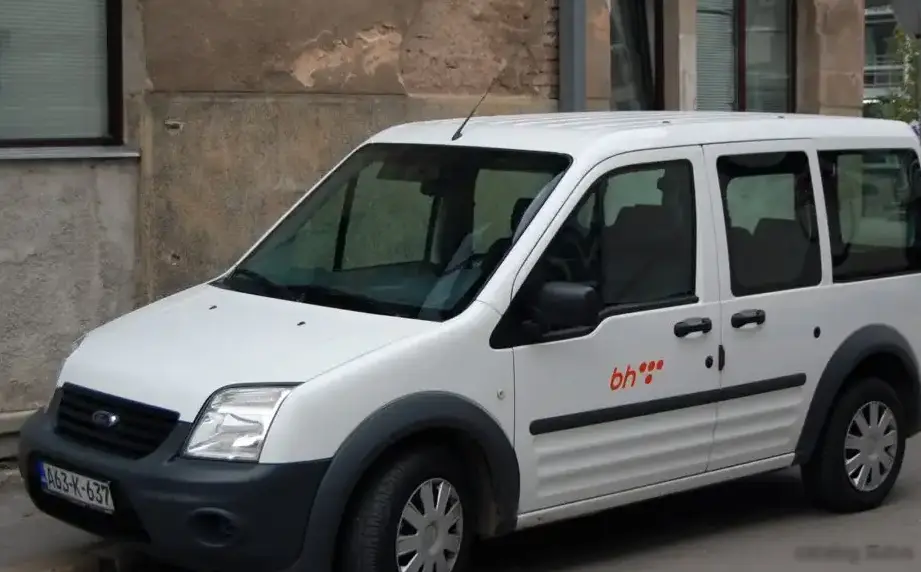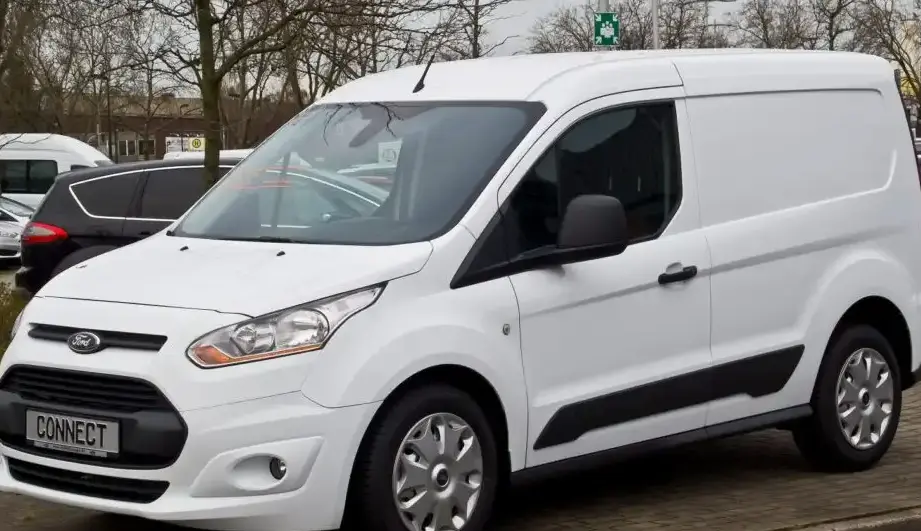
The Ford Transit Connect II Panel Van L1 1.0 EcoBoost (100 hp) was a commercially-oriented vehicle produced between 2013 and 2015, representing a key variant within the second generation of the popular Transit Connect range. Positioned as an entry-level offering, it aimed to provide a fuel-efficient and practical solution for businesses and tradespeople needing a compact van. This particular configuration, combining the 1.0-liter EcoBoost engine with a 6-speed manual transmission, was primarily sold in the European market, though limited numbers were also available in North America. It sat below the 1.6-liter diesel and higher-output gasoline options in the lineup, focusing on affordability and lower running costs.
Technical Specifications
| Brand | Ford |
| Model | Transit Connect |
| Generation | Transit Connect II Panel Van L1 |
| Type (Engine) | 1.0 EcoBoost (100 Hp) |
| Start of production | 2013 |
| End of production | 2015 |
| Powertrain Architecture | Internal Combustion engine |
| Body type | Minivan |
| Seats | 2-3 |
| Doors | 4-5 |
| Fuel consumption (economy) – urban (NEDC) | 6.4 l/100 km (36.8 US mpg, 44.1 UK mpg, 15.6 km/l) |
| Fuel consumption (economy) – extra urban (NEDC) | 5.1 l/100 km (46.1 US mpg, 55.4 UK mpg, 19.6 km/l) |
| Fuel consumption (economy) – combined (NEDC) | 5.6 l/100 km (42 US mpg, 50.4 UK mpg, 17.9 km/l) |
| CO2 emissions (NEDC) | 129 g/km |
| Fuel Type | Petrol (Gasoline) |
| Emission standard | Euro 5 |
| Weight-to-power ratio | 13.4 kg/Hp, 74.5 Hp/tonne |
| Weight-to-torque ratio | 7.9 kg/Nm, 126.7 Nm/tonne |
| Power | 100 Hp @ 6000 rpm |
| Power per litre | 100.1 Hp/l |
| Torque | 170 Nm @ 1400-4000 rpm (125.39 lb.-ft. @ 1400-4000 rpm) |
| Engine layout | Front, Transverse |
| Engine Model/Code | EcoBoost / M2GA, M2GB |
| Engine displacement | 999 cm3 (60.96 cu. in.) |
| Number of cylinders | 3 |
| Engine configuration | Inline |
| Cylinder Bore | 71.9 mm (2.83 in.) |
| Piston Stroke | 82 mm (3.23 in.) |
| Compression ratio | 10:1 |
| Number of valves per cylinder | 4 |
| Fuel injection system | Direct injection |
| Engine aspiration | Turbocharger, Intercooler |
| Valvetrain | DOHC |
| Engine oil capacity | 4.1 l (4.33 US qt | 3.61 UK qt) |
| Coolant | 5.85 l (6.18 US qt | 5.15 UK qt) |
| Kerb Weight | 1342 kg (2958.6 lbs.) |
| Max. weight | 1970 kg (4343.11 lbs.) |
| Max load | 628 kg (1384.5 lbs.) |
| Trunk (boot) space – minimum | 2630 l (92.88 cu. ft.) |
| Trunk (boot) space – maximum | 3700 l (130.66 cu. ft.) |
| Fuel tank capacity | 60 l (15.85 US gal | 13.2 UK gal) |
| Permitted trailer load with brakes (12%) | 1200 kg (2645.55 lbs.) |
| Permitted trailer load without brakes | 705 kg (1554.26 lbs.) |
| Length | 4418 mm (173.94 in.) |
| Width | 1835 mm (72.24 in.) |
| Width including mirrors | 2137 mm (84.13 in.) |
| Height | 1861 mm (73.27 in.) |
| Wheelbase | 2662 mm (104.8 in.) |
| Front track | 1568 mm (61.73 in.) |
| Rear (Back) track | 1584-1585 mm (62.36 – 62.4 in.) |
| Front overhang | 878 mm (34.57 in.) |
| Rear overhang | 878 mm (34.57 in.) |
| Ride height (ground clearance) | 152 mm (5.98 in.) |
| Minimum turning circle (turning diameter) | 11.7 m (38.39 ft.) |
| Drivetrain Architecture | The Internal combustion engine (ICE) drives the front wheels of the vehicle. |
| Drive wheel | Front wheel drive |
| Number of gears and type of gearbox | 6 gears, manual transmission |
| Front suspension | Independent, type McPherson with coil spring and anti-roll bar |
| Rear suspension | Coil spring, Torsion |
| Front brakes | Ventilated discs, 300 mm |
| Rear brakes | Disc, 280 mm |
| Assisting systems | ABS (Anti-lock braking system) |
| Steering type | Steering rack and pinion |
| Power steering | Electric Steering |
| Tires size | 205/60 R16 |
| Wheel rims size | 6.5J x 16 |
Powertrain & Engine Architecture
The heart of this Transit Connect variant is the Ford 1.0-liter EcoBoost engine, specifically the M2GA or M2GB engine code. This is a three-cylinder, inline gasoline engine featuring direct fuel injection and a single turbocharger with an intercooler. The engine utilizes a dual overhead camshaft (DOHC) valvetrain with four valves per cylinder, contributing to its relatively high power output for its size. The 1.0 EcoBoost was a significant advancement for Ford, offering a blend of efficiency and performance. The 6-speed manual transmission was the standard offering, providing drivers with full control over gear selection. The transmission was chosen to complement the engine’s torque curve and maximize fuel economy.
Driving Characteristics
The 100 hp EcoBoost engine in the Transit Connect L1 provided adequate, though not exhilarating, performance. Acceleration was modest, particularly when fully loaded. The engine’s peak torque of 170 Nm (125 lb-ft) was available from 1400-4000 rpm, making it reasonably tractable in urban environments. Compared to the 1.6-liter gasoline or diesel options, this variant felt noticeably less powerful, especially when climbing hills or overtaking. The manual transmission allowed for precise control, but required more driver involvement than an automatic. The gear ratios were tuned for fuel efficiency, meaning the engine often needed to be revved to maintain speed on the highway. The relatively light weight of the L1 van helped mitigate the engine’s power deficit.
Equipment & Trim Levels
The 1.0 EcoBoost L1 typically came with a basic level of equipment, reflecting its position as an entry-level work van. Standard features generally included power steering, ABS, a driver’s airbag, and basic steel wheels. Interior appointments were functional rather than luxurious, with durable plastic trim and cloth upholstery. Optional extras included air conditioning, a radio/CD player, power windows, and central locking. Higher trim levels, available with the larger engines, offered more comfort and convenience features, such as upgraded seating, alloy wheels, and a more sophisticated infotainment system.
Chassis & Braking
The Transit Connect L1 utilized a McPherson strut front suspension with a coil spring and anti-roll bar, providing a reasonable balance of ride comfort and handling. The rear suspension employed a coil spring and torsion beam setup, which was cost-effective and space-efficient. Braking duties were handled by ventilated discs at the front and solid discs at the rear. ABS (Anti-lock Braking System) was standard, enhancing safety. The suspension was tuned to prioritize load-carrying capability and stability, rather than sporty handling.
Market Reception & Comparison
The 1.0 EcoBoost Transit Connect L1 was generally well-received by critics for its fuel efficiency and low running costs. However, its limited power output was a common criticism, particularly for those who frequently carried heavy loads or drove on hilly terrain. Compared to the 1.6-liter diesel, the EcoBoost offered lower torque and a less refined driving experience, but it was quieter and produced fewer emissions. The 1.6-liter gasoline engine provided more power but at the expense of fuel economy. The EcoBoost variant appealed to businesses prioritizing cost savings and environmental considerations.
Legacy
The 1.0 EcoBoost engine proved to be a reliable unit when properly maintained. While not without its quirks (like potential for timing chain wear in some early examples), it generally offered good longevity. In the used car market, the 1.0 EcoBoost Transit Connect L1 remains a popular choice for budget-conscious buyers seeking a practical and fuel-efficient van. Its affordability and relatively low maintenance costs continue to make it an attractive option for small businesses and tradespeople. The engine itself became a mainstay in Ford’s lineup, appearing in numerous other models and demonstrating its versatility.