
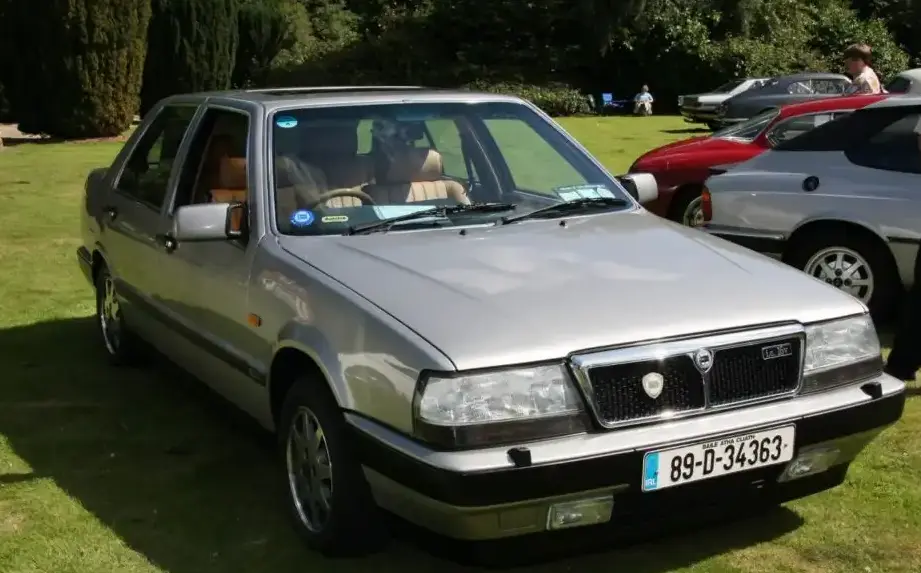
The Lancia Thema (834) 2500 Turbo DS, produced from 1993 to 1994, represents a late-stage evolution of the second-generation Thema, a flagship sedan intended to compete with executive cars from German manufacturers. This variant, powered by a turbocharged diesel engine, was positioned as a more fuel-efficient and torque-rich alternative to the gasoline-powered models within the Thema lineup. It was a relatively short-lived iteration, reflecting Lancia’s shifting market focus and eventual withdrawal from many European markets. The 834 series Thema, launched in 1988, was a collaborative effort with Saab (resulting in the Saab 9000), Alfa Romeo (resulting in the Alfa Romeo 164), and Fiat (resulting in the Fiat Croma), all sharing the same Type Four platform.
Technical Specifications
| Brand | Lancia |
| Model | Thema |
| Generation | Thema (834) |
| Type (Engine) | 2500 Turbo DS (116 Hp) |
| Start of Production | 1993 |
| End of Production | 1994 |
| Powertrain Architecture | Internal Combustion Engine |
| Body Type | Sedan |
| Fuel Type | Diesel |
| Power | 116 Hp |
| Engine Model/Code | 8144.97 Y |
| Engine Aspiration | Turbocharger |
| Engine Oil Capacity | 6.4 l (6.76 US qt | 5.63 UK qt) |
| Coolant Capacity | 9.6 l (10.14 US qt | 8.45 UK qt) |
Powertrain & Engine Architecture
The heart of the Thema 2500 Turbo DS is the 8144.97 Y engine, a 2.5-liter inline-five cylinder diesel engine. This engine utilizes a turbocharger with an intercooler to boost power output to 116 horsepower. The engine’s design emphasizes low-end torque, a characteristic desirable in a large sedan intended for long-distance cruising. It features direct injection, a technology that improves combustion efficiency and reduces emissions compared to indirect injection systems common in earlier diesel engines. The fuel injection system is a Bosch unit, known for its reliability and precision. The engine employs a single overhead camshaft (SOHC) valvetrain, a relatively simple design that contributes to its durability. The Thema 2500 Turbo DS was exclusively offered with a four-speed automatic transmission. This transmission, while providing convenience, was not known for its particularly quick shifts or sporty feel, prioritizing smooth operation and fuel economy.
Driving Characteristics
The driving experience in the Thema 2500 Turbo DS is defined by its substantial torque and comfortable ride. The turbocharged diesel delivers a strong surge of power from relatively low RPMs, making it well-suited for overtaking maneuvers and maintaining highway speeds. However, the engine is not particularly rev-happy, and peak power is achieved at a relatively low engine speed. The four-speed automatic transmission, while smooth, lacks the responsiveness of a manual gearbox or a more modern automatic with additional gears. Compared to the gasoline-powered Thema variants, the 2500 Turbo DS offers significantly better fuel economy, but at the expense of outright acceleration. The gasoline engines, particularly the 2.0-liter turbocharged model, provided a more engaging driving experience, while the diesel prioritized efficiency and relaxed cruising. The Thema’s suspension, tuned for comfort, absorbs bumps and imperfections in the road effectively, contributing to a refined ride quality.
Equipment & Trim Levels
The Thema 2500 Turbo DS was generally well-equipped, reflecting its status as a flagship Lancia model. Standard features typically included power windows, central locking, power steering, and air conditioning. Interior upholstery was typically a high-quality cloth or leather, with wood trim accents on the dashboard and door panels. The dashboard layout is typical of early 1990s Italian design, featuring a comprehensive instrument cluster and logically arranged controls. Optional extras available for the Thema 2500 Turbo DS included a sunroof, upgraded audio system, and more luxurious leather upholstery. The trim level was generally consistent across the 2500 Turbo DS models, with limited options for customization beyond the available extras.
Chassis & Braking
The Thema 834 utilizes a front-engine, front-wheel-drive layout. The suspension consists of independent front suspension with MacPherson struts and a semi-independent rear suspension with trailing arms. The braking system features disc brakes on the front wheels and drum brakes on the rear wheels. Anti-lock braking system (ABS) was often included as standard equipment, enhancing safety and control during emergency braking situations. The chassis was designed to provide a balance between comfort and handling, prioritizing a smooth ride over sporty responsiveness. Stabilizer bars were fitted to both the front and rear axles to reduce body roll during cornering. The Thema’s weight, typical for a large sedan of its era, contributes to its stable and planted feel on the road.
Market Reception & Comparison
The Lancia Thema 2500 Turbo DS received mixed reviews from automotive critics. While the engine was praised for its torque and fuel efficiency, the four-speed automatic transmission was often criticized for its lack of responsiveness. Compared to its rivals, such as the BMW 5 Series and Mercedes-Benz E-Class, the Thema offered a more affordable alternative, but lacked the same level of prestige and refinement. Within the Thema lineup, the 2500 Turbo DS appealed to buyers who prioritized fuel economy and low-cost operation over outright performance. The gasoline-powered models, particularly the 2.0-liter Turbo, were favored by drivers who enjoyed a more engaging driving experience. Reliability was generally considered average for a vehicle of its era, with potential issues related to the turbocharger and fuel injection system requiring attention.
Legacy
The Lancia Thema 2500 Turbo DS, while not a commercial success in large numbers, represents an interesting chapter in Lancia’s history. The turbocharged diesel engine offered a compelling combination of fuel efficiency and torque, making it a practical choice for long-distance drivers. Today, the Thema 2500 Turbo DS is a relatively rare vehicle, sought after by Lancia enthusiasts and collectors. The engine, while robust, requires regular maintenance to ensure its longevity. Parts availability can be challenging, as many components are specific to this model. However, the Thema’s relatively simple mechanical design makes it a potentially rewarding project for experienced mechanics. The car’s enduring appeal lies in its unique blend of Italian style, comfortable ride, and efficient diesel power.
