
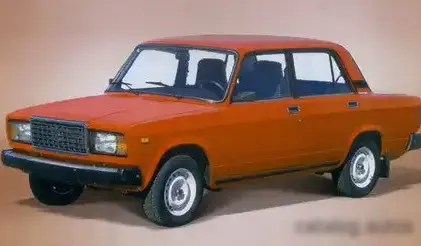
The Lada 21072 1.3, producing 64 horsepower, was a variant of the Lada 2107, a popular sedan produced by AvtoVAZ (formerly Lada) in the Soviet Union and later Russia. Production of the 21072 1.3 ran from 1982 to 1990. It represented an entry-level offering within the 2107 range, positioned below the more powerful 1.5 and 1.6-liter versions. The 2107 itself was a significant model for Lada, representing a modernization of the earlier 2105, and was based on the Fiat 124 platform, licensed and adapted for Soviet production in the late 1960s. The 2107 aimed to provide a more comfortable and refined experience compared to its predecessors, becoming a staple of Soviet and Eastern European roads for decades.
Technical Specifications
| Brand | Lada |
| Model | 2107 |
| Generation | 21072 |
| Type (Engine) | 1.3 (64 Hp) |
| Start of production | 1982 |
| End of production | 1990 |
| Powertrain Architecture | Internal Combustion engine |
| Body type | Sedan |
| Seats | 5 |
| Doors | 4 |
| Fuel consumption (urban) | 10 l/100 km (23.5 US mpg, 28.2 UK mpg, 10 km/l) |
| Fuel Type | Petrol (Gasoline) |
| Acceleration 0 – 100 km/h | 18 sec |
| Acceleration 0 – 62 mph | 18 sec |
| Acceleration 0 – 60 mph | 17.1 sec |
| Maximum speed | 143 km/h (88.86 mph) |
| Weight-to-power ratio | 16.1 kg/Hp (62.1 Hp/tonne) |
| Weight-to-torque ratio | 11.1 kg/Nm (90.3 Nm/tonne) |
| Power | 64 Hp @ 5400 rpm |
| Power per litre | 49.5 Hp/l |
| Torque | 93 Nm @ 3400 rpm (68.59 lb.-ft. @ 3400 rpm) |
| Engine layout | Front, Longitudinal |
| Engine displacement | 1294 cm3 (78.96 cu. in.) |
| Number of cylinders | 4 |
| Engine configuration | Inline |
| Compression ratio | 8.5:1 |
| Number of valves per cylinder | 2 |
| Fuel injection system | Carburettor |
| Engine aspiration | Naturally aspirated |
| Valvetrain | OHC |
| Kerb Weight | 1030 kg (2270.76 lbs) |
| Max. weight | 1430 kg (3152.61 lbs) |
| Max load | 400 kg (881.85 lbs) |
| Trunk (boot) space – maximum | 325 l (11.48 cu. ft.) |
| Fuel tank capacity | 39 l (10.3 US gal | 8.58 UK gal) |
| Length | 4128 mm (162.52 in) |
| Width | 1620 mm (63.78 in) |
| Height | 1435 mm (56.5 in) |
| Wheelbase | 2424 mm (95.43 in) |
| Front track | 1365 mm (53.74 in) |
| Rear (Back) track | 1321 mm (52.01 in) |
| Drivetrain Architecture | Rear wheel drive |
| Drive wheel | Rear wheel drive |
| Number of gears and type of gearbox | 4 gears, manual transmission |
| Front suspension | Double wishbone |
| Rear suspension | Coil spring |
| Front brakes | Disc |
| Rear brakes | Drum |
| Steering type | Worm-reduction unit |
| Tires size | 175/70 SR13 |
Powertrain & Engine Architecture
The Lada 21072 1.3 was powered by a 1.3-liter inline-four cylinder engine, designated as the VAZ-2107. This engine was a development of the earlier VAZ-2101 engine, sharing its basic architecture but with some modifications. The engine featured a single overhead camshaft (OHC) operating two valves per cylinder. Fuel delivery was handled by a carburetor, a common feature for vehicles of this era and market segment. The carburetor system, while simple and relatively inexpensive, was less efficient and produced higher emissions compared to fuel injection systems. The engine produced 64 horsepower at 5400 rpm and 93 Nm (68.59 lb-ft) of torque at 3400 rpm. The engine was mounted longitudinally in the front of the vehicle, driving the rear wheels. The 21072 1.3 was exclusively offered with a four-speed manual transmission, designed to provide adequate performance for everyday driving.
Driving Characteristics
The 1.3-liter engine in the 21072 provided modest performance. Acceleration was slow, taking approximately 18 seconds to reach 100 km/h (62 mph). Top speed was around 143 km/h (88.86 mph). The four-speed manual transmission was geared to prioritize fuel economy and drivability over outright performance. The gear ratios were relatively tall, making the car feel sluggish when accelerating, especially when fully loaded. Compared to the 1.5 and 1.6-liter versions of the 2107, the 1.3 offered a more economical driving experience but at the expense of power and responsiveness. The rear-wheel-drive layout provided predictable handling, but the car’s suspension was relatively basic, resulting in a somewhat bumpy ride on uneven surfaces.
Equipment & Trim Levels
The Lada 21072 1.3 was typically equipped with basic amenities. Standard features included cloth upholstery, a simple dashboard layout with analog gauges, and basic exterior trim. Power steering, electric windows, and central locking were not typically offered on this base model. Optional extras were limited, often including a radio, upgraded seat covers, and sometimes a sunroof. The interior was functional and durable, designed to withstand the rigors of daily use. The exterior featured chrome bumpers and relatively simple styling, reflecting the design trends of the 1980s.
Chassis & Braking
The Lada 21072 1.3 utilized a body-on-frame construction, a common practice for vehicles of its era. The front suspension consisted of a double wishbone setup, while the rear suspension employed a coil spring arrangement. The braking system featured disc brakes on the front wheels and drum brakes on the rear wheels. The steering was a worm-reduction type, providing a relatively heavy but direct steering feel. The tires were typically 175/70 SR13, offering adequate grip for normal driving conditions. The chassis and braking system were designed to provide safe and reliable operation, but they were not particularly sophisticated compared to more modern vehicles.
Market Reception & Comparison
The Lada 21072 1.3 was primarily marketed towards budget-conscious buyers in the Soviet Union and Eastern European countries. It was praised for its affordability, durability, and relatively simple mechanical design, making it easy to maintain and repair. However, it was often criticized for its lack of power, slow acceleration, and basic interior. Compared to the 1.5 and 1.6-liter versions of the 2107, the 1.3 offered better fuel economy but significantly less performance. It was also less refined and comfortable than some of its Western European competitors. Despite its shortcomings, the 21072 1.3 remained a popular choice for many years due to its low price and practicality.
Legacy
The Lada 21072 1.3, and the 2107 series as a whole, holds a significant place in automotive history, particularly in the context of Soviet and post-Soviet automotive production. The powertrain, while simple, proved to be remarkably durable and reliable, with many examples still in operation today. In the used car market, the 21072 1.3 is often sought after by enthusiasts and collectors who appreciate its classic design and straightforward mechanics. Parts availability remains relatively good, making it a viable option for those looking for an affordable and easily maintainable classic car. While not known for its performance or luxury, the Lada 21072 1.3 represents a significant chapter in the history of automotive engineering and a testament to the enduring appeal of simple, robust design.
