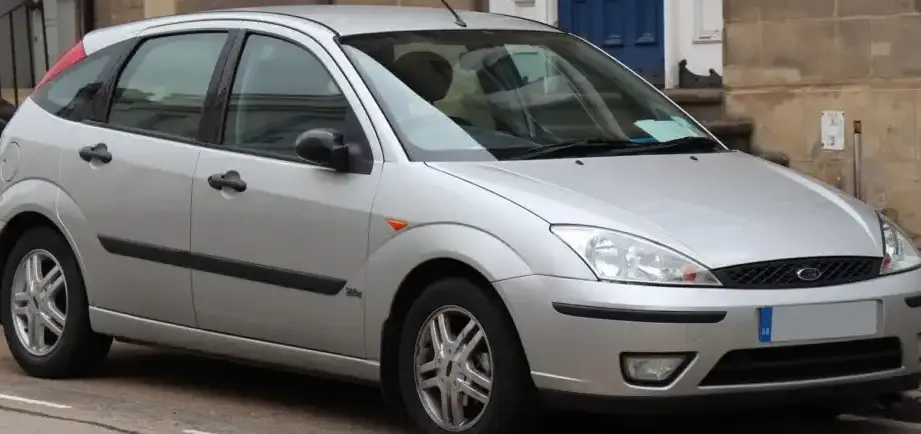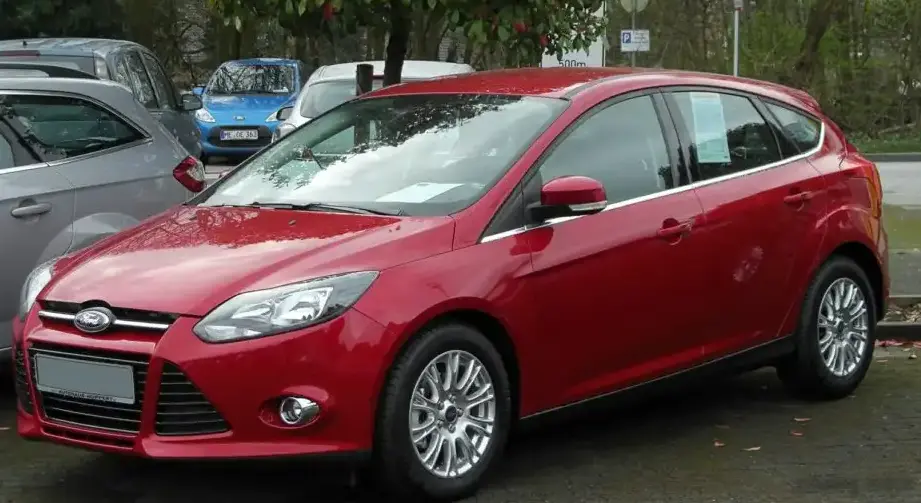
The Ford Focus III Hatchback 1.6 TDCi, producing 115 horsepower, was a significant variant within the third generation of Ford’s globally successful Focus model. Introduced in 2010 and continuing through 2014, this version played a crucial role in offering a fuel-efficient and practical option for European buyers, particularly as diesel engines held a strong market share. Positioned as a mid-range offering, it bridged the gap between the base models and the more powerful, higher-trim versions. The Focus III, built on the C170 platform, represented a substantial leap forward in terms of design, technology, and driving dynamics compared to its predecessors.
Technical Specifications
| Brand | Ford |
| Model | Focus |
| Generation | Focus III Hatchback |
| Type (Engine) | 1.6 TDCi (115 Hp) |
| Start of production | 2010 |
| End of production | 2014 |
| Powertrain Architecture | Internal Combustion engine |
| Body type | Hatchback |
| Seats | 5 |
| Doors | 5 |
| Fuel consumption (urban) | 5.7 l/100 km (41.3 US mpg, 49.6 UK mpg, 17.5 km/l) |
| Fuel consumption (extra urban) | 3.7 l/100 km (63.6 US mpg, 76.3 UK mpg, 27 km/l) |
| Fuel consumption (combined) | 4.5 l/100 km (52.3 US mpg, 62.8 UK mpg, 22.2 km/l) |
| Fuel Type | Diesel |
| Acceleration 0 – 100 km/h | 10.8 sec |
| Acceleration 0 – 62 mph | 10.8 sec |
| Acceleration 0 – 60 mph | 10.3 sec |
| Maximum speed | 193 km/h (119.92 mph) |
| Power | 115 Hp |
| Engine layout | Front, Transverse |
| Engine Model/Code | T1DA, T1DB |
| Engine configuration | Inline |
| Fuel injection system | Diesel Commonrail |
| Engine aspiration | Turbocharger, Intercooler |
| Engine oil capacity | 3.8 l (4.02 US qt, 3.34 UK qt) |
| Coolant capacity | 7.3 l (7.71 US qt, 6.42 UK qt) |
| Drivetrain | Front wheel drive |
| Number of gears | 6 |
| Gearbox type | Manual transmission |
| Assisting systems | ABS (Anti-lock braking system) |
| Steering type | Steering rack and pinion |
Powertrain & Engine Architecture
The heart of this Focus variant is the 1.6-liter TDCi diesel engine, identified by engine codes T1DA and T1DB. This engine is a four-cylinder, inline configuration, utilizing a common-rail direct fuel injection system. The common-rail system, operating at very high pressures, allows for precise fuel metering and optimized combustion, contributing to both fuel efficiency and reduced emissions. A turbocharger with an intercooler is employed to increase power output by forcing more air into the cylinders. The intercooler cools the compressed air, further enhancing density and combustion efficiency. The engine features a single overhead camshaft (SOHC) operating four valves per cylinder. The six-speed manual transmission was the standard offering, providing a good balance between fuel economy and drivability. The gear ratios were tuned to maximize efficiency at highway speeds while still providing adequate acceleration in urban environments.
Driving Characteristics
The 1.6 TDCi 115 hp Focus offered a practical and economical driving experience. While not a performance-oriented model, it provided sufficient power for everyday driving situations. Acceleration from 0-60 mph took approximately 10.3 seconds, and top speed was around 119.92 mph. The turbocharger provided a noticeable boost in power at lower engine speeds, mitigating some of the inherent torque deficit of a smaller displacement diesel. Compared to the higher-output 1.6 TDCi variants (often around 136 hp) or the petrol-powered versions, this model prioritized fuel economy over outright performance. The manual transmission allowed for greater driver control, but the gear ratios were optimized for efficiency rather than sporty driving. The engine was relatively quiet for a diesel, but some engine noise was still present, particularly during acceleration.
Equipment & Trim Levels
The 1.6 TDCi 115 hp model typically came equipped with a reasonable level of standard features. These generally included air conditioning, power windows, power door locks, a basic audio system with CD player, and ABS brakes. Higher trim levels, such as Zetec or Titanium, added features like alloy wheels, upgraded audio systems, automatic headlights and rain-sensing wipers, cruise control, and more sophisticated climate control systems. Interior upholstery was typically cloth, with options for upgraded materials on higher trims. Dashboard configurations were generally consistent across the range, with a focus on functionality and ease of use. Optional extras included navigation systems, parking sensors, and a panoramic sunroof.
Chassis & Braking
The Focus III utilized a MacPherson strut front suspension and a multi-link rear suspension. This setup provided a good balance between ride comfort and handling precision. The 1.6 TDCi models typically featured disc brakes on the front wheels and drum brakes on the rear wheels. ABS (Anti-lock Braking System) was standard, enhancing braking performance and stability, particularly on slippery surfaces. Stabilizer bars were fitted to both the front and rear axles to reduce body roll during cornering. The suspension tuning was generally geared towards comfort, but the Focus still offered a reasonably engaging driving experience.
Market Reception & Comparison
The Ford Focus III 1.6 TDCi 115 hp was well-received by critics and consumers alike, particularly in Europe where diesel engines were highly popular. It was praised for its fuel efficiency, practicality, and comfortable ride. Compared to the more powerful diesel variants, the 1.6 TDCi offered a lower purchase price and slightly better fuel economy, making it an attractive option for budget-conscious buyers. However, it lacked the outright performance of the higher-output models. Against petrol-powered competitors, the 1.6 TDCi offered significantly better fuel economy, but often at a higher initial cost. Reliability was generally good, although some owners reported issues with the diesel particulate filter (DPF) system, a common concern with modern diesel engines.
Legacy
The 1.6 TDCi engine proved to be a durable and reliable powertrain when properly maintained. In the used car market, the Focus III 1.6 TDCi remains a popular choice due to its fuel efficiency and affordability. However, potential buyers should be aware of the potential for DPF issues and ensure that the vehicle has been regularly serviced. The Focus III, in general, established Ford as a leader in the compact car segment, and the 1.6 TDCi variant played a significant role in its success, offering a compelling blend of economy, practicality, and driving enjoyment.