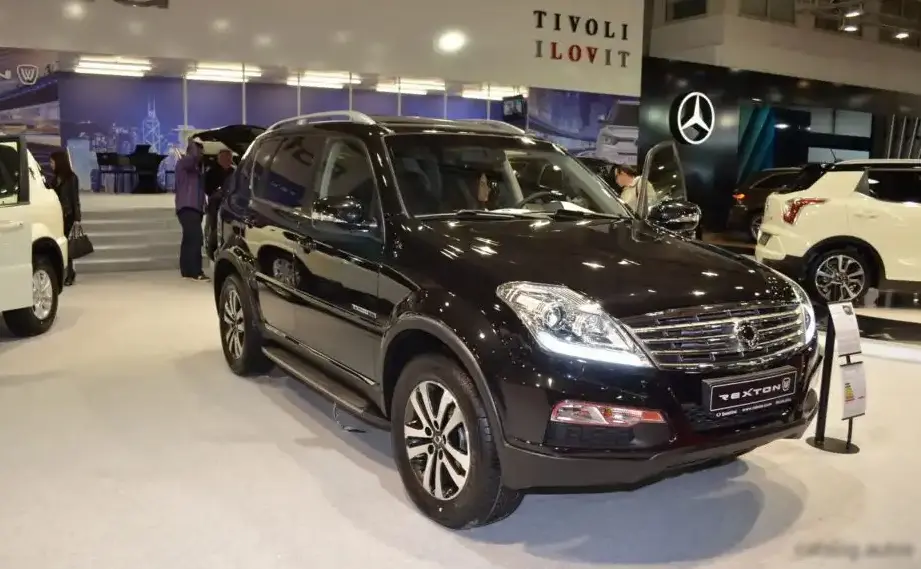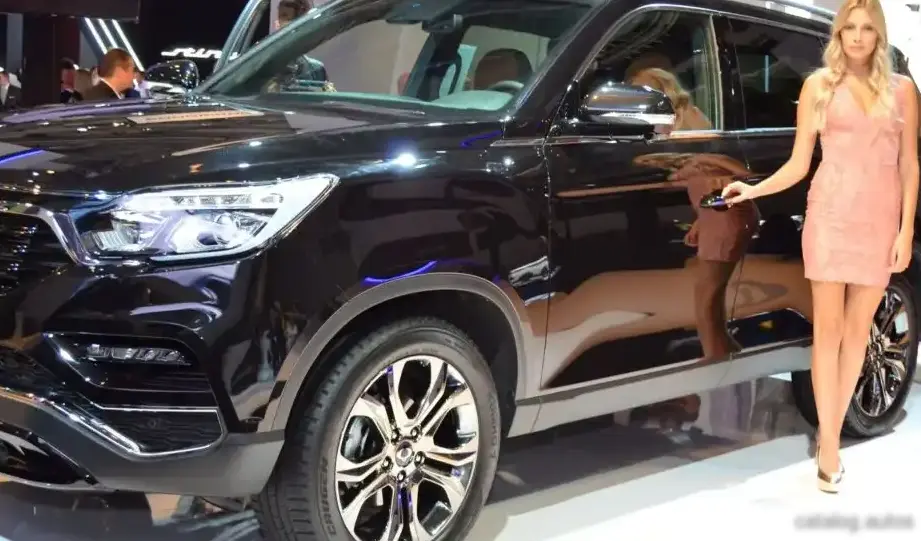
The SsangYong Rexton II 2.0 e-XGDi (224 Hp) represents a significant step forward for the South Korean automaker, launched in 2018 and continuing through a refresh until March 2021. Positioned as a mid-to-upper range SUV, the Rexton II aimed to compete with established players in the segment, offering a blend of space, capability, and modern technology. This particular variant, powered by the 2.0-liter turbocharged gasoline engine, was a key offering in markets where diesel engines were less favored, or where gasoline options were preferred due to emissions regulations. It sat within the Rexton II lineup as a performance-oriented alternative to the diesel models, offering a more responsive driving experience.
Technical Specifications
| Brand | SsangYong |
| Model | Rexton |
| Generation | Rexton II |
| Type (Engine) | 2.0 e-XGDi (224 Hp) |
| Start of production | 2018 |
| End of production | March, 2021 |
| Powertrain Architecture | Internal Combustion engine |
| Body type | SUV |
| Seats | 5-7 |
| Doors | 5 |
| Fuel consumption (urban) | 12.7 l/100 km (18.5 US mpg, 22.2 UK mpg, 7.9 km/l) |
| Fuel consumption (extra urban) | 7.9 l/100 km (29.8 US mpg, 35.8 UK mpg, 12.7 km/l) |
| Fuel consumption (combined) | 9.7 l/100 km (24.2 US mpg, 29.1 UK mpg, 10.3 km/l) |
| CO2 emissions | 225 g/km |
| Fuel Type | Petrol (Gasoline) |
| Maximum speed | 190 km/h (118.06 mph) |
| Emission standard | Euro 6 |
| Weight-to-power ratio | 8.8 kg/Hp, 113.4 Hp/tonne |
| Weight-to-torque ratio | 5.6 kg/Nm, 177.2 Nm/tonne |
| Power | 224 Hp @ 5500 rpm |
| Power per litre | 112.1 Hp/l |
| Torque | 350 Nm @ 1500-4500 rpm (258.15 lb.-ft. @ 1500-4500 rpm) |
| Engine layout | Front, Longitudinal |
| Engine Model/Code | G20GDi |
| Engine displacement | 1998 cm3 (121.93 cu. in.) |
| Number of cylinders | 4 |
| Engine configuration | Inline |
| Cylinder Bore | 86 mm (3.39 in.) |
| Piston Stroke | 86 mm (3.39 in.) |
| Compression ratio | 9.6:1 |
| Number of valves per cylinder | 4 |
| Fuel injection system | Direct injection |
| Engine aspiration | Turbocharger, Intercooler |
| Engine oil capacity | 5 l (5.28 US qt | 4.4 UK qt) |
| Kerb Weight | 1975-2082 kg (4354.13 – 4590.02 lbs.) |
| Max. weight | 2830 kg (6239.08 lbs.) |
| Max load | 748-855 kg (1649.06 – 1884.95 lbs.) |
| Fuel tank capacity | 70 l (18.49 US gal | 15.4 UK gal) |
| Permitted trailer load with brakes (12%) | 2300 kg (5070.63 lbs.) |
| Permitted trailer load without brakes | 750 kg (1653.47 lbs.) |
| Length | 4850 mm (190.94 in.) |
| Width | 1960 mm (77.17 in.) |
| Height | 1825 mm (71.85 in.) |
| Wheelbase | 2865 mm (112.8 in.) |
| Front track | 1640 mm (64.57 in.) |
| Rear track | 1640 mm (64.57 in.) |
| Front overhang | 895 mm (35.24 in.) |
| Rear overhang | 1090 mm (42.91 in.) |
| Ride height (ground clearance) | 203 mm (7.99 in.) |
| Minimum turning circle | 11.0 m (36.09 ft.) |
| Drivetrain Architecture | Rear wheel drive |
| Number of gears and type of gearbox | 6 gears, manual transmission |
| Front brakes | Ventilated discs |
| Rear brakes | Disc |
| Assisting systems | ABS (Anti-lock braking system) |
| Steering type | Steering rack and pinion |
| Power steering | Electric Steering |
Powertrain & Engine Architecture
At the heart of the Rexton II 2.0 e-XGDi lies the G20GDi engine, a 1.998-liter inline-four cylinder gasoline engine. This engine utilizes direct fuel injection and is coupled with a twin-scroll turbocharger and intercooler to enhance performance and efficiency. The engine’s design prioritizes a broad torque curve, delivering 350 Nm (258 lb-ft) of torque between 1500 and 4500 rpm. This makes it relatively flexible for everyday driving. The engine employs a timing chain for durability and features four valves per cylinder. The 6-speed manual transmission was standard for this variant, providing drivers with full control over gear selection. While an automatic transmission was available on other Rexton II trims, it wasn’t offered with the 2.0 e-XGDi engine.
Driving Characteristics
The 2.0 e-XGDi Rexton II offers a noticeably more engaging driving experience compared to the diesel-powered models. The turbocharger provides a responsive power delivery, making overtaking and highway merging easier. The manual transmission allows for precise control, although the shift quality isn’t as refined as some European competitors. The gear ratios are tuned for a balance between acceleration and fuel economy. While not a sports SUV, the 2.0 e-XGDi provides adequate performance for most driving situations. The rear-wheel-drive configuration contributes to a more balanced feel, although it doesn’t offer the all-weather capability of the available all-wheel-drive system found on other Rexton II models.
Equipment & Trim Levels
The 2.0 e-XGDi trim typically came well-equipped, though specific features varied depending on the market. Standard equipment generally included air conditioning, power windows and mirrors, a touchscreen infotainment system with Bluetooth connectivity, and a suite of safety features like ABS, ESP, and multiple airbags. Higher trim levels added features such as leather upholstery, heated seats, a sunroof, and a premium audio system. The interior design was functional and modern, with a focus on practicality and durability. The Rexton II offered seating for up to seven passengers, with a flexible seating configuration to accommodate varying cargo needs.
Chassis & Braking
The Rexton II utilizes a body-on-frame construction, providing a robust and durable chassis. The suspension system consists of double wishbones at the front and a multi-link setup at the rear, designed to provide a comfortable ride while maintaining good handling characteristics. The front brakes are ventilated discs, while the rear brakes are solid discs. The steering is electrically assisted, providing a light and responsive feel. Stabilizer bars are fitted to both the front and rear axles to reduce body roll during cornering.
Market Reception & Comparison
The SsangYong Rexton II 2.0 e-XGDi received mixed reviews. Critics praised its spacious interior, robust build quality, and competitive pricing. However, some noted that the engine, while capable, wasn’t as refined or powerful as some of its rivals. Compared to the diesel versions of the Rexton II, the 2.0 e-XGDi offered a more responsive driving experience but suffered from slightly lower fuel economy. Against competitors like the Kia Sorento and Hyundai Santa Fe, the Rexton II offered a unique blend of value and capability, but lacked the brand recognition of its Korean rivals.
Legacy
The SsangYong Rexton II 2.0 e-XGDi represents an interesting chapter in the brand’s history. While not a massive sales success, it demonstrated SsangYong’s ability to offer a competitive SUV with a gasoline engine option. The G20GDi engine proved to be relatively reliable, although regular maintenance is crucial. On the used car market, these models offer a compelling value proposition for buyers seeking a spacious and capable SUV at an affordable price. However, potential buyers should be aware of the potential for higher fuel consumption compared to diesel alternatives and the limited availability of spare parts in some regions.