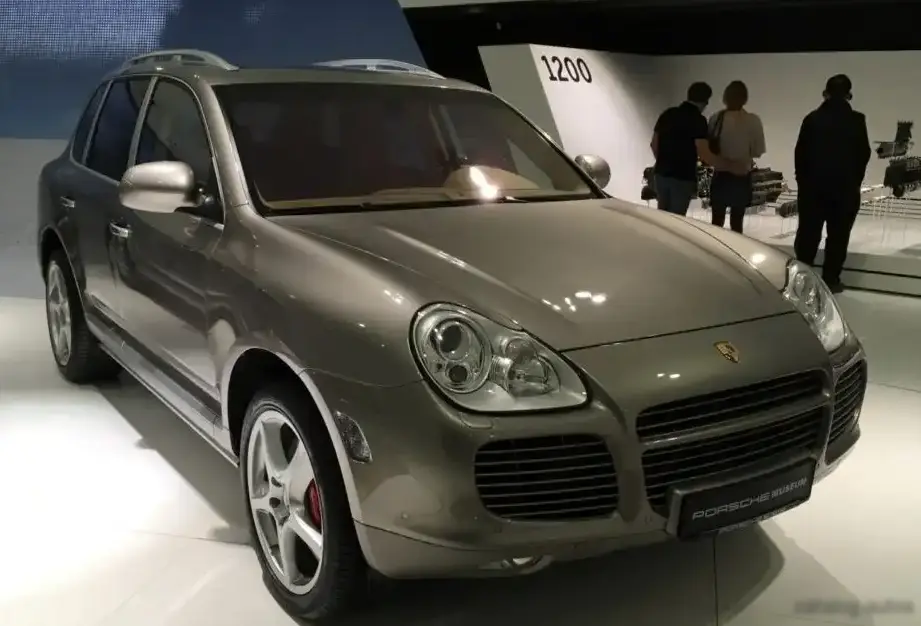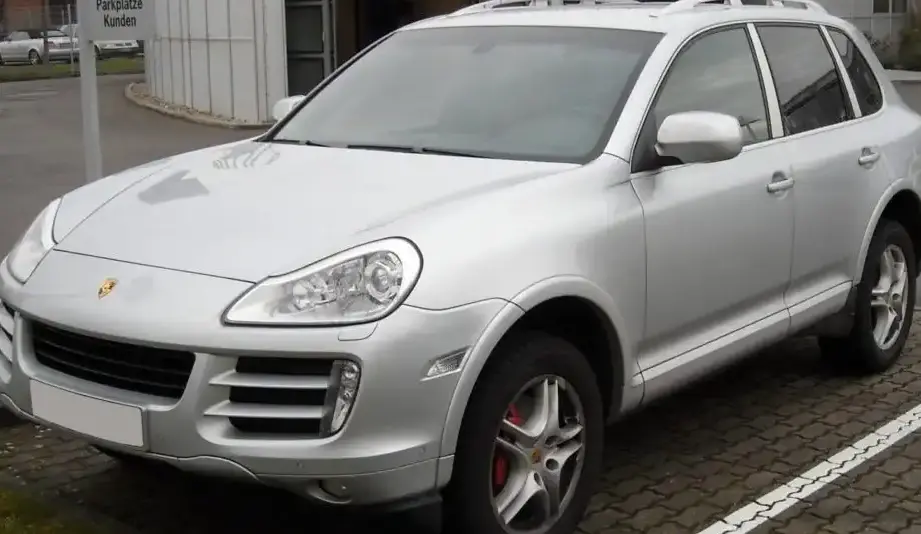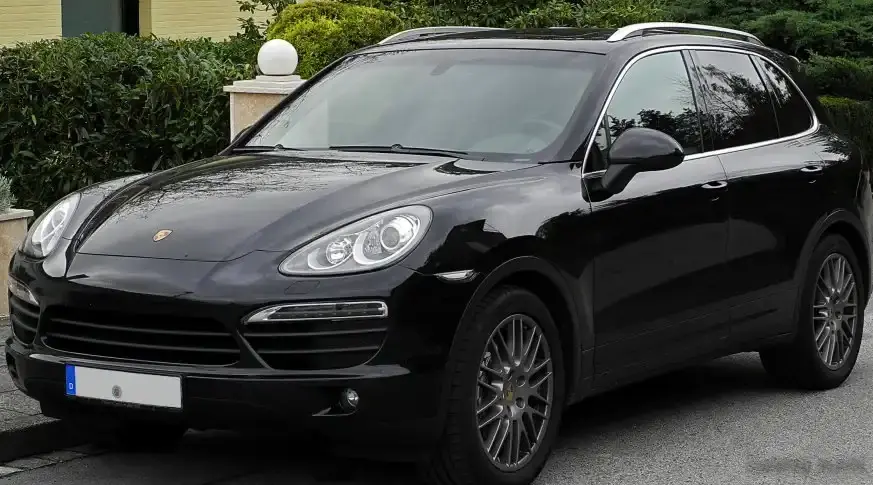
The Porsche Cayenne II Diesel S 4.2 V8 Tiptronic, produced from 2012 to 2014, represented a significant offering in Porsche’s second-generation Cayenne lineup (the 958 platform). Positioned as a mid-to-high range trim, it catered to buyers seeking the prestige and capability of a Cayenne SUV combined with the efficiency and torque characteristics of a modern diesel engine. This variant aimed to bridge the gap between the base Cayenne and the higher-performance gasoline models, offering a compelling blend of luxury, performance, and fuel economy for the European and increasingly, North American SUV markets.
Technical Specifications
| Brand | Porsche |
| Model | Cayenne |
| Generation | Cayenne II |
| Type (Engine) | Diesel S 4.2 V8 (382 Hp) Tiptronic |
| Start of production | 2012 |
| End of production | 2014 |
| Powertrain Architecture | Internal Combustion engine |
| Body type | SUV |
| Seats | 5 |
| Doors | 5 |
| Fuel consumption (economy) – urban | 10 l/100 km (23.5 US mpg) |
| Fuel consumption (economy) – extra urban | 7.3 l/100 km (32.2 US mpg) |
| Fuel consumption (economy) – combined | 8.3 l/100 km (28.3 US mpg) |
| CO2 emissions | 218 g/km |
| Fuel Type | Diesel |
| Acceleration 0 – 100 km/h | 5.7 sec |
| Acceleration 0 – 62 mph | 5.7 sec |
| Acceleration 0 – 60 mph | 5.4 sec |
| Maximum speed | 252 km/h (156.59 mph) |
| Emission standard | Euro 5 |
| Weight-to-power ratio | 5.7 kg/Hp |
| Weight-to-torque ratio | 2.6 kg/Nm |
| Power | 382 Hp @ 3750 rpm |
| Torque | 850 Nm @ 2000-2750 rpm (626.93 lb.-ft.) |
| Engine layout | Front, Longitudinal |
| Engine Model/Code | CUDB |
| Engine displacement | 4134 cm3 (252.27 cu. in.) |
| Number of cylinders | 8 |
| Engine configuration | V-engine |
| Cylinder Bore | 83 mm (3.27 in.) |
| Piston Stroke | 95.5 mm (3.76 in.) |
| Compression ratio | 16.8:1 |
| Number of valves per cylinder | 4 |
| Fuel injection system | Diesel Commonrail |
| Engine aspiration | Turbocharger, Intercooler |
| Engine oil capacity | 9 l (9.51 US qt | 7.92 UK qt) |
| Kerb Weight | 2195 kg (4839.15 lbs.) |
| Max. weight | 2935 kg (6470.57 lbs.) |
| Max load | 740 kg (1631.42 lbs.) |
| Trunk (boot) space – minimum | 670 l (23.66 cu. ft.) |
| Trunk (boot) space – maximum | 1780 l (62.86 cu. ft.) |
| Fuel tank capacity | 85 l (22.45 US gal | 18.7 UK gal) |
| Length | 4846 mm (190.79 in.) |
| Width | 1939 mm (76.34 in.) |
| Height | 1705 mm (67.13 in.) |
| Wheelbase | 2895 mm (113.98 in.) |
| Front track | 1655 mm (65.16 in.) |
| Rear (Back) track | 1669 mm (65.71 in.) |
| Ride height (ground clearance) | 215 mm (8.46 in.) |
| Drag coefficient (Cd) | 0.36 |
| Drive wheel | All wheel drive (4×4) |
| Number of gears and type of gearbox | 8 gears, automatic transmission Tiptronic |
| Front suspension | Double wishbone |
| Rear suspension | Independent multi-link suspension |
| Front brakes | Ventilated discs |
| Rear brakes | Ventilated discs |
| Assisting systems | ABS (Anti-lock braking system) |
| Steering type | Steering rack and pinion |
| Power steering | Electric Steering |
| Tires size | 255/55 R18 |
| Wheel rims size | 8J x 18 |
Powertrain & Engine Architecture
At the heart of the Cayenne Diesel S was the Porsche-engineered, Volkswagen Group-sourced 4.2-liter V8 diesel engine, designated CUDB. This engine was a sophisticated design featuring a common rail direct injection system, a variable geometry turbocharger, and an intercooler. The CUDB produced 382 horsepower at 3750 rpm and a substantial 850 Nm (626.93 lb-ft) of torque between 2000 and 2750 rpm. This broad torque curve was a key characteristic, providing effortless acceleration and strong pulling power. The engine utilized four valves per cylinder and a compression ratio of 16.8:1. The engine also incorporated a diesel particulate filter to meet stringent Euro 5 emissions standards.
The “Tiptronic” transmission was Porsche’s name for its 8-speed automatic gearbox. This transmission offered both fully automatic operation and manual gear selection via steering wheel-mounted paddles or the gear selector. The Tiptronic was known for its smooth and responsive shifts, contributing to a refined driving experience. The transmission was specifically tuned to work in harmony with the engine’s torque characteristics, optimizing acceleration and fuel efficiency.
Driving Characteristics
The Cayenne Diesel S 4.2 V8 Tiptronic delivered a distinctly different driving experience compared to its gasoline-powered siblings. While lacking the outright acceleration of the Cayenne S or Turbo, the diesel offered a more relaxed and effortless cruising experience. The abundant torque allowed for strong acceleration in everyday driving situations, and overtaking maneuvers were executed with ease. The 0-60 mph time of around 5.4 seconds was respectable for a large SUV. The Tiptronic transmission contributed to smooth gear changes, and the ability to manually select gears provided greater control when desired. Compared to the 6-speed manual versions, the Tiptronic offered a more comfortable and convenient driving experience, particularly in urban environments.
Equipment & Trim Levels
The Diesel S trim typically included a generous level of standard equipment. Interior features included leather upholstery, power-adjustable front seats with memory function, a multi-function steering wheel, and a high-quality audio system. Standard exterior features included 18-inch alloy wheels, bi-xenon headlights, and parking sensors. Optional extras included adaptive air suspension, a panoramic sunroof, upgraded leather interiors, and a more powerful audio system. Porsche offered a wide range of customization options, allowing buyers to tailor the vehicle to their specific preferences.
Chassis & Braking
The Cayenne II featured a fully independent suspension system, with double wishbones at the front and a multi-link setup at the rear. This suspension design provided a comfortable ride and good handling characteristics. The Diesel S model typically came equipped with ventilated disc brakes on all four wheels, providing ample stopping power. ABS (Anti-lock Braking System) was standard, enhancing safety and stability. The suspension was tuned to balance comfort and handling, providing a stable and predictable driving experience.
Market Reception & Comparison
The Cayenne Diesel S was generally well-received by automotive critics. It was praised for its powerful and efficient engine, comfortable ride, and luxurious interior. However, some critics noted that the diesel engine lacked the sporty character of the gasoline engines. Compared to the Cayenne S (with its V6 gasoline engine), the Diesel S offered superior fuel economy and torque, but slightly less outright performance. Compared to the base Cayenne, the Diesel S provided a significant upgrade in terms of power and refinement. Fuel economy was a strong point, with combined figures around 28.3 US mpg, making it a relatively efficient option in the luxury SUV segment.
Legacy
The CUDB engine, while robust, has shown some susceptibility to issues with the diesel particulate filter (DPF) and turbocharger over the long term, particularly if not properly maintained. However, with regular servicing and preventative maintenance, these engines can prove reliable. Today, the Cayenne Diesel S represents a compelling value proposition in the used car market, offering a blend of luxury, performance, and fuel efficiency at a more affordable price point than newer models. Its robust construction and relatively simple technology (compared to later Cayenne generations) make it a potentially reliable choice for buyers seeking a capable and comfortable SUV.