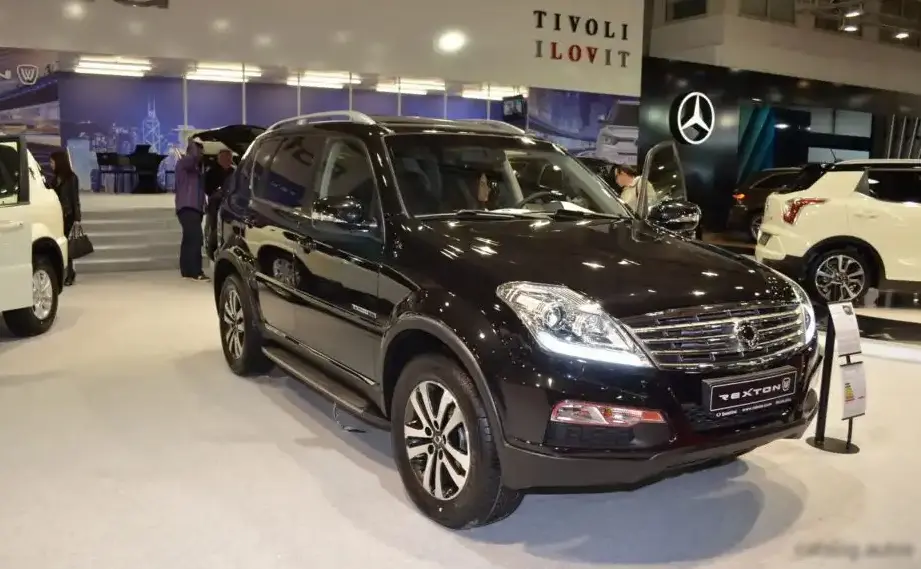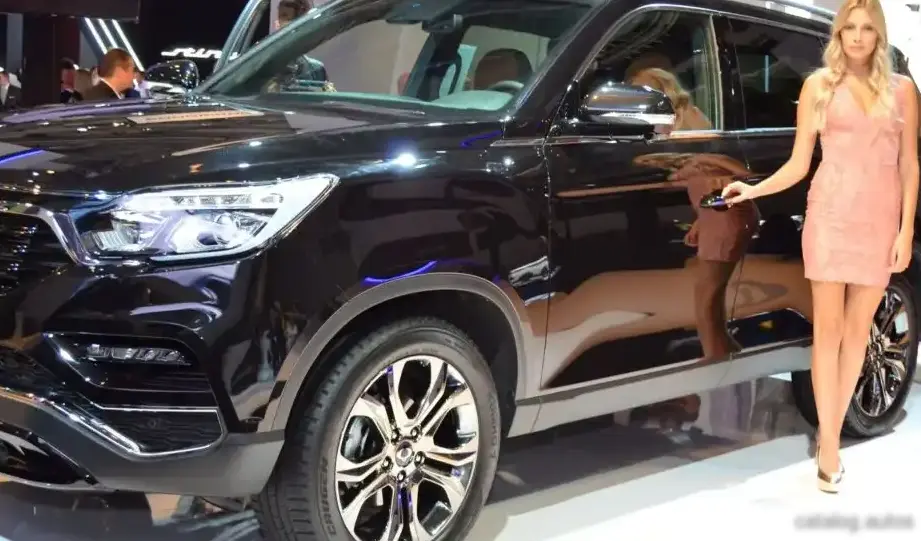
The SsangYong Rexton II 2.0 e-XGDi 4WD Automatic, produced from 2018 to March 2021, represents a significant step forward for the South Korean automaker in the mid-size SUV segment. Positioned as a more premium offering within the Rexton II range, this variant aimed to compete with established players like the Toyota 4Runner and Ford Explorer, particularly in markets outside of North America where SsangYong had a stronger presence. Built on the Rexton II platform, it offered a blend of space, capability, and a relatively modern powertrain. This model was a key part of SsangYong’s strategy to rebrand and improve its image, moving away from its traditionally utilitarian vehicles.
Technical Specifications
| Brand | SsangYong |
| Model | Rexton |
| Generation | Rexton II |
| Type (Engine) | 2.0 e-XGDi (224 Hp) 4WD Automatic |
| Start of production | 2018 |
| End of production | March, 2021 |
| Powertrain Architecture | Internal Combustion engine |
| Body type | SUV |
| Seats | 5-7 |
| Doors | 5 |
| Fuel consumption (urban) | 13.9 l/100 km (16.9 US mpg, 20.3 UK mpg, 7.2 km/l) |
| Fuel consumption (extra urban) | 8.4 l/100 km (28 US mpg, 33.6 UK mpg, 11.9 km/l) |
| Fuel consumption (combined) | 10.4 l/100 km (22.6 US mpg, 27.2 UK mpg, 9.6 km/l) |
| CO2 emissions | 242 g/km |
| Fuel Type | Petrol (Gasoline) |
| Maximum speed | 185 km/h (114.95 mph) |
| Emission standard | Euro 6 |
| Weight-to-power ratio | 9.3 kg/Hp, 107.4 Hp/tonne |
| Weight-to-torque ratio | 6 kg/Nm, 167.9 Nm/tonne |
| Power | 224 Hp @ 5500 rpm |
| Power per litre | 112.1 Hp/l |
| Torque | 350 Nm @ 1500-4500 rpm (258.15 lb.-ft. @ 1500-4500 rpm) |
| Engine layout | Front, Longitudinal |
| Engine Model/Code | G20GDi |
| Engine displacement | 1998 cm3 (121.93 cu. in.) |
| Number of cylinders | 4 |
| Engine configuration | Inline |
| Cylinder Bore | 86 mm (3.39 in.) |
| Piston Stroke | 86 mm (3.39 in.) |
| Compression ratio | 9.6:1 |
| Number of valves per cylinder | 4 |
| Fuel injection system | Direct injection |
| Engine aspiration | Turbocharger, Intercooler |
| Engine oil capacity | 5 l (5.28 US qt | 4.4 UK qt) |
| Kerb Weight | 2085-2223 kg (4596.64 – 4900.88 lbs.) |
| Max. weight | 2940 kg (6481.59 lbs.) |
| Max load | 717-855 kg (1580.71 – 1884.95 lbs.) |
| Fuel tank capacity | 70 l (18.49 US gal | 15.4 UK gal) |
| Permitted trailer load with brakes (12%) | 2300 kg (5070.63 lbs.) |
| Permitted trailer load without brakes | 750 kg (1653.47 lbs.) |
| Length | 4850 mm (190.94 in.) |
| Width | 1960 mm (77.17 in.) |
| Height | 1825 mm (71.85 in.) |
| Wheelbase | 2865 mm (112.8 in.) |
| Front track | 1640 mm (64.57 in.) |
| Rear (Back) track | 1640 mm (64.57 in.) |
| Front overhang | 895 mm (35.24 in.) |
| Rear overhang | 1090 mm (42.91 in.) |
| Ride height (ground clearance) | 203 mm (7.99 in.) |
| Minimum turning circle (turning diameter) | 11.0 m (36.09 ft.) |
| Drive wheel | All wheel drive (4×4) |
| Number of gears and type of gearbox | 6 gears, automatic transmission |
| Front brakes | Ventilated discs |
| Rear brakes | Disc |
| Assisting systems | ABS (Anti-lock braking system) |
| Steering type | Steering rack and pinion |
| Power steering | Electric Steering |
Powertrain & Engine Architecture
The heart of the Rexton II 2.0 e-XGDi is the G20GDi engine, a 1.998-liter turbocharged inline-four cylinder gasoline engine. This engine utilizes direct fuel injection, a technology that improves fuel efficiency and power output by injecting fuel directly into the combustion chamber. The engine also features an intercooler, which cools the intake air, further enhancing performance. The G20GDi produces 224 horsepower at 5500 rpm and 350 Nm (258 lb-ft) of torque between 1500 and 4500 rpm. This broad torque curve is a key characteristic, providing good responsiveness in everyday driving situations. The engine is paired with a six-speed automatic transmission, designed to provide smooth and efficient gear changes. While not a cutting-edge transmission in terms of gear count compared to some competitors, it was well-suited to the engine’s characteristics and the Rexton’s intended use as a comfortable and capable SUV.
Driving Characteristics
The 2.0 e-XGDi Automatic Rexton II offers a comfortable and composed driving experience. The engine provides adequate power for most driving situations, although it doesn’t offer the brisk acceleration of larger displacement engines. The automatic transmission is generally smooth, but can sometimes feel hesitant during quick downshifts. The all-wheel-drive system provides enhanced traction in slippery conditions, making it a capable vehicle for light off-road use. Compared to the diesel-powered Rexton models, the gasoline version offers a quieter and more refined driving experience, but at the expense of fuel economy. The six-speed automatic transmission is geared for comfortable cruising, with relatively tall gear ratios that prioritize fuel efficiency over outright performance.
Equipment & Trim Levels
The 2.0 e-XGDi Automatic trim typically came well-equipped, positioning it as a mid-to-upper level offering in the Rexton II lineup. Standard features often included leather upholstery, heated front seats, a touchscreen infotainment system with navigation, automatic climate control, and a suite of safety features such as ABS, electronic stability control, and multiple airbags. Optional extras could include a sunroof, premium audio system, and advanced driver-assistance systems like lane departure warning and adaptive cruise control. Interior materials were generally of good quality, reflecting SsangYong’s efforts to elevate the Rexton’s perceived value.
Chassis & Braking
The Rexton II utilizes a body-on-frame construction, providing a robust and durable chassis. The suspension consists of double wishbones at the front and a multi-link setup at the rear, designed to provide a comfortable ride and good handling characteristics. Braking duties are handled by ventilated discs at the front and solid discs at the rear. The braking system is assisted by ABS (Anti-lock Braking System) and Electronic Stability Control (ESC), enhancing safety and control. The Rexton II’s suspension tuning prioritizes comfort over sporty handling, resulting in a relatively soft and forgiving ride quality.
Market Reception & Comparison
The Rexton II 2.0 e-XGDi Automatic received mixed reviews from automotive critics. While praised for its spacious interior, comfortable ride, and generous equipment levels, it was often criticized for its relatively high fuel consumption and lack of dynamic finesse compared to some of its competitors. Compared to the diesel-powered Rexton models, the gasoline version offered a more refined driving experience but suffered from lower fuel economy. Against rivals like the Toyota 4Runner and Ford Explorer, the Rexton II offered a more affordable price point but lacked the brand recognition and established reputation of those vehicles.
Legacy
The SsangYong Rexton II 2.0 e-XGDi Automatic, while not a massive sales success, represents an important step in SsangYong’s evolution as an automaker. The G20GDi engine proved to be a reasonably reliable unit, although long-term maintenance costs can be higher than some competitors due to the relative scarcity of parts and specialized knowledge required for repairs. On the used car market, these models offer a compelling value proposition for buyers seeking a spacious, capable, and well-equipped SUV at a relatively affordable price. However, potential buyers should be aware of the potential for higher maintenance costs and the limited availability of parts.