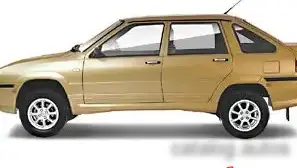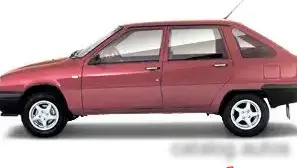
The Izh 2126, produced between 1993 and 2005, was a significant evolution of the Izh-based automotive lineage originating from the Soviet Union. Representing a modernization effort within the Izhevsk Automobile Plant (IzhAvto), the 2126 aimed to offer a more contemporary and practical vehicle for the evolving Russian market. This particular variant, equipped with a 1.6-liter engine producing 75 horsepower, served as a core offering within the 2126 range, positioned as an affordable and relatively efficient option. It was built on the foundation of the earlier Izh 2125, inheriting its basic platform but incorporating numerous updates to the body, interior, and mechanical components. The 2126 was primarily intended for domestic consumption, filling a niche for a small, five-door hatchback in a market transitioning towards more modern automotive expectations.
Technical Specifications
| Brand | Izh |
| Model | 2126 |
| Generation | 2126 |
| Type (Engine) | 1.6 (75 Hp) |
| Start of production | 1993 |
| End of production | 2005 |
| Powertrain Architecture | Internal Combustion engine |
| Body type | Hatchback |
| Seats | 5 |
| Doors | 5 |
| Fuel consumption (urban) | 9.5 l/100 km (24.8 US mpg) |
| Fuel consumption (extra urban) | 6.9 l/100 km (34.1 US mpg) |
| Fuel Type | Petrol (Gasoline) |
| Acceleration 0 – 100 km/h | 15 sec |
| Acceleration 0 – 62 mph | 15 sec |
| Acceleration 0 – 60 mph | 14.3 sec |
| Weight-to-power ratio | 13.1 kg/Hp |
| Weight-to-torque ratio | 8.4 kg/Nm |
| Power | 75 Hp |
| Power per litre | 47.8 Hp/l |
| Torque | 116 Nm (85.56 lb.-ft.) |
| Engine layout | Front, Longitudinal |
| Engine displacement | 1568 cm3 (95.69 cu. in.) |
| Number of cylinders | 4 |
| Engine configuration | Inline |
| Cylinder Bore | 79 mm (3.11 in.) |
| Piston Stroke | 80 mm (3.15 in.) |
| Compression ratio | 8.5:1 |
| Number of valves per cylinder | 2 |
| Fuel injection system | Carburettor |
| Engine aspiration | Naturally aspirated engine |
| Valvetrain | OHC |
| Kerb Weight | 980 kg (2160.53 lbs.) |
| Max. weight | 1380 kg (3042.38 lbs.) |
| Max load | 400 kg (881.85 lbs.) |
| Trunk (boot) space – minimum | 300 l (10.59 cu. ft.) |
| Trunk (boot) space – maximum | 958 l (33.83 cu. ft.) |
| Fuel tank capacity | 45 l (11.89 US gal) |
| Length | 4053 mm (159.57 in.) |
| Width | 1660 mm (65.35 in.) |
| Height | 1357 mm (53.43 in.) |
| Wheelbase | 2470 mm (97.24 in.) |
| Front track | 1390 mm (54.72 in.) |
| Rear (Back) track | 1370 mm (53.94 in.) |
| Drivetrain Architecture | Rear wheel drive |
| Number of gears and type of gearbox | 5 gears, manual transmission |
| Front suspension | Spring Strut |
| Rear suspension | Coil spring |
| Front brakes | Disc |
| Rear brakes | Drum |
| Steering type | Steering rack and pinion |
| Tires size | 175/70 R13 |
Powertrain & Engine Architecture
The heart of the Izh 2126 1.6 was the UMZ-4178 engine, a 1.6-liter inline-four cylinder powerplant. This engine, while a development of earlier Izh designs, represented a move towards increased refinement and reliability. Notably, this variant utilized a carburetor fuel system, a common feature for vehicles of this era and price point, rather than fuel injection. The engine employed an overhead camshaft (OHC) valvetrain with two valves per cylinder. The 75 horsepower output was achieved at approximately 5,600 rpm, with peak torque of 116 Nm (85.56 lb.-ft.) delivered at 3,200 rpm. The engine’s longitudinal front-engine, rear-wheel-drive layout was a carryover from previous Izh models. The five-speed manual transmission was the standard offering, providing a relatively wide range of gear ratios designed to balance acceleration and fuel economy. The transmission was not known for its particularly smooth operation, but it was generally durable.
Driving Characteristics
The Izh 2126 1.6 (75 Hp) offered modest performance. Acceleration from 0 to 60 mph took around 14.3 seconds, making it a relatively slow vehicle by Western standards. The carburetor-fed engine delivered power in a linear, but somewhat unrefined manner. The rear-wheel-drive configuration provided a traditional driving experience, but could also lead to oversteer in challenging conditions. Compared to potential higher-output versions (which were not commonly available), the 75 hp variant prioritized fuel efficiency and affordability over outright speed. The five-speed manual transmission helped to keep the engine within its optimal power band, but the gear ratios were spaced relatively closely, requiring frequent shifting. The overall driving experience was best described as utilitarian, focusing on practicality and basic transportation.
Equipment & Trim Levels
The Izh 2126 1.6 was typically offered with a fairly basic level of equipment. Standard features included cloth upholstery, a simple dashboard layout with analog gauges, and manual windows and door locks. Heating and ventilation were standard, but air conditioning was rarely fitted, even as an option. The interior was functional but lacked the refinement of more modern vehicles. Optional extras were limited, but could include upgraded seat covers, a radio, and occasionally, power steering. The trim level was largely consistent across the 1.6-liter models, with variations primarily stemming from individual owner preferences for optional accessories.
Chassis & Braking
The Izh 2126 utilized a relatively simple chassis design. The front suspension consisted of a spring strut setup, while the rear employed a coil spring arrangement. The braking system featured disc brakes on the front wheels and drum brakes on the rear. The steering was a rack and pinion system, providing reasonable steering feel. The suspension was tuned for comfort rather than sporty handling, resulting in a somewhat soft and compliant ride. The relatively narrow 175/70 R13 tires contributed to the car’s modest grip levels.
Market Reception & Comparison
The Izh 2126 was primarily a domestic market vehicle, and its reception was largely dictated by the economic conditions in Russia during the 1990s and early 2000s. It was viewed as an affordable and relatively reliable option for those seeking basic transportation. Compared to other trims, the 1.6-liter version offered a good balance between fuel economy and performance. While more powerful engines were available in other Izh models, they were less common and typically more expensive to operate. Fuel economy was a key selling point, with the 1.6-liter engine achieving around 34.1 US mpg on the highway. Reliability was generally acceptable, although the carburetor-based fuel system required periodic maintenance.
Legacy
The Izh 2126, and specifically the 1.6-liter variant, holds a place in automotive history as a representative of the post-Soviet automotive industry. While not a technologically advanced vehicle, it provided affordable transportation for a large segment of the Russian population. The UMZ-4178 engine, while simple, proved to be reasonably durable and parts availability remains relatively good in Russia and surrounding countries. Today, the Izh 2126 is increasingly sought after by collectors and enthusiasts, representing a nostalgic reminder of a bygone era. Its simple mechanical design makes it relatively easy to maintain and repair, contributing to its continued presence on the roads.