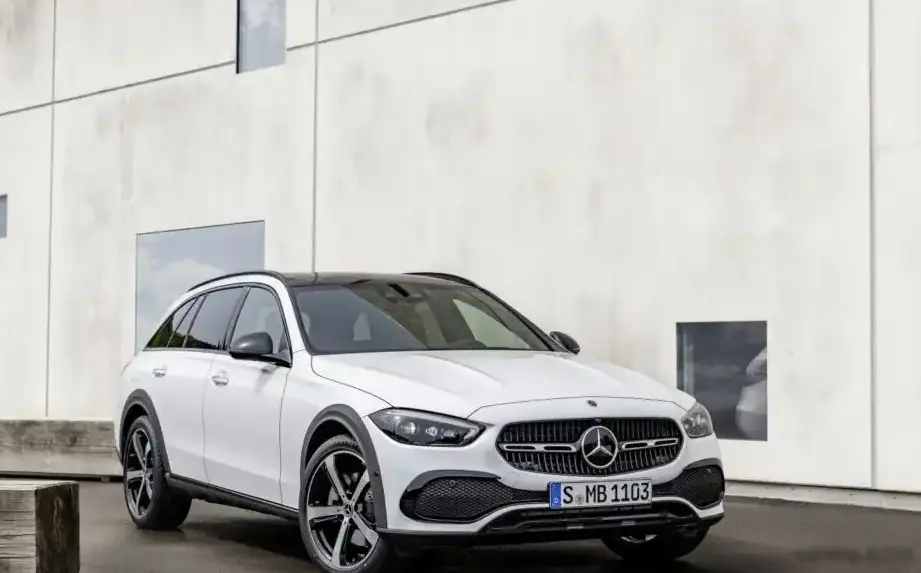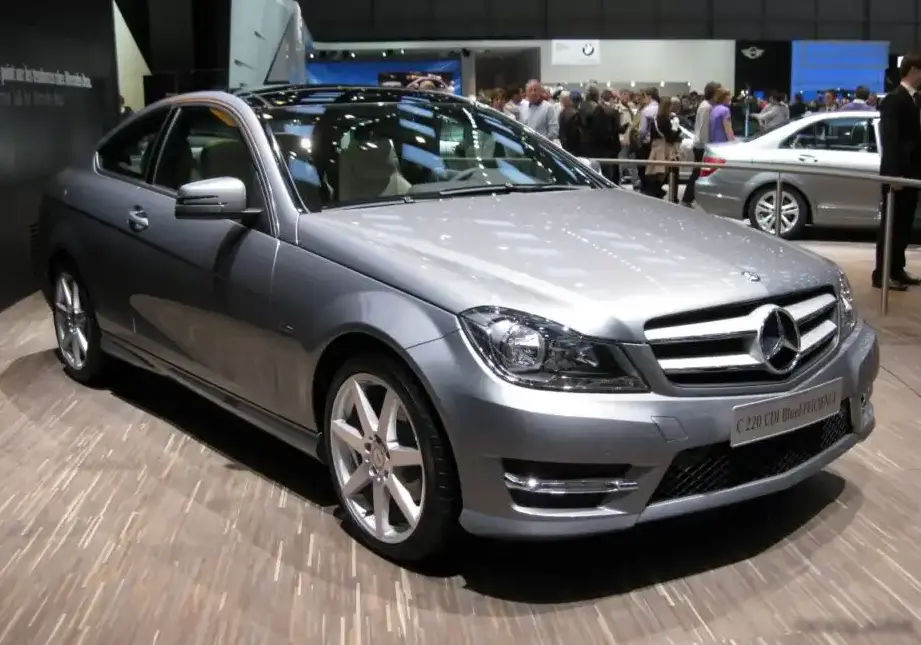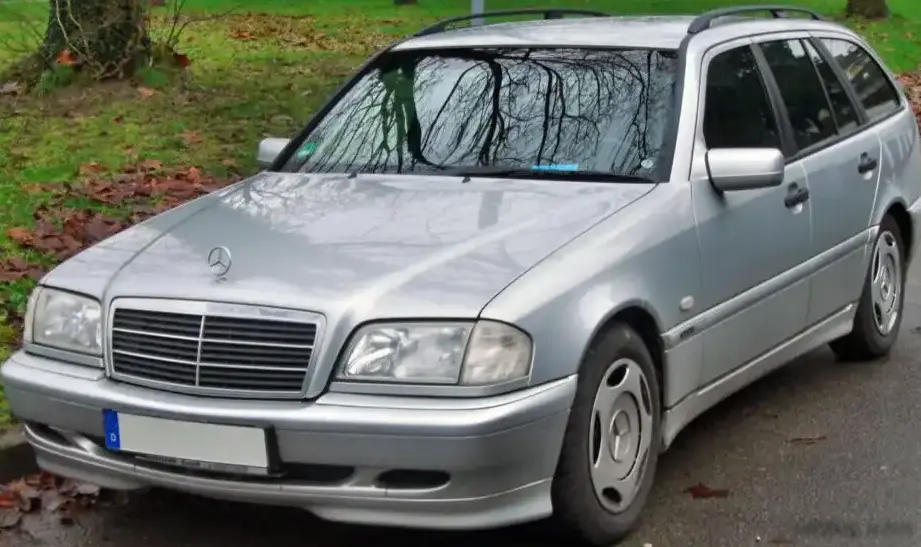
The Mercedes-Benz C-Class T-modell (S202) C 220 D with the 5G-TRONIC automatic transmission, produced from June 1997 to May 1999, represented a practical and fuel-efficient option within the refreshed (facelift) S202 series. Positioned as a mid-range offering in the wagon (estate) body style, it catered to buyers seeking the prestige of the Mercedes-Benz brand combined with the versatility of a spacious cargo area and the convenience of an automatic gearbox. This variant was part of the W202 platform, a significant model for Mercedes-Benz as it expanded their compact executive car lineup and introduced new technologies.
Technical Specifications
| Brand | Mercedes-Benz |
| Model | C-Class |
| Generation | C-Class T-modell (S202, facelift 1997) |
| Type (Engine) | C 220 D (95 Hp) 5G-TRONIC |
| Start of production | June, 1997 |
| End of production | May, 1999 |
| Powertrain Architecture | Internal Combustion engine |
| Body type | Station wagon (estate) |
| Seats | 5 |
| Doors | 5 |
| Fuel consumption (urban) | 8.4 l/100 km (28 US mpg, 33.6 UK mpg, 11.9 km/l) |
| Fuel consumption (extra urban) | 5.5 l/100 km (42.8 US mpg, 51.4 UK mpg, 18.2 km/l) |
| Fuel Type | Diesel |
| Acceleration 0 – 100 km/h | 17 sec |
| Acceleration 0 – 62 mph | 17 sec |
| Acceleration 0 – 60 mph | 16.2 sec |
| Maximum speed | 170 km/h (105.63 mph) |
| Weight-to-power ratio | 15.3 kg/Hp, 65.5 Hp/tonne |
| Weight-to-torque ratio | 9.7 kg/Nm, 103.4 Nm/tonne |
| Power | 95 Hp @ 5000 rpm |
| Power per litre | 44.1 Hp/l |
| Torque | 150 Nm @ 3100-4500 rpm (110.63 lb.-ft. @ 3100-4500 rpm) |
| Engine layout | Front, Longitudinal |
| Engine Model/Code | OM 604 D 20/604.910 |
| Engine displacement | 2155 cm3 (131.51 cu. in.) |
| Number of cylinders | 4 |
| Engine configuration | Inline |
| Cylinder Bore | 89 mm (3.5 in.) |
| Piston Stroke | 86.6 mm (3.41 in.) |
| Compression ratio | 22:1 |
| Number of valves per cylinder | 4 |
| Fuel injection system | Precombustion chamber injection |
| Engine aspiration | Naturally aspirated engine |
| Valvetrain | DOHC |
| Engine oil capacity | 6.5 l (6.87 US qt | 5.72 UK qt) |
| Coolant | 7 l (7.4 US qt | 6.16 UK qt) |
| Kerb Weight | 1450 kg (3196.7 lbs.) |
| Max. weight | 1960 kg (4321.06 lbs.) |
| Max load | 510 kg (1124.36 lbs.) |
| Trunk (boot) space – minimum | 465 l (16.42 cu. ft.) |
| Trunk (boot) space – maximum | 1510 l (53.33 cu. ft.) |
| Fuel tank capacity | 62 l (16.38 US gal | 13.64 UK gal) |
| Length | 4516 mm (177.8 in.) |
| Width | 1723 mm (67.83 in.) |
| Height | 1460 mm (57.48 in.) |
| Wheelbase | 2690 mm (105.91 in.) |
| Front track | 1499 mm (59.02 in.) |
| Rear (Back) track | 1464 mm (57.64 in.) |
| Drivetrain Architecture | The Internal combustion engine (ICE) drives the rear wheels of the vehicle. |
| Drive wheel | Rear wheel drive |
| Number of gears and type of gearbox | 5 gears, automatic transmission G-TRONIC |
| Front suspension | Double wishbone |
| Rear suspension | Independent multi-link spring suspension with stabilizer |
| Front brakes | Disc |
| Rear brakes | Disc |
| Assisting systems | ABS (Anti-lock braking system) |
| Steering type | Steering rack and pinion |
| Power steering | Hydraulic Steering |
| Tires size | 195/65 R15 |
| Wheel rims size | 6.5J x 15 |
Powertrain & Engine Architecture
The C 220 D T-modell was powered by the OM 604 D 20, a 2.2-liter inline-four cylinder diesel engine. This engine utilized precombustion chamber injection, a system common in Mercedes-Benz diesels of the era, known for its relatively quiet operation and good fuel efficiency. The OM 604 featured a double overhead camshaft (DOHC) valvetrain, operating four valves per cylinder. This configuration contributed to improved breathing and, consequently, better performance compared to older designs. The 5G-TRONIC automatic transmission was a five-speed unit, offering smooth shifts and contributing to the car’s ease of driving. Unlike some contemporary automatics, the 5G-TRONIC allowed for a degree of manual control, though it wasn’t a fully manual mode. The engine’s longitudinal mounting and rear-wheel drive configuration were typical for Mercedes-Benz passenger cars of this period.
Driving Characteristics
The 95 horsepower output and 150 Nm (110 lb-ft) of torque of the C 220 D Automatic resulted in a comfortable, but not particularly sporty, driving experience. Acceleration from 0-60 mph took around 16.2 seconds, and top speed was limited to 170 km/h (105 mph). Compared to the more powerful C 280 or the sportier C 36 AMG models, the C 220 D felt significantly slower. Even against other versions of the C-Class, like the 1.8L gasoline variants, the diesel offered less outright performance. However, the diesel’s strength lay in its fuel economy and low-end torque. The automatic transmission, while smooth, did sap some power, making the manual transmission versions feel more responsive. The gear ratios were tuned for fuel efficiency and relaxed cruising rather than aggressive acceleration.
Equipment & Trim Levels
The C 220 D T-modell typically came equipped with features expected of a mid-range Mercedes-Benz. Standard equipment included power windows, central locking, and an anti-lock braking system (ABS). Interior upholstery was usually cloth, though leather was available as an option. Dashboard trim was typically wood veneer. Optional extras included a sunroof, automatic climate control, upgraded audio systems, and heated seats. The T-modell (estate) body style itself was a key feature, offering a generous 465-1510 liter cargo capacity, making it ideal for families or those needing to transport larger items.
Chassis & Braking
The S202 C-Class utilized a double wishbone front suspension and an independent multi-link rear suspension, providing a comfortable ride and good handling. Stabilizer bars were fitted to both axles to reduce body roll. Braking was handled by disc brakes on all four wheels, providing adequate stopping power for the vehicle’s weight and performance. The steering was a rack and pinion system with hydraulic power assistance, offering precise control and ease of maneuvering.
Market Reception & Comparison
The C 220 D T-modell was generally well-received by critics as a practical and economical option. Its fuel efficiency was a major selling point, particularly in Europe where diesel fuel was often cheaper than gasoline. However, its relatively slow acceleration was often noted. Compared to the gasoline-powered C-Class models, the C 220 D offered significantly better fuel economy but less performance. Against competitors like the BMW 3 Series Touring and Audi A4 Avant, the C 220 D offered a similar blend of practicality and refinement, with the Mercedes-Benz brand image being a key differentiator.
Legacy
The OM 604 engine, in general, is known for its durability and reliability. The C 220 D powertrain, while not particularly powerful, has proven to be long-lasting with proper maintenance. Today, these vehicles are relatively affordable on the used car market, but finding well-maintained examples can be challenging. Common issues include wear and tear on suspension components, corrosion, and potential problems with the automatic transmission. However, the C 220 D T-modell remains a popular choice for those seeking a classic Mercedes-Benz estate with good fuel economy and a reputation for reliability.