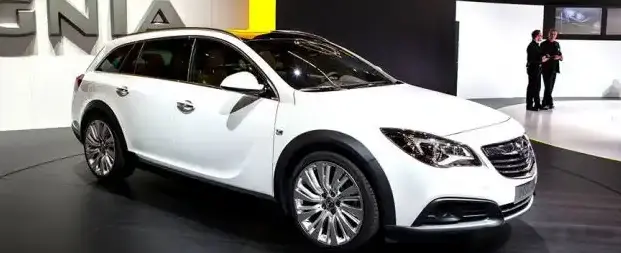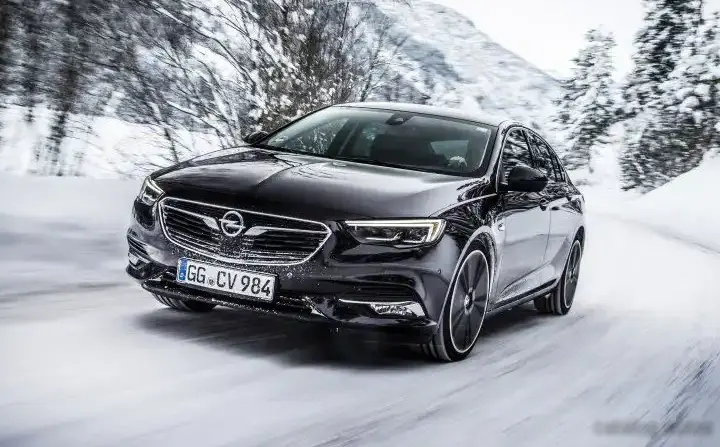
The Opel Insignia Grand Sport (B) 2.0d BiTurbo 4×4 Automatic, produced from April 2019 to February 2020, represents a high-performance variant within the second generation of Opel’s flagship D-segment hatchback. Positioned as a premium offering, this model combined a potent twin-turbocharged diesel engine with an eight-speed automatic transmission and all-wheel drive, targeting buyers seeking both performance and all-weather capability. It was a key model in Opel’s lineup during a period of transition under PSA Group ownership, showcasing the brand’s engineering capabilities. The Insignia Grand Sport competed with vehicles like the Ford Mondeo, Volkswagen Passat, and Mazda 6, offering a distinctive blend of style, space, and technology.
Technical Specifications
| Brand | Opel |
| Model | Insignia |
| Generation | Insignia Grand Sport (B) |
| Type (Engine) | 2.0d BiTurbo (210 Hp) 4×4 Automatic |
| Start of production | April, 2019 |
| End of production | February, 2020 |
| Powertrain Architecture | Internal Combustion engine |
| Body type | Hatchback |
| Seats | 5 |
| Doors | 5 |
| Fuel consumption (urban) | 9.1-9.3 l/100 km (25.8 – 25.3 US mpg) |
| Fuel consumption (extra urban) | 5.4-5.7 l/100 km (43.6 – 41.3 US mpg) |
| Fuel consumption (combined) | 6.8-7.0 l/100 km (34.6 – 33.6 US mpg) |
| CO2 emissions | 178-184 g/km |
| Fuel Type | Diesel |
| Acceleration 0 – 100 km/h | 7.9 sec |
| Acceleration 0 – 62 mph | 7.9 sec |
| Acceleration 0 – 60 mph | 7.5 sec |
| Maximum speed | 233 km/h (144.78 mph) |
| Emission standard | Euro 6c |
| Weight-to-power ratio | 7.9 kg/Hp |
| Weight-to-torque ratio | 3.5 kg/Nm |
| Power | 210 Hp @ 4000 rpm |
| Torque | 480 Nm @ 1500 rpm (354.03 lb.-ft. @ 1500 rpm) |
| Engine layout | Front, Transverse |
| Engine Model/Code | D20DTR |
| Engine displacement | 1956 cm3 (119.36 cu. in.) |
| Number of cylinders | 4 |
| Engine configuration | Inline |
| Cylinder Bore | 83 mm (3.27 in.) |
| Piston Stroke | 90.4 mm (3.56 in.) |
| Compression ratio | 16.5:1 |
| Number of valves per cylinder | 4 |
| Fuel injection system | Diesel Commonrail |
| Engine aspiration | BiTurbo, Intercooler |
| Engine oil capacity | 4.9 l (5.18 US qt | 4.31 UK qt) |
| Coolant | 5.9 l (6.23 US qt | 5.19 UK qt) |
| Kerb Weight | 1658 kg (3655.26 lbs.) |
| Max. weight | 2340 kg (5158.82 lbs.) |
| Max load | 682 kg (1503.55 lbs.) |
| Trunk (boot) space – minimum | 490 l (17.3 cu. ft.) |
| Trunk (boot) space – maximum | 1450 l (51.21 cu. ft.) |
| Fuel tank capacity | 62 l (16.38 US gal | 13.64 UK gal) |
| AdBlue tank | 15 l (3.96 US gal | 3.3 UK gal) |
| Max. roof load | 100 kg (220.46 lbs.) |
| Permitted trailer load with brakes (12%) | 1805 kg (3979.34 lbs.) |
| Permitted trailer load without brakes | 750 kg (1653.47 lbs.) |
| Permitted towbar download | 90 kg (198.42 lbs.) |
| Length | 4897 mm (192.8 in.) |
| Width | 1863 mm (73.35 in.) |
| Width with mirrors folded | 1941 mm (76.42 in.) |
| Width including mirrors | 2093 mm (82.4 in.) |
| Height | 1455 mm (57.28 in.) |
| Wheelbase | 2829 mm (111.38 in.) |
| Front track | 1607 mm (63.27 in.) |
| Rear (Back) track | 1610 mm (63.39 in.) |
| Front overhang | 990 mm (38.98 in.) |
| Rear overhang | 1078 mm (42.44 in.) |
| Minimum turning circle | 11.74 m (38.52 ft.) |
| Drivetrain Architecture | All wheel drive (4×4) |
| Number of gears and type of gearbox | 8 gears, automatic transmission |
| Front brakes | Disc |
| Rear brakes | Disc |
| Tires size | 215/60 R16; 215/55 R17; 225/55 R17; 245/45 R18 |
| Wheel rims size | 6.5J x 16; 7J x 17; 7.5J x 17; 8.5J x 18 |
INTRODUCTION
The Opel Insignia Grand Sport (B) 2.0d BiTurbo 4×4 Automatic, launched in 2019, was a significant iteration of Opel’s D-segment offering. Building upon the success of the original Insignia, the Grand Sport variant emphasized a more dynamic design and enhanced technology. This particular version, equipped with the D20DTR engine and an eight-speed automatic transmission coupled with all-wheel drive, was positioned as a premium trim level, offering a compelling combination of performance, comfort, and practicality. It was designed to appeal to drivers who required a spacious, well-equipped vehicle capable of handling diverse driving conditions.
Powertrain & Engine Architecture
At the heart of the Insignia Grand Sport 2.0d BiTurbo 4×4 Automatic lies the D20DTR engine, a 1956cc inline-four cylinder diesel. This engine utilizes a sophisticated twin-turbocharger setup, employing two turbochargers of different sizes to optimize performance across the rev range. A smaller turbocharger provides quick response at low engine speeds, minimizing turbo lag, while a larger turbocharger delivers increased power at higher speeds. The engine features direct injection with a common rail system, operating at a high compression ratio of 16.5:1. This contributes to both power output and fuel efficiency. The eight-speed automatic transmission, sourced from Aisin, provides smooth and efficient gear changes, contributing to the vehicle’s refined driving experience. The 4×4 system utilizes a multi-plate clutch to distribute torque between the front and rear axles as needed, enhancing traction and stability.
Driving Characteristics
The 210 horsepower and 480 Nm (354 lb-ft) of torque delivered by the 2.0d BiTurbo engine provide brisk acceleration, with a 0-60 mph time of around 7.5 seconds. The eight-speed automatic transmission is well-tuned, offering seamless shifts and contributing to a relaxed cruising experience. The all-wheel-drive system provides excellent grip in various conditions, enhancing confidence on wet or slippery roads. Compared to lower-powered Insignia variants, the 2.0d BiTurbo offers a noticeably more responsive and engaging driving experience. While not as overtly sporty as some competitors, it strikes a good balance between performance and comfort. The gear ratios are optimized for both acceleration and fuel economy, allowing for effortless highway cruising.
Equipment & Trim Levels
The 2.0d BiTurbo 4×4 Automatic trim typically included a high level of standard equipment. This often encompassed features such as leather upholstery, heated front seats, a touchscreen infotainment system with navigation, Apple CarPlay and Android Auto compatibility, and a suite of advanced driver-assistance systems (ADAS) including adaptive cruise control, lane keep assist, and automatic emergency braking. Optional extras could include a panoramic sunroof, premium audio system, and upgraded alloy wheels. The interior design was modern and well-appointed, with a focus on ergonomics and user-friendliness.
Chassis & Braking
The Insignia Grand Sport features a MacPherson strut front suspension and a multi-link rear suspension, providing a comfortable and controlled ride. The chassis was tuned to balance handling and ride quality, offering a good compromise between agility and comfort. The 4×4 system adds to the vehicle’s stability, particularly during cornering. Braking duties are handled by disc brakes on all four wheels, providing ample stopping power. Anti-lock braking system (ABS) and electronic stability control (ESC) are standard features, enhancing safety.
Market Reception & Comparison
The Opel Insignia Grand Sport 2.0d BiTurbo 4×4 Automatic was generally well-received by automotive critics. It was praised for its spacious interior, comfortable ride, and strong performance. The twin-turbo diesel engine was noted for its refinement and efficiency. Compared to other trims in the Insignia lineup, the 2.0d BiTurbo 4×4 Automatic offered a significant performance upgrade, but at a higher price point. Fuel economy was competitive for its class, averaging around 34-35 mpg in combined driving. Reliability reports were generally positive, although some owners reported minor issues with the infotainment system.
Legacy
The Opel Insignia Grand Sport 2.0d BiTurbo 4×4 Automatic represents a well-engineered and capable vehicle. The D20DTR engine, while complex, has proven to be relatively reliable when properly maintained. On the used car market, these models hold their value reasonably well, particularly those with low mileage and a full service history. The combination of performance, practicality, and technology continues to make it an attractive option for buyers seeking a spacious and well-equipped D-segment hatchback. The Insignia, in general, helped solidify Opel’s reputation for building comfortable and capable family cars.