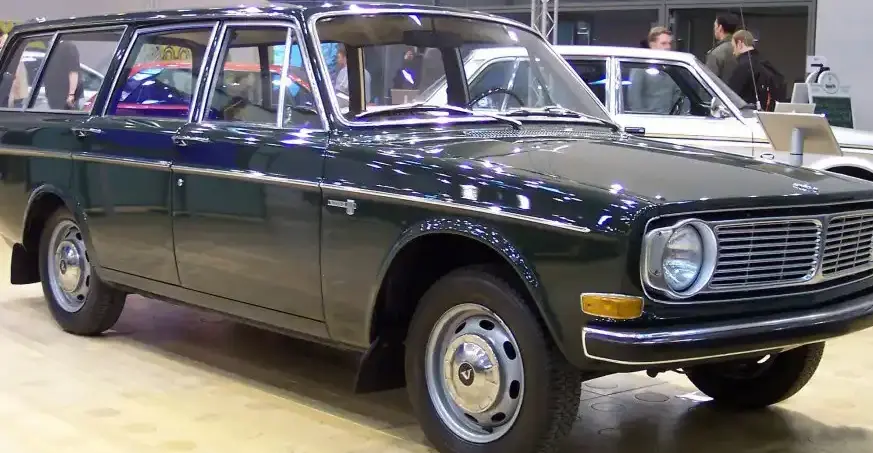
The Volvo 145, part of the broader 140 series, represented Volvo’s entry into the growing station wagon market. Produced from 1972 to 1973, the 2.0 S (100 hp) variant, designated internally as the B20B engine, occupied a middle ground within the 140 Combi lineup, offering a balance between practicality, fuel economy, and reasonable performance. It was built upon the robust and safe engineering principles that defined Volvo during this era, and served as a popular choice for families and those needing a versatile vehicle.
Technical Specifications
| Brand | Volvo |
| Model | 140 |
| Generation | 140 Combi (145) |
| Type (Engine) | 2.0 S (100 Hp) |
| Start of Production | 1972 |
| End of Production | 1973 |
| Powertrain Architecture | Internal Combustion Engine |
| Body Type | Station Wagon (Estate) |
| Seats | 5 |
| Doors | 5 |
| Fuel Type | Petrol (Gasoline) |
| Power | 100 Hp |
| Engine Model/Code | B20B |
| Engine Aspiration | Naturally Aspirated |
| Engine Oil Capacity | 3.8 l (4.02 US qt | 3.34 UK qt) |
| Coolant Capacity | 8.6 l (9.09 US qt | 7.57 UK qt) |
| Fuel Tank Capacity | 58 l (15.32 US gal | 12.76 UK gal) |
Powertrain & Engine Architecture
The heart of the 145 2.0 S was the Volvo B20B engine, a 1,986 cc (121.1 cubic inch) inline-four cylinder powerplant. This engine was a further development of the earlier B20 series, known for its oversquare design (88.0 mm bore and 80.0 mm stroke) and robust construction. The B20B featured a cast iron block and cylinder head, contributing to its durability. Fuel delivery was managed by a Solex VDAB 36D carburetor, a common setup for the time. The engine utilized a pushrod-operated overhead valve (OHV) valvetrain, a relatively simple and reliable design.
The 100 hp output was achieved at 5,200 rpm, with peak torque of 128 lb-ft (174 Nm) arriving at 3,000 rpm. This engine was mated to a three-speed automatic transmission with overdrive. This transmission, while providing convenience, was not known for its sporty performance. It was geared towards smooth operation and fuel efficiency rather than rapid acceleration. The automatic transmission featured a torque converter, which multiplied engine torque at low speeds, aiding in initial acceleration, but also introduced some efficiency losses.
Driving Characteristics
The 145 2.0 S Automatic offered a comfortable, if not particularly exhilarating, driving experience. The automatic transmission smoothed out power delivery, making it easy to drive in city traffic. However, the 100 hp engine and the weight of the station wagon (approximately 3,150 lbs) meant that acceleration was modest. Passing maneuvers required careful planning, and the car felt noticeably slower than its manual transmission counterparts or the higher-output 145 models. The overdrive function in the automatic transmission helped improve fuel economy on highway journeys, but also reduced acceleration in higher gears. The steering was relatively heavy, typical of Volvo’s of this era, but provided good feedback. The suspension, consisting of independent front suspension with coil springs and a solid rear axle with leaf springs, offered a comfortable ride, absorbing bumps and imperfections in the road effectively.
Equipment & Trim Levels
The 145 2.0 S Automatic was positioned as a mid-range trim level. Standard equipment included cloth upholstery, a basic AM radio, and manually adjustable seats. The interior was functional and durable, prioritizing practicality over luxury. Options included a vinyl roof, upgraded audio systems, and power steering. The dashboard layout was simple and straightforward, with clearly marked gauges for speed, fuel level, coolant temperature, and oil pressure. The 145 was renowned for its safety features, even by the standards of the time. These included seat belts for all occupants, a collapsible steering column, and reinforced body structure designed to absorb impact energy in the event of a collision.
Chassis & Braking
The 145 2.0 S utilized a body-on-frame construction, providing a robust and durable chassis. The front suspension featured independent coil springs and wishbones, while the rear suspension employed a solid axle with leaf springs. This setup provided a comfortable ride and good load-carrying capacity. Braking was accomplished via disc brakes on the front wheels and drum brakes on the rear wheels. The braking system was hydraulically operated and provided adequate stopping power for the vehicle’s weight and performance. A stabilizer bar was fitted to the front suspension to reduce body roll during cornering.
Market Reception & Comparison
The Volvo 145 2.0 S Automatic was generally well-received by critics and consumers alike. It was praised for its practicality, safety, and durability. However, the automatic transmission and relatively low horsepower were points of criticism. Compared to the manual transmission versions of the 145, the automatic was noticeably slower and less engaging to drive. The higher-output 145 models, such as the 164 with its V6 engine, offered significantly more performance, but at a higher price point. Fuel economy was reasonable for the time, averaging around 18-22 mpg in mixed driving conditions. The 145 2.0 S Automatic appealed to buyers who prioritized comfort and convenience over outright performance.
Legacy
The Volvo 145 2.0 S Automatic, while not the most powerful or sporty variant of the 140 series, remains a respected and sought-after classic car. The B20B engine is known for its reliability and longevity, and many examples are still on the road today. Parts availability is generally good, thanks to a strong aftermarket support network. The 145’s reputation for safety and durability has contributed to its enduring appeal. In the used car market, well-maintained examples of the 145 2.0 S Automatic command a reasonable price, reflecting their historical significance and enduring quality. It represents a pivotal moment in Volvo’s history, solidifying their reputation for building safe, reliable, and practical vehicles.