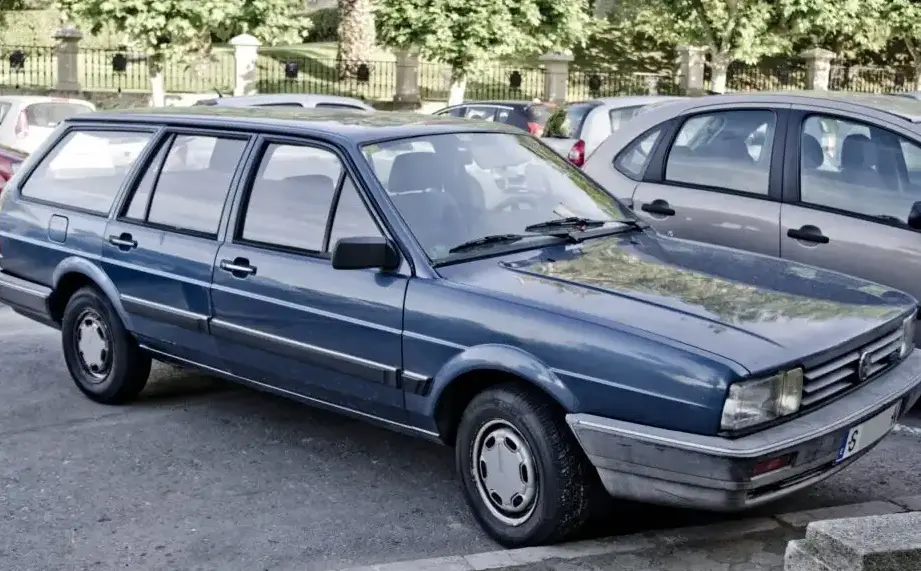
The Volkswagen Passat Variant (B2) 2.2, produced between 1985 and 1988, represents a significant iteration of Volkswagen’s popular mid-size family car. This specific variant, powered by the 115 horsepower 2.2-liter engine, occupied a middle ground in the B2 Passat lineup, offering a balance between performance and affordability. The B2 generation, introduced in 1981, was a substantial redesign of the original Passat, moving to a front-wheel-drive layout and offering improved space and comfort. The “Variant” designation denoted the station wagon (estate) body style, a popular choice in European markets for its practicality. This model was primarily aimed at families and those requiring a versatile vehicle capable of carrying both passengers and cargo.
Technical Specifications
| Brand | Volkswagen |
| Model | Passat |
| Generation | Passat Variant (B2) |
| Type (Engine) | 2.2 (115 Hp) |
| Start of production | 1985 |
| End of production | 1988 |
| Powertrain Architecture | Internal Combustion engine |
| Body type | Station wagon (estate) |
| Seats | 5 |
| Doors | 5 |
| Fuel Type | Petrol (Gasoline) |
| Power | 115 Hp |
| Engine Model/Code | KX |
| Engine aspiration | Naturally aspirated engine |
| Engine oil capacity | 3 l (3.17 US qt | 2.64 UK qt) |
| Coolant capacity | 4 l (4.23 US qt | 3.52 UK qt) |
| Trunk (boot) space – minimum | 540 l (19.07 cu. ft.) |
| Trunk (boot) space – maximum | 1811 l (63.95 cu. ft.) |
| Fuel tank capacity | 70 l (18.49 US gal | 15.4 UK gal) |
| Length | 4545 mm (178.94 in.) |
| Width | 1695 mm (66.73 in.) |
| Wheelbase | 2555 mm (100.59 in.) |
Powertrain & Engine Architecture
The heart of the Passat Variant 2.2 was the KX engine, a 2.2-liter inline-four cylinder gasoline engine. This engine was a naturally aspirated unit, meaning it did not employ a turbocharger or supercharger. It featured a cast iron block and an aluminum cylinder head, a common configuration for engines of this era. Fuel delivery was managed by Bosch mechanical fuel injection, a system that offered improved efficiency and reliability compared to carburetors. The engine utilized a single overhead camshaft (SOHC) valvetrain, operating two valves per cylinder. While not particularly high-tech by modern standards, the KX engine was known for its durability and relatively smooth operation. The engine was typically paired with a four-speed automatic transmission, although a five-speed manual transmission was also available. The automatic transmission was a conventional hydraulic unit, offering smooth but not particularly quick shifts.
Driving Characteristics
The 115 hp output of the 2.2-liter engine, coupled with the four-speed automatic transmission, resulted in a driving experience geared towards comfort and practicality rather than outright performance. Acceleration was adequate for everyday driving, but overtaking maneuvers required planning. The automatic transmission’s gear ratios were optimized for fuel economy and smooth cruising, rather than rapid acceleration. Compared to the more powerful GTI variants or even the diesel-powered Passats, the 2.2 automatic felt noticeably slower. However, it offered a more relaxed driving experience, particularly on long journeys. The suspension, while comfortable, wasn’t particularly sporty, prioritizing ride quality over handling precision. The steering was light and easy, making it well-suited for urban driving.
Equipment & Trim Levels
The Passat Variant 2.2 typically came with a reasonable level of standard equipment for its time. This included cloth upholstery, a basic stereo system, and power-assisted steering. Air conditioning was often an optional extra, as were features like electric windows and central locking. The interior design was functional and straightforward, with a focus on ergonomics. Trim levels varied depending on the market, but generally, the 2.2 variant occupied a mid-range position in the lineup. Higher-spec models featured upgraded upholstery, more comprehensive stereo systems, and additional convenience features. The dashboard layout was typical of early 1980s Volkswagen designs, with a clear instrument cluster and logically arranged controls.
Chassis & Braking
The B2 Passat Variant featured an independent suspension system at the front, utilizing MacPherson struts and stabilizer bar. The rear suspension employed a semi-independent torsion beam axle, a cost-effective and space-saving design. Braking was typically accomplished with disc brakes at the front and drum brakes at the rear. The braking system was adequate for the vehicle’s weight and performance, but lacked the stopping power of more modern systems. The steering was a recirculating ball system, providing a relatively indirect feel. The chassis was designed to provide a comfortable ride and reasonable handling, but it wasn’t particularly sporty or agile.
Market Reception & Comparison
The Passat Variant 2.2 was generally well-received by automotive critics as a practical and comfortable family car. It was praised for its spacious interior, large cargo capacity, and relatively fuel-efficient engine. However, some critics noted its lack of performance compared to other variants in the lineup. Compared to the 1.8-liter models, the 2.2 offered more power and a more relaxed driving experience, but at a slightly higher price. The diesel-powered Passats offered superior fuel economy, but were often noisier and less refined. The 2.2 automatic was seen as a good compromise for buyers who wanted a comfortable and practical car without sacrificing too much performance.
Legacy
The Volkswagen Passat Variant (B2) 2.2, while not the most exciting version of the B2 Passat, remains a popular choice among classic car enthusiasts. The KX engine is known for its reliability and relatively simple maintenance requirements. Parts availability is generally good, although some components may be becoming increasingly difficult to find. Today, well-maintained examples of the Passat Variant 2.2 are sought after by collectors and enthusiasts who appreciate their classic styling and practicality. The B2 Passat Variant played a significant role in establishing Volkswagen’s reputation for building high-quality, durable, and versatile family cars, and the 2.2 variant represents a solid and dependable option within that lineage.