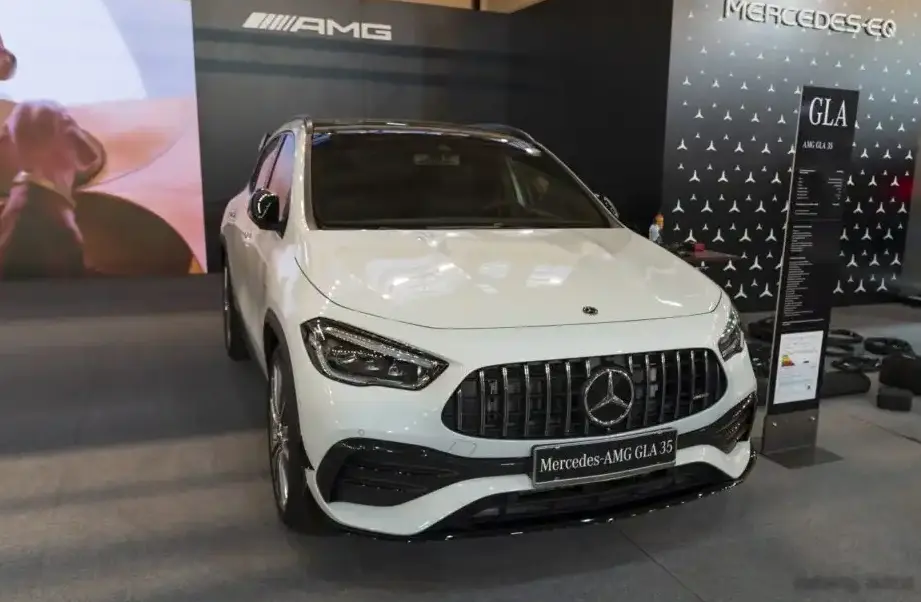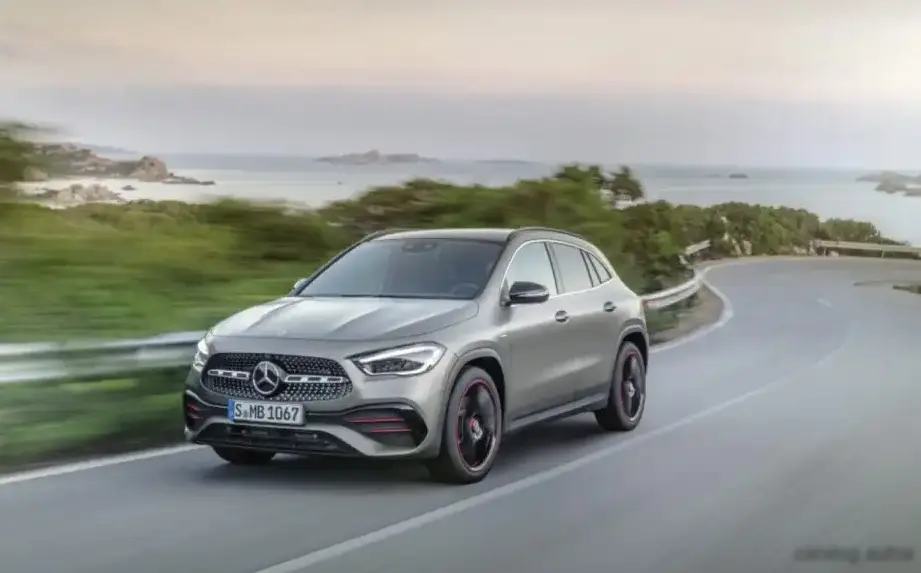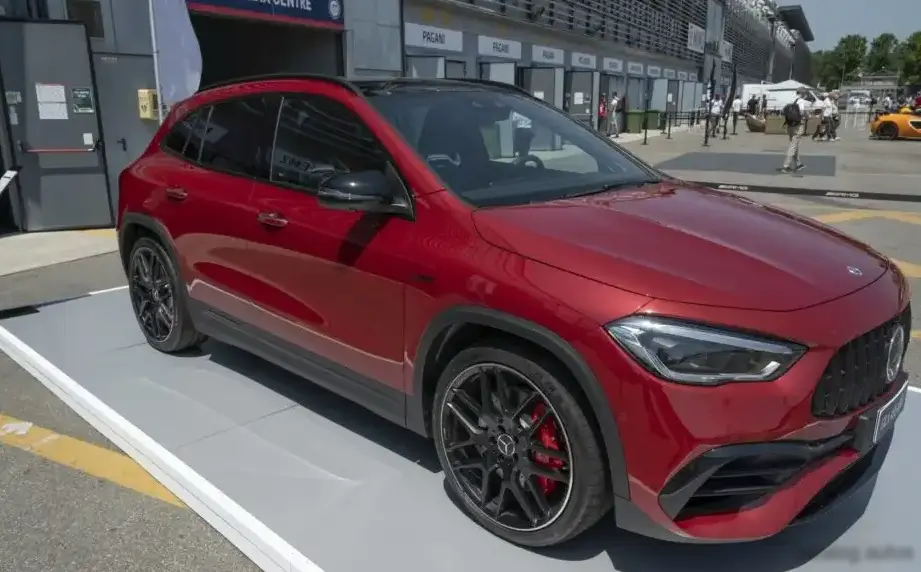
The Mercedes-Benz GLA-Class (X156) GLA 250, equipped with a 211 horsepower engine and a 7G-DCT dual-clutch transmission, was a key model in Mercedes-Benz’s expansion into the compact luxury crossover segment. Produced from December 2013 through 2017, the GLA 250 aimed to attract a younger demographic to the brand while offering a more accessible entry point into the Mercedes-Benz lineup. It was built on the MFA (Modular Front-wheel drive Architecture) platform, shared with other compact models like the A-Class and CLA, and represented a significant step for Mercedes-Benz in offering a versatile, smaller SUV.
Technical Specifications
| Brand | Mercedes-Benz |
| Model | GLA |
| Generation | GLA (X156) |
| Type (Engine) | GLA 250 (211 Hp) 7G-DCT |
| Start of production | December, 2013 |
| End of production | 2017 |
| Powertrain Architecture | Internal Combustion engine |
| Body type | SUV |
| Seats | 5 |
| Doors | 5 |
| Fuel consumption (economy) – urban (NEDC) | 8.3 l/100 km (28.3 US mpg, 34 UK mpg, 12 km/l) |
| Fuel consumption (economy) – extra urban (NEDC) | 4.7-4.8 l/100 km (50 – 49 US mpg, 60.1 – 58.9 UK mpg, 21.3 – 20.8 km/l) |
| Fuel consumption (economy) – combined (NEDC) | 6-6.1 l/100 km (39.2 – 38.6 US mpg, 47.1 – 46.3 UK mpg, 16.7 – 16.4 km/l) |
| CO2 emissions (NEDC) | 141-143 g/km |
| Fuel Type | Petrol (Gasoline) |
| Acceleration 0 – 100 km/h | 7.2 sec |
| Acceleration 0 – 62 mph | 7.2 sec |
| Acceleration 0 – 60 mph | 6.8 sec |
| Maximum speed | 235 km/h (146.02 mph) |
| Emission standard | Euro 6 |
| Weight-to-power ratio | 6.5 kg/Hp, 152.9 Hp/tonne |
| Weight-to-torque ratio | 3.9 kg/Nm, 253.6 Nm/tonne |
| Power | 211 Hp @ 5500 rpm |
| Power per litre | 106 Hp/l |
| Torque | 350 Nm @ 1200-4000 rpm (258.15 lb.-ft. @ 1200-4000 rpm) |
| Engine layout | Front, Transverse |
| Engine Model/Code | M 270.920 |
| Engine displacement | 1991 cm3 (121.5 cu. in.) |
| Number of cylinders | 4 |
| Engine configuration | Inline |
| Cylinder Bore | 83 mm (3.27 in.) |
| Piston Stroke | 92 mm (3.62 in.) |
| Compression ratio | 9.8:1 |
| Number of valves per cylinder | 4 |
| Fuel injection system | Direct injection |
| Engine aspiration | Turbocharger, Intercooler |
| Valvetrain | DOHC |
| Engine oil capacity | 5.6 l (5.92 US qt | 4.93 UK qt) |
| Kerb Weight | 1380 kg (3042.38 lbs.) |
| Max. weight | 1940 kg (4276.97 lbs.) |
| Max load | 560 kg (1234.59 lbs.) |
| Trunk (boot) space – minimum | 421 l (14.87 cu. ft.) |
| Trunk (boot) space – maximum | 1235 l (43.61 cu. ft.) |
| Fuel tank capacity | 50 l (13.21 US gal | 11 UK gal) |
| Max. roof load | 75 kg (165.35 lbs.) |
| Permitted trailer load with brakes (12%) | 1500 kg (3306.93 lbs.) |
| Permitted trailer load without brakes | 725 kg (1598.35 lbs.) |
| Permitted towbar download | 75 kg (165.35 lbs.) |
| Length | 4417 mm (173.9 in.) |
| Width | 1804 mm (71.02 in.) |
| Width including mirrors | 2022 mm (79.61 in.) |
| Height | 1494 mm (58.82 in.) |
| Wheelbase | 2699 mm (106.26 in.) |
| Front track | 1569 mm (61.77 in.) |
| Rear (Back) track | 1560 mm (61.42 in.) |
| Front overhang | 906 mm (35.67 in.) |
| Rear overhang | 812 mm (31.97 in.) |
| Drag coefficient (Cd) | 0.31 |
| Minimum turning circle (turning diameter) | 11.84 m (38.85 ft.) |
| Approach angle | 15.8° |
| Departure angle | 21.5° |
| Drivetrain Architecture | The Internal combustion engine (ICE) drives the front wheels of the vehicle. |
| Drive wheel | Front wheel drive |
| Number of gears and type of gearbox | 7 gears, automatic transmission G-DCT |
| Front suspension | Independent, type McPherson with coil spring and anti-roll bar |
| Rear suspension | Wishbone, Transverse stabilizer, Trailing arm |
| Front brakes | Ventilated discs |
| Rear brakes | Disc |
| Assisting systems | ABS (Anti-lock braking system) |
| Steering type | Steering rack and pinion |
| Power steering | Electric Steering |
| Tires size | 215/60 R17; 215/55 R18; 235/50 R18; 235/45 R19 |
| Wheel rims size | 6.5J x 17; 6.5J x 18; 7J x 18; 8J x 19 |
Powertrain & Engine Architecture
The GLA 250’s heart is the M270.920 2.0-liter inline-four cylinder engine. This engine is a member of Mercedes-Benz’s modular engine family, known for its compact design and efficiency. It features direct fuel injection, a single turbocharger with an intercooler, and a dual overhead camshaft (DOHC) valvetrain. The engine produces 211 horsepower at 5500 rpm and 350 Nm (258 lb-ft) of torque between 1200 and 4000 rpm. This broad torque curve contributes to responsive acceleration in everyday driving situations. The 7G-DCT (7-speed dual-clutch transmission) is a crucial component of the powertrain. This transmission offers quick and smooth gear changes, enhancing both performance and fuel economy. It operates with two separate clutches, one for even-numbered gears and one for odd-numbered gears, allowing for pre-selection of the next gear and minimizing interruption in power delivery.
Driving Characteristics
The GLA 250 7G-DCT delivers a comfortable and refined driving experience. While not as overtly sporty as some of its competitors, the combination of the turbocharged engine and the dual-clutch transmission provides brisk acceleration. The 0-60 mph sprint takes approximately 6.8 seconds. The 7G-DCT transmission is well-tuned for both city and highway driving, offering seamless shifts in automatic mode and responsive manual control via steering wheel-mounted paddle shifters. Compared to the base GLA 200 models, the 250 offers a noticeable performance upgrade. It also feels more composed than models with manual transmissions, thanks to the DCT’s efficiency. However, it doesn’t quite match the performance of the more powerful GLA 45 AMG variant.
Equipment & Trim Levels
The GLA 250 typically came well-equipped as standard. Features included automatic climate control, a multi-function steering wheel, power-adjustable front seats, and the Mercedes-Benz COMAND infotainment system with a 5.8-inch display screen. Optional extras included a larger 8-inch display, navigation, a panoramic sunroof, leather upholstery, and a premium sound system. Trim levels varied slightly by market, but generally, the GLA 250 sat in the mid-range of the lineup, offering a balance of luxury and performance. Packages like the Premium Package and the Technology Package added further convenience and safety features.
Chassis & Braking
The GLA 250 utilizes a McPherson strut front suspension and a multi-link rear suspension. This setup provides a good balance between ride comfort and handling. The suspension is tuned to prioritize comfort, but it still offers decent body control in corners. The GLA 250 is equipped with ventilated disc brakes at the front and solid disc brakes at the rear. Anti-lock braking system (ABS) and electronic stability control (ESC) are standard safety features. The steering is electrically assisted, providing a light and precise feel.
Market Reception & Comparison
The GLA 250 was generally well-received by automotive critics. It was praised for its stylish design, comfortable interior, and refined driving experience. The 2.0-liter engine and 7G-DCT transmission were considered a good match for the vehicle’s size and weight. Fuel economy was also a strong point, with combined figures ranging from 38.6 to 39.2 US mpg. Compared to rivals like the Audi Q3 and BMW X1, the GLA 250 offered a more luxurious interior and a more comfortable ride. However, some critics noted that the rear seat space was somewhat limited.
Legacy
The GLA 250 (X156) has proven to be a relatively reliable vehicle in the used car market. The M270 engine, while not without its potential issues (such as carbon buildup on the intake valves), is generally durable when properly maintained. The 7G-DCT transmission is also known for its reliability. Regular maintenance, including oil changes and fluid flushes, is crucial for ensuring the longevity of the powertrain. Today, the GLA 250 remains a popular choice for buyers looking for a compact luxury crossover with a good balance of style, comfort, and performance.