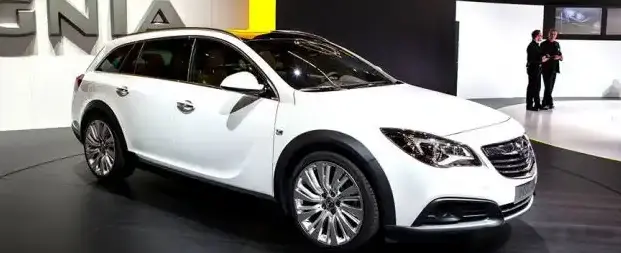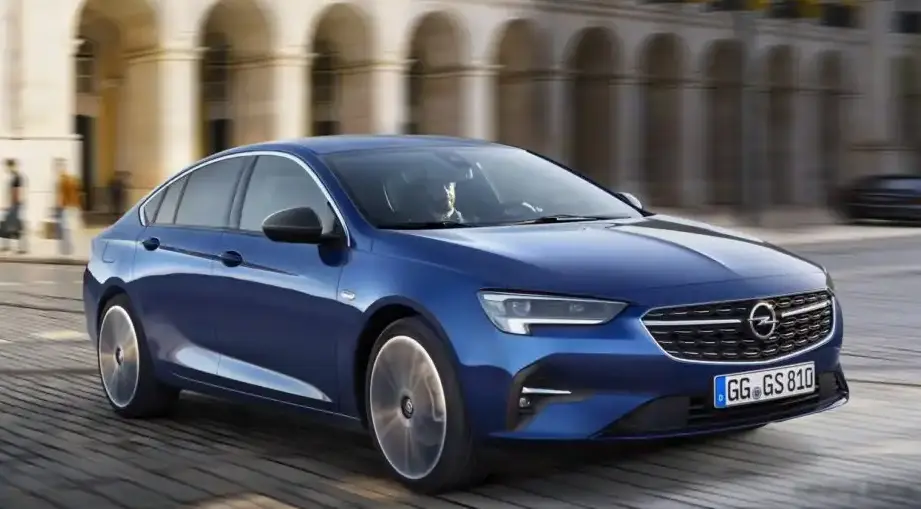
The Opel Insignia Grand Sport (B, facelift 2020) 1.5d (122 Hp) Automatic represents a mid-cycle refresh of Opel’s flagship liftback, introduced in March 2020. Positioned as a fuel-efficient and comfortable option within the Insignia range, this variant aimed to appeal to buyers prioritizing practicality and lower running costs. It falls within the broader B generation of the Insignia, which debuted in 2017, and benefits from the styling and technological updates introduced with the facelift. The Insignia, in general, served as Opel’s competitor in the D-segment, challenging vehicles like the Ford Mondeo, Volkswagen Passat, and Peugeot 508, primarily targeting the European market. This specific 1.5 diesel automatic configuration was designed to offer a balance between performance and economy, catering to drivers who frequently undertake long journeys.
Technical Specifications
| Brand | Opel |
| Model | Insignia |
| Generation | Insignia Grand Sport (B, facelift 2020) |
| Type (Engine) | 1.5d (122 Hp) Automatic |
| Start of production | March, 2020 |
| Powertrain Architecture | Internal Combustion engine |
| Body type | Liftback |
| Seats | 5 |
| Doors | 5 |
| Fuel consumption at Low speed (WLTP) | 7.3-7.9 l/100 km (32.2 – 29.8 US mpg, 38.7 – 35.8 UK mpg, 13.7 – 12.7 km/l) |
| Fuel consumption at Medium speed (WLTP) | 5.2-5.8 l/100 km (45.2 – 40.6 US mpg, 54.3 – 48.7 UK mpg, 19.2 – 17.2 km/l) |
| Fuel consumption at high speed (WLTP) | 4.1-4.8 l/100 km (57.4 – 49 US mpg, 68.9 – 58.9 UK mpg, 24.4 – 20.8 km/l) |
| Fuel consumption at very high speed (WLTP) | 4.9-6 l/100 km (48 – 39.2 US mpg, 57.6 – 47.1 UK mpg, 20.4 – 16.7 km/l) |
| Combined fuel consumption (WLTP) | 5-5.8 l/100 km (47 – 40.6 US mpg, 56.5 – 48.7 UK mpg, 20 – 17.2 km/l) |
| CO2 emissions (WLTP) | 132-153 g/km |
| Fuel Type | Diesel |
| Acceleration 0 – 100 km/h | 12.2 sec |
| Acceleration 0 – 62 mph | 12.2 sec |
| Acceleration 0 – 60 mph | 11.6 sec |
| Maximum speed | 200 km/h (124.27 mph) |
| Emission standard | Euro 6d |
| Weight-to-power ratio | 12.5 kg/Hp, 80.3 Hp/tonne |
| Weight-to-torque ratio | 5.3 kg/Nm, 187.5 Nm/tonne |
| Power | 122 Hp @ 3250 rpm |
| Power per litre | 81.6 Hp/l |
| Torque | 285 Nm @ 1750-2750 rpm (210.21 lb.-ft. @ 1750-2750 rpm) |
| Engine layout | Front, Transverse |
| Engine Model/Code | F15DVH |
| Engine displacement | 1496 cm3 (91.29 cu. in.) |
| Number of cylinders | 3 |
| Engine configuration | Inline |
| Number of valves per cylinder | 4 |
| Fuel injection system | Diesel Commonrail |
| Engine aspiration | Turbocharger, Intercooler |
| Engine oil capacity | 4.25 l (4.49 US qt | 3.74 UK qt) |
| Kerb Weight | 1520 kg (3351.03 lbs.) |
| Max. weight | 2140 kg (4717.89 lbs.) |
| Max load | 620 kg (1366.87 lbs.) |
| Trunk (boot) space – minimum | 490 l (17.3 cu. ft.) |
| Trunk (boot) space – maximum | 1450 l (51.21 cu. ft.) |
| Fuel tank capacity | 62 l (16.38 US gal | 13.64 UK gal) |
| Max. roof load | 60 kg (132.28 lbs.) |
| Permitted trailer load with brakes (12%) | 1500 kg (3306.93 lbs.) |
| Permitted trailer load without brakes | 730 kg (1609.37 lbs.) |
| Permitted towbar download | 75 kg (165.35 lbs.) |
| Length | 4897 mm (192.8 in.) |
| Width | 1863 mm (73.35 in.) |
| Width with mirrors folded | 1941 mm (76.42 in.) |
| Width including mirrors | 2093 mm (82.4 in.) |
| Height | 1455 mm (57.28 in.) |
| Wheelbase | 2829 mm (111.38 in.) |
| Front track | 1607 mm (63.27 in.) |
| Rear (Back) track | 1610 mm (63.39 in.) |
| Front overhang | 990 mm (38.98 in.) |
| Rear overhang | 1078 mm (42.44 in.) |
| Minimum turning circle (turning diameter) | 11.74 m (38.52 ft.) |
| Drivetrain Architecture | The Internal combustion engine (ICE) drives the front wheels of the vehicle. |
| Drive wheel | Front wheel drive |
| Number of gears and type of gearbox | 8 gears, automatic transmission |
| Front brakes | Ventilated discs |
| Rear brakes | Disc |
| Assisting systems | ABS (Anti-lock braking system) |
| Steering type | Steering rack and pinion |
| Power steering | Electric Steering |
| Tires size | 215/55 R17; 245/45 R18; 245/35 R20 |
| Wheel rims size | 7J x 17; 8.5J x 18; 8.5J x 20 |
Powertrain & Engine Architecture
The heart of this Insignia variant is the F15DVH, a 1.5-liter inline-three cylinder turbocharged diesel engine. This engine is part of Opel’s (and subsequently Stellantis’) modular engine family, designed for efficiency and reduced emissions. The engine utilizes a diesel commonrail fuel injection system, delivering fuel at extremely high pressure for optimized combustion. A turbocharger with an intercooler is employed to boost power output and improve torque across a wider rev range. The engine produces 122 horsepower at 3250 rpm and 285 Nm (210 lb-ft) of torque between 1750 and 2750 rpm. Paired with this engine is an eight-speed automatic transmission, providing smooth gear changes and contributing to fuel efficiency. This transmission is a conventional torque-converter automatic, prioritizing comfort over outright performance.
Driving Characteristics
The 1.5-liter diesel automatic Insignia Grand Sport delivers a comfortable and refined driving experience, prioritizing fuel economy over sporty performance. Acceleration from 0-100 km/h (0-62 mph) takes around 12.2 seconds, which is adequate for everyday driving but not particularly brisk. The eight-speed automatic transmission is well-tuned, offering smooth shifts and keeping the engine within its optimal torque band. The gear ratios are geared towards maximizing fuel efficiency, meaning the engine doesn’t rev excessively during cruising. Compared to higher-output versions of the Insignia, such as those with the 2.0-liter petrol engine, this variant feels noticeably less powerful, especially during overtaking maneuvers. However, the readily available torque from the diesel engine provides sufficient pulling power for most situations. The steering is light and precise, making it easy to maneuver in urban environments.
Equipment & Trim Levels
The 1.5d Automatic trim typically came equipped with a respectable level of standard features. These generally included air conditioning, a touchscreen infotainment system with Apple CarPlay and Android Auto compatibility, Bluetooth connectivity, cruise control, and a suite of safety features such as automatic emergency braking and lane departure warning. Interior upholstery was typically cloth, with options for leather upgrades. Higher trim levels, such as ‘Business Edition’ or ‘Elite’, added features like heated seats, a panoramic sunroof, and more advanced driver-assistance systems. Optional extras included a premium audio system, adaptive cruise control, and parking assist.
Chassis & Braking
The Insignia Grand Sport features a front-wheel-drive layout with a MacPherson strut suspension at the front and a multi-link suspension at the rear. This setup provides a good balance between ride comfort and handling. The suspension is tuned to prioritize comfort, absorbing bumps and imperfections in the road surface effectively. Braking duties are handled by ventilated discs at the front and solid discs at the rear. ABS (Anti-lock Braking System) is standard, along with electronic stability control. The weight distribution is fairly balanced, contributing to predictable handling characteristics.
Market Reception & Comparison
The Opel Insignia Grand Sport 1.5d Automatic was generally well-received by automotive critics as a practical and fuel-efficient option. Reviewers praised its comfortable ride, spacious interior, and generous equipment levels. However, some criticized its relatively modest performance compared to more powerful rivals. In terms of fuel economy, this variant consistently outperformed petrol-powered Insignias, making it an attractive choice for high-mileage drivers. Compared to other diesel-powered Insignia models, such as the 1.6-liter diesel, the 1.5-liter engine offered a slight improvement in fuel efficiency and refinement. Reliability reports suggest that the 1.5-liter diesel engine is generally reliable, although regular servicing is essential to maintain optimal performance.
Legacy
The Opel Insignia Grand Sport, including the 1.5d Automatic variant, has established itself as a popular choice in the European D-segment. On the used car market, these models offer good value for money, providing a comfortable and well-equipped driving experience at an affordable price. The 1.5-liter diesel engine has proven to be a durable and efficient powerplant, capable of covering high mileages with proper maintenance. While newer models with more advanced technology have since been introduced, the Insignia Grand Sport remains a competitive option for buyers seeking a spacious, practical, and fuel-efficient family car.