
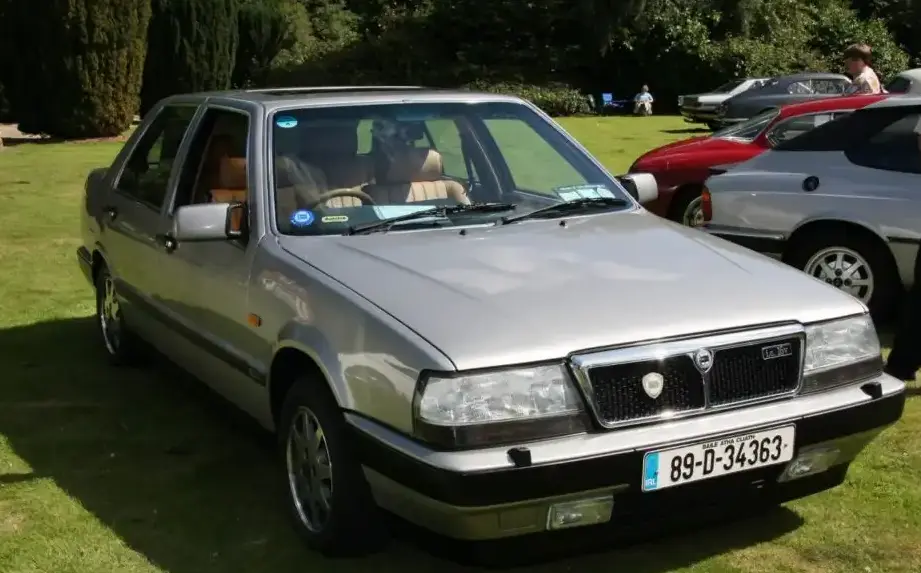
The Lancia Thema (834) 3000 V6, produced between 1992 and 1994, represents the pinnacle of Lancia’s flagship sedan during its final generation. This variant, powered by a 3.0-liter V6 engine producing 171 horsepower, was positioned as the premium offering within the 834 series, building upon the earlier successes of the Thema platform which debuted in 1984. The 834 series, a collaborative effort with Saab, Fiat, and Alfa Romeo (sharing the Type Four platform), aimed to provide a sophisticated and technologically advanced alternative in the executive sedan segment. The 3000 V6 was intended to compete with established German and British luxury cars, offering a blend of Italian style, comfort, and performance.
Technical Specifications
| Brand | Lancia |
| Model | Thema |
| Generation | Thema (834) |
| Type (Engine) | 3000 V6 (171 Hp) |
| Start of Production | 1992 |
| End of Production | 1994 |
| Powertrain Architecture | Internal Combustion Engine |
| Body Type | Sedan |
| Fuel Type | Petrol (Gasoline) |
| Power | 171 Hp |
| Engine Model/Code | 834 F.000 |
| Engine Aspiration | Naturally Aspirated |
| Engine Oil Capacity | 6.6 l (6.97 US qt | 5.81 UK qt) |
| Coolant Capacity | 10 l (10.57 US qt | 8.8 UK qt) |
Powertrain & Engine Architecture
The heart of the Thema 3000 V6 is the 834 F.000 engine, a 2957 cc (180.6 cu in) 60-degree V6. This engine is notable for its all-aluminum construction, a relatively advanced feature for the early 1990s, contributing to a lighter overall weight compared to iron-block alternatives. The engine utilizes a single overhead camshaft (SOHC) design per cylinder bank, operating with two valves per cylinder. Fuel delivery is managed by Bosch Motronic fuel injection, a sophisticated system for its time, optimizing fuel efficiency and emissions while providing smooth power delivery. The engine’s design prioritized refinement and torque over outright peak horsepower. While 171 hp was a respectable figure, the engine produced a substantial 207 lb-ft of torque, providing strong acceleration in everyday driving situations. The Thema 3000 V6 was exclusively offered with a four-speed automatic transmission, designed to provide seamless gear changes and enhance the luxurious driving experience. This transmission, while reliable, wasn’t known for its sportiness, prioritizing comfort over rapid shifts.
Driving Characteristics
The Thema 3000 V6 offered a distinctly grand touring experience. The combination of the V6 engine and the four-speed automatic transmission resulted in smooth, effortless acceleration. The torque-rich engine meant that strong performance was available across a wide RPM range, making overtaking and highway cruising particularly comfortable. However, the automatic transmission’s relatively conservative gearing meant that the car wasn’t particularly quick off the line, and it lacked the responsiveness of a manual transmission. Compared to the earlier, less powerful four-cylinder Thema variants, the 3000 V6 provided a significant performance upgrade, offering a more refined and capable driving experience. The suspension, tuned for comfort, absorbed bumps and imperfections in the road effectively, contributing to a relaxed ride quality. Steering was power-assisted, providing light and easy maneuverability, although it lacked the feedback preferred by more enthusiastic drivers.
Equipment & Trim Levels
As the top-of-the-line Thema variant, the 3000 V6 came generously equipped. Standard features included leather upholstery, power-adjustable front seats, air conditioning, electric windows and mirrors, and a high-quality sound system. The interior trim was typically finished with wood veneer accents, enhancing the luxurious ambiance. Optional extras included a sunroof, upgraded sound systems, and a more comprehensive trip computer. The Thema 3000 V6’s interior was designed to provide a comfortable and refined environment for both driver and passengers, reflecting its positioning as a premium executive sedan. The exterior styling was understated and elegant, with a focus on clean lines and a sophisticated appearance.
Chassis & Braking
The Thema 834 utilized a front-engine, front-wheel-drive layout. The suspension consisted of independent front suspension with MacPherson struts and a semi-independent torsion beam rear suspension. This setup prioritized ride comfort and stability over outright handling prowess. The braking system featured ventilated disc brakes on the front wheels and drum brakes on the rear wheels. Anti-lock braking system (ABS) was standard equipment, enhancing safety and control during emergency braking situations. The Thema’s chassis was robust and well-engineered, providing a solid foundation for the car’s luxurious character. Stabilizer bars were fitted to both the front and rear axles to reduce body roll during cornering.
Market Reception & Comparison
The Lancia Thema 3000 V6 received generally positive reviews from automotive critics. It was praised for its comfortable ride, refined engine, and luxurious interior. However, it was also criticized for its relatively high price and its lack of sporting character compared to some of its German rivals. Compared to the four-cylinder Thema variants, the 3000 V6 offered a significant improvement in performance and refinement, but it also came at a higher cost. Fuel economy was reasonable for a V6 engine of this size, but it was not a primary strength of the car. Reliability was generally good, although the Thema’s complex electronics could occasionally present challenges. The Thema 3000 V6 competed directly with cars like the Alfa Romeo 164, BMW 5 Series, and Mercedes-Benz E-Class.
Legacy
The Lancia Thema 3000 V6 represents a high point in Lancia’s engineering and design capabilities. While production numbers were relatively low, the car has gained a following among enthusiasts who appreciate its unique blend of Italian style, comfort, and performance. The 834 F.000 V6 engine is known for its durability and smooth operation, and well-maintained examples continue to provide reliable service today. In the used car market, the Thema 3000 V6 commands a premium over the lesser-equipped variants, reflecting its rarity and desirability. The car’s legacy is as a sophisticated and luxurious grand tourer that offered a distinctive alternative to the more mainstream executive sedans of its era. Finding parts can be challenging due to the car’s age and limited production, but a dedicated community of owners and specialists exists to support the preservation of these classic Lancias.
