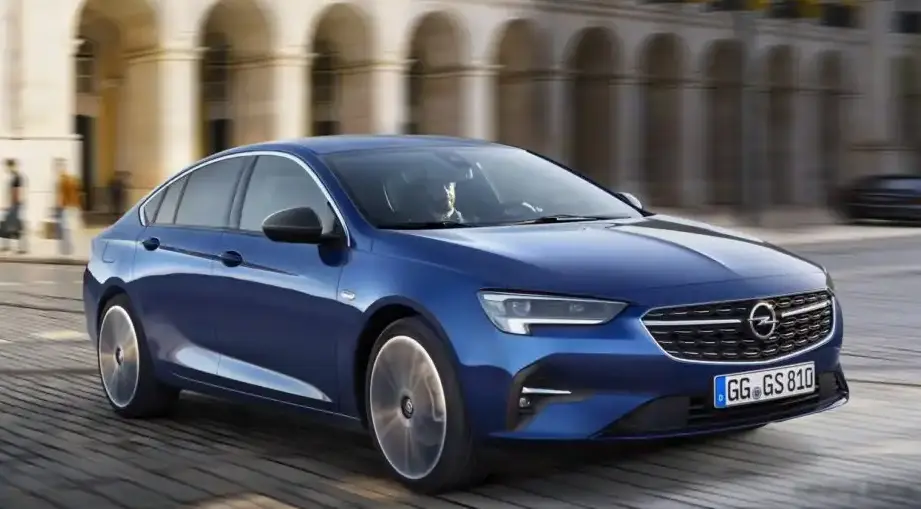
The Opel Insignia Grand Sport, specifically the 2.0 Turbo (200 hp) Automatic variant produced from March 2020 onwards, represents a mid-cycle refresh of the second-generation Insignia (designated as the B model). This liftback, positioned as a mainstream family vehicle in Europe, aimed to blend practicality, comfort, and a degree of sporting appeal. The facelift brought styling updates, enhanced technology, and refinements to the powertrain options, including this 2.0-liter turbocharged engine paired with a nine-speed automatic transmission. It occupied a sweet spot in the Insignia lineup, offering a balance between performance and fuel efficiency, appealing to buyers seeking a more engaging driving experience than the base engine options but without the higher cost of the range-topping trims.
Technical Specifications
| Brand | Opel |
| Model | Insignia |
| Generation | Insignia Grand Sport (B, facelift 2020) |
| Type (Engine) | 2.0 Turbo (200 Hp) Automatic |
| Start of production | March, 2020 |
| Powertrain Architecture | Internal Combustion engine |
| Body type | Liftback |
| Seats | 5 |
| Doors | 5 |
| Fuel consumption (urban) | 8.7 l/100 km (32.5 US mpg, 36.5 UK mpg, 11.5 km/l) |
| Fuel consumption (extra urban) | 4.8-5.1 l/100 km (49-46.1 US mpg, 58.9-55.4 UK mpg, 20.8-19.6 km/l) |
| Fuel consumption (combined) | 6.2-6.4 l/100 km (37.9-36.8 US mpg, 45.6-44.1 UK mpg, 16.1-15.6 km/l) |
| CO2 emissions | 144-149 g/km |
| Fuel Type | Petrol (Gasoline) |
| Acceleration 0 – 100 km/h | 7.7 sec |
| Acceleration 0 – 62 mph | 7.7 sec |
| Acceleration 0 – 60 mph | 7.3 sec |
| Maximum speed | 235 km/h (146.02 mph) |
| Emission standard | Euro 6d |
| Power | 200 Hp @ 4250-6000 rpm |
| Torque | 350 Nm @ 1500-4000 rpm (258.15 lb.-ft. @ 1500-4000 rpm) |
| Engine layout | Front, Transverse |
| Engine Model/Code | F20SHT |
| Engine displacement | 1998 cm3 (121.93 cu. in.) |
| Number of cylinders | 4 |
| Engine configuration | Inline |
| Compression ratio | 10:1 |
| Number of valves per cylinder | 4 |
| Fuel injection system | Direct injection |
| Engine aspiration | Turbocharger, Intercooler |
| Engine oil capacity | 5 l (5.28 US qt | 4.4 UK qt) |
| Trunk (boot) space (minimum) | 490 l (17.3 cu. ft.) |
| Trunk (boot) space (maximum) | 1450 l (51.21 cu. ft.) |
| Fuel tank capacity | 62 l (16.38 US gal | 13.64 UK gal) |
| Length | 4897 mm (192.8 in.) |
| Width | 1863 mm (73.35 in.) |
| Width with mirrors folded | 1941 mm (76.42 in.) |
| Width including mirrors | 2093 mm (82.4 in.) |
| Height | 1455 mm (57.28 in.) |
| Wheelbase | 2829 mm (111.38 in.) |
| Front track | 1607 mm (63.27 in.) |
| Rear track | 1610 mm (63.39 in.) |
| Front overhang | 990 mm (38.98 in.) |
| Rear overhang | 1078 mm (42.44 in.) |
| Minimum turning circle | 11.74 m (38.52 ft.) |
| Drivetrain Architecture | Front wheel drive |
| Number of gears | 9 |
| Gearbox type | Automatic transmission |
| Tire size | 215/55 R17; 245/45 R18; 245/35 R20 |
| Wheel rims size | 7.5J x 17; 8.5J x 18; 8.5J x 20 |
Powertrain & Engine Architecture
At the heart of this Insignia variant lies the F20SHT, a 1.998-liter inline-four cylinder gasoline engine. This engine is part of Opel’s family of turbocharged engines, utilizing direct injection and an intercooled turbocharger to deliver a balance of power and efficiency. The direct injection system, crucial for modern engine performance, allows for precise fuel delivery, optimizing combustion and reducing emissions. The engine’s 10:1 compression ratio is a typical value for a turbocharged engine, balancing performance and reliability. The nine-speed automatic transmission, sourced from Aisin, plays a vital role in maximizing fuel economy and providing smooth gear changes. This transmission offers a wide range of gear ratios, allowing the engine to operate in its most efficient zone more frequently. The Start & Stop system further contributes to fuel savings by automatically shutting off the engine when the vehicle is stationary.
Driving Characteristics
The 200 hp and 350 Nm (258 lb-ft) of torque provide adequate performance for everyday driving and longer journeys. Acceleration from 0-60 mph takes approximately 7.3 seconds, making it reasonably quick for a family liftback. The nine-speed automatic transmission is generally responsive, although some drivers might find it occasionally hesitant during kickdown maneuvers. Compared to the more powerful 260 hp version of the 2.0 Turbo, this variant offers a slightly more relaxed driving experience, prioritizing fuel economy over outright performance. The gear ratios are tuned for efficiency, meaning the engine doesn’t always feel as eager to rev as it might in a sportier application. Compared to the diesel options, the 2.0 Turbo provides a more linear power delivery and a more refined engine note.
Equipment & Trim Levels
The Insignia Grand Sport 2.0 Turbo Automatic typically came well-equipped, even in base trim. Standard features often included automatic climate control, a touchscreen infotainment system with Apple CarPlay and Android Auto compatibility, and a suite of safety features such as automatic emergency braking and lane departure warning. Higher trim levels added features like leather upholstery, heated front seats, a panoramic sunroof, and adaptive cruise control. Interior upholstery was typically cloth on lower trims, upgrading to leather on higher specification models. Dashboard configurations were consistent across the range, with a focus on a clean and modern design.
Chassis & Braking
The Insignia Grand Sport utilizes a front-wheel-drive platform with independent suspension at the front and a multi-link suspension at the rear. This setup provides a comfortable ride quality while maintaining reasonable handling characteristics. Braking systems varied depending on trim level, with lower trims often featuring disc brakes at the front and drum brakes at the rear. Higher trims typically received disc brakes all around. Stabilizer bars were fitted front and rear to reduce body roll during cornering. The steering is electrically assisted, providing a light and precise feel.
Market Reception & Comparison
The Opel Insignia Grand Sport 2.0 Turbo Automatic was generally well-received by automotive critics. It was praised for its spacious interior, comfortable ride, and good fuel economy. However, some reviewers noted that the interior materials weren’t quite as premium as those found in some of its competitors. Compared to rivals like the Ford Mondeo and Volkswagen Passat, the Insignia offered a compelling value proposition, particularly in terms of standard equipment. The 2.0 Turbo Automatic offered a good balance between performance and running costs, making it a popular choice for fleet buyers and private customers alike.
Legacy
The F20SHT engine, while not without its occasional issues (such as potential for timing chain wear in some instances), has proven to be a relatively reliable unit when properly maintained. The nine-speed automatic transmission has also demonstrated good durability. In the used car market, the Insignia Grand Sport 2.0 Turbo Automatic represents a sensible choice for buyers seeking a spacious, comfortable, and well-equipped family car. Its relatively affordable price point and good fuel economy make it an attractive alternative to more expensive rivals. Regular servicing, including oil changes and timing chain inspections, is crucial to ensure the long-term reliability of this powertrain.