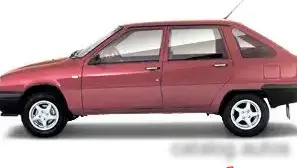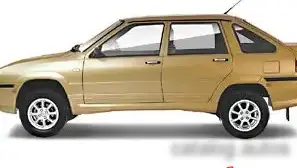
The Izh 2126, specifically the 4×4 variant powered by the 1.7-liter engine producing 85 horsepower, represents a unique chapter in Russian automotive history. Produced from 1997 to 2005, this vehicle was a direct descendant of the iconic Izh Kombi, but with the added capability of four-wheel drive. It occupied a niche position, offering affordable all-wheel drive functionality to a market with limited options, primarily serving rural areas and those needing a robust vehicle for challenging road conditions. The 2126 4×4 aimed to bridge the gap between passenger car comfort and off-road utility, though its execution was often criticized for its dated technology and build quality.
Technical Specifications
| Brand | Izh |
| Model | 2126 |
| Generation | 2126 4×4 |
| Type (Engine) | 1.7 (85 Hp) |
| Start of production | 1997 |
| End of production | 2005 |
| Powertrain Architecture | Internal Combustion engine |
| Body type | Hatchback |
| Seats | 5 |
| Doors | 5 |
| Fuel consumption (urban) | 11 l/100 km (21.4 US mpg) |
| Fuel consumption (extra urban) | 8 l/100 km (29.4 US mpg) |
| Fuel Type | Petrol (Gasoline) |
| Acceleration 0 – 100 km/h | 20 sec |
| Acceleration 0 – 62 mph | 20 sec |
| Acceleration 0 – 60 mph | 19 sec |
| Maximum speed | 157 km/h (97.56 mph) |
| Weight-to-power ratio | 12.9 kg/Hp |
| Weight-to-torque ratio | 8.3 kg/Nm |
| Power | 85 Hp |
| Power per litre | 50 Hp/l |
| Torque | 133 Nm (98.1 lb.-ft.) |
| Engine layout | Front, Longitudinal |
| Engine displacement | 1699 cm3 (103.68 cu. in.) |
| Number of cylinders | 4 |
| Engine configuration | Inline |
| Cylinder Bore | 85 mm (3.35 in.) |
| Piston Stroke | 74.9 mm (2.95 in.) |
| Compression ratio | 8.2:1 |
| Number of valves per cylinder | 2 |
| Fuel injection system | Carburettor |
| Engine aspiration | Naturally aspirated engine |
| Valvetrain | OHC |
| Kerb Weight | 1100 kg (2425.08 lbs.) |
| Max. weight | 1500 kg (3306.93 lbs.) |
| Max load | 400 kg (881.85 lbs.) |
| Trunk (boot) space – minimum | 300 l (10.59 cu. ft.) |
| Trunk (boot) space – maximum | 958 l (33.83 cu. ft.) |
| Fuel tank capacity | 45 l (11.89 US gal) |
| Length | 4053 mm (159.57 in.) |
| Width | 1660 mm (65.35 in.) |
| Height | 1357 mm (53.43 in.) |
| Wheelbase | 2470 mm (97.24 in.) |
| Front track | 1390 mm (54.72 in.) |
| Rear (Back) track | 1380 mm (54.33 in.) |
| Drive wheel | All wheel drive (4×4) |
| Number of gears and type of gearbox | 5 gears, manual transmission |
| Front suspension | Spring Strut |
| Rear suspension | Coil spring |
| Front brakes | Disc |
| Rear brakes | Drum |
| Assisting systems | ABS (Anti-lock braking system) |
| Steering type | Steering rack and pinion |
| Tires size | 175/70 R14 |
Powertrain & Engine Architecture
The heart of the Izh 2126 4×4 was the 1.7-liter inline-four cylinder engine. This engine, often referred to by its internal codes, was a relatively simple design, utilizing a single overhead camshaft (OHC) and a carburetor fuel delivery system. The carburetor, a hallmark of older Soviet and Eastern European automotive engineering, was a significant drawback in terms of fuel efficiency and emissions compared to contemporary fuel-injected engines. The engine produced 85 horsepower and 133 Nm (98.1 lb.-ft.) of torque. The longitudinal engine placement, coupled with a five-speed manual transmission, sent power to all four wheels via a part-time four-wheel drive system. This system typically required the driver to manually engage the front axle when needed, making it less sophisticated than modern automatic all-wheel drive systems.
Driving Characteristics
The 1.7-liter, 85 hp engine in the 2126 4×4 provided adequate, but not exhilarating, performance. Acceleration from 0 to 60 mph took around 19 seconds, and the top speed was approximately 97.56 mph. The car felt sluggish, particularly when fully loaded or attempting to climb steep inclines. The five-speed manual transmission helped to mitigate some of the engine’s shortcomings, allowing drivers to select appropriate gears for the conditions. Compared to potential upgrades like a more powerful engine, the 1.7L offered a balance of affordability and usability. The four-wheel drive system, when engaged, provided improved traction on loose surfaces, making it suitable for navigating unpaved roads and snowy conditions. However, the system lacked the refinement of more advanced all-wheel drive systems, and could be cumbersome to operate.
Equipment & Trim Levels
The Izh 2126 4×4 was generally sparsely equipped, reflecting its budget-oriented positioning. Standard features typically included basic cloth upholstery, a simple dashboard layout, and manual windows and door locks. Air conditioning and power steering were rare options, even on later models. The interior was functional but lacked the aesthetic appeal and comfort found in Western European or Japanese vehicles of the same era. Trim levels were minimal, with most variations stemming from optional extras like upgraded audio systems or different wheel covers. The focus was on providing a basic, reliable vehicle rather than luxury or refinement.
Chassis & Braking
The Izh 2126 4×4 utilized a relatively simple chassis design. Front suspension consisted of a MacPherson strut setup, while the rear employed a coil spring arrangement. The braking system featured disc brakes on the front wheels and drum brakes on the rear. An Anti-lock Braking System (ABS) was included on some later models, improving braking performance and safety. The suspension was tuned for durability rather than comfort, resulting in a somewhat harsh ride quality, especially on uneven surfaces. The tires, typically 175/70 R14, were chosen for their affordability and all-weather capability rather than high-performance characteristics.
Market Reception & Comparison
The Izh 2126 4×4 received mixed reviews. Critics acknowledged its affordability and all-wheel drive capability, but often criticized its outdated technology, poor build quality, and lackluster performance. Compared to other vehicles in its price range, such as the Lada Niva, the Izh 2126 4×4 offered a more car-like driving experience but lacked the Niva’s dedicated off-road prowess. Fuel economy was reasonable for the time, averaging around 21.4 US mpg in urban conditions and 29.4 US mpg on the highway. However, its reliability was often questioned, with reports of frequent mechanical issues and a lack of readily available spare parts.
Legacy
The Izh 2126 4×4 represents a fascinating, if somewhat flawed, example of post-Soviet automotive engineering. While it never achieved widespread popularity outside of Russia and neighboring countries, it served a vital role in providing affordable transportation to those needing all-wheel drive capability. Today, the 2126 4×4 has a growing following among enthusiasts and collectors, particularly those interested in Soviet-era vehicles. Its simple mechanical design makes it relatively easy to maintain and repair, and its unique character and historical significance continue to appeal to a niche market. However, finding well-maintained examples can be challenging, and parts availability remains a concern. The 1.7L engine, while not known for its longevity, is generally considered to be the most reliable powertrain option in the 2126 range.