
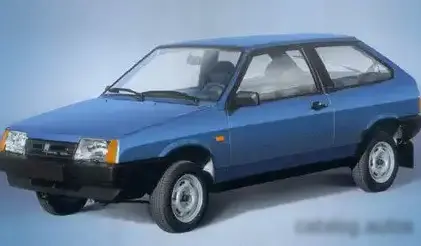
The Lada 21083 1.5, a variant of the Lada 2108, represents a significant step in the evolution of Soviet and later Russian automotive engineering. Produced from 1984 to 2004, the 21083 was the most commonly produced version of the 2108 family, and served as the mainstay of Lada’s lineup during a period of considerable economic and political change. This model, a front-wheel-drive hatchback, was intended to modernize Lada’s offerings and compete with increasingly sophisticated Western European vehicles. The 1.5-liter, 70 horsepower engine and typically four-speed manual transmission configuration positioned it as the entry-level offering within the 2108 range, appealing to budget-conscious buyers and those prioritizing simplicity and durability.
Technical Specifications
| Brand | Lada |
| Model | 2108 |
| Generation | 21083 |
| Type (Engine) | 1.5 (70 Hp) |
| Start of production | 1984 |
| End of production | 2004 |
| Powertrain Architecture | Internal Combustion engine |
| Body type | Hatchback |
| Fuel Type | Petrol (Gasoline) |
| Power | 70 Hp @ 5600 rpm |
| Power per litre | 46.7 Hp/l |
| Torque | 1064 Nm @ 3500 rpm (784.77 lb.-ft. @ 3500 rpm) |
| Engine layout | Front, Transverse |
| Engine displacement | 1500 cm3 (91.54 cu. in.) |
| Number of cylinders | 4 |
| Engine configuration | Inline |
| Cylinder Bore | 82 mm (3.23 in.) |
| Piston Stroke | 71 mm (2.8 in.) |
| Compression ratio | 9.9:1 |
| Number of valves per cylinder | 2 |
| Fuel injection system | Carburettor |
| Engine aspiration | Naturally aspirated engine |
| Valvetrain | OHC |
Powertrain & Engine Architecture
The heart of the Lada 21083 1.5 is the 1499cc inline-four cylinder engine. This engine, designated internally with various codes depending on the year of manufacture, represents a significant departure from the older, rear-wheel-drive Lada designs. It features a single overhead camshaft (OHC) operating two valves per cylinder. Crucially, the 21083 utilized a carburetor – typically a K-126G or similar – for fuel delivery. This was a deliberate choice to maintain affordability and simplicity, reflecting the economic realities of the time and the target market. The carburetor, while less efficient and precise than fuel injection, was relatively easy to maintain and repair with readily available parts. The engine’s 70 horsepower output at 5600 rpm and 1064 Nm (784.77 lb-ft) of torque at 3500 rpm, while modest by modern standards, provided adequate performance for everyday driving. The engine was transversely mounted, driving the front wheels. The transmission was most commonly a four-speed manual, although a three-speed automatic was available, albeit rarely chosen due to its further reduction in performance and increased complexity.
Driving Characteristics
The driving experience of the Lada 21083 1.5 was characterized by its simplicity and robustness. The 70 hp engine, coupled with the four-speed manual transmission, provided adequate, if not exhilarating, acceleration. The gear ratios were relatively tall, prioritizing fuel economy over outright performance. The car felt somewhat sluggish at higher speeds, and overtaking required careful planning. Compared to the later 1.6-liter versions of the 2108, the 1.5-liter engine lacked the extra punch needed for more spirited driving. The automatic transmission version, when equipped, further diminished performance, making the car feel even slower and less responsive. However, the 21083’s relatively light weight and simple suspension contributed to a comfortable ride, particularly on less-than-perfect road surfaces. Steering was generally considered vague, but predictable.
Equipment & Trim Levels
The Lada 21083 1.5 was typically offered in a fairly basic trim level, reflecting its position as the entry-level model. Standard features generally included cloth upholstery, a simple dashboard with basic instrumentation (speedometer, fuel gauge, temperature gauge), and manual windows and door locks. Heating and ventilation were standard, but air conditioning was rarely fitted, even as an option. Optional extras included a radio, upgraded seat upholstery, and occasionally, power steering. The interior was functional and durable, but lacked the refinement of contemporary Western European cars. The exterior typically featured steel wheels with hubcaps, and relatively simple body trim.
Chassis & Braking
The Lada 21083 utilized a MacPherson strut front suspension and a semi-independent trailing arm rear suspension. The suspension setup was designed for durability and simplicity, rather than sporty handling. The front brakes were disc brakes, while the rear brakes were typically drum brakes, although some later models featured rear disc brakes. Steering was a rack-and-pinion system, but lacked power assistance in most models. The chassis was a monocoque construction, providing reasonable structural rigidity. Stabilizer bars were often omitted on the base 1.5-liter models, contributing to a noticeable degree of body roll in corners.
Market Reception & Comparison
The Lada 21083 1.5 was generally well-received in its primary markets – primarily Russia and other Eastern European countries – due to its affordability, reliability, and ease of maintenance. Critics often pointed to its outdated technology and lack of refinement compared to Western European competitors, but acknowledged its value for money. Compared to the higher-spec 1.6-liter versions of the 2108, the 1.5-liter model offered lower performance and a more basic level of equipment, but at a significantly lower price point. Fuel economy was reasonable for the time, but not exceptional. Reliability was generally good, although the carburetor required periodic adjustment and maintenance. The 1.5L engine was known for its longevity, often exceeding 200,000 kilometers with proper care.
Legacy
The Lada 21083 1.5, and the 2108 series as a whole, represents a pivotal moment in Russian automotive history. It was the first Lada to adopt a modern, front-wheel-drive layout, and it paved the way for subsequent generations of Lada vehicles. While the 21083 is now considered a classic car, it remains relatively common on the roads of Russia and other former Soviet republics. The 1.5-liter engine, while not particularly powerful, is known for its durability and simplicity, making it a popular choice for those seeking a reliable and affordable vehicle. In the used car market today, the 21083 1.5 is valued for its affordability and nostalgic appeal, and is often sought after by enthusiasts and collectors.
