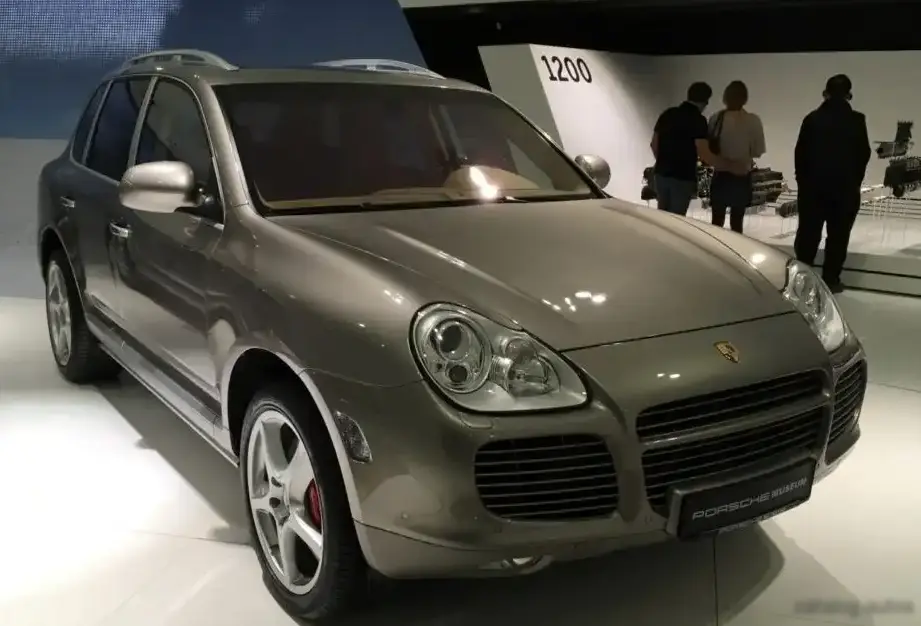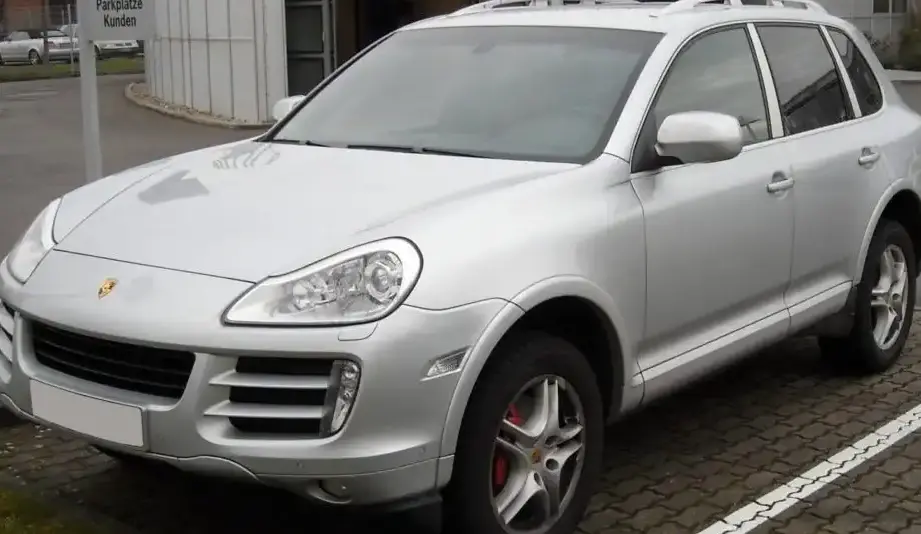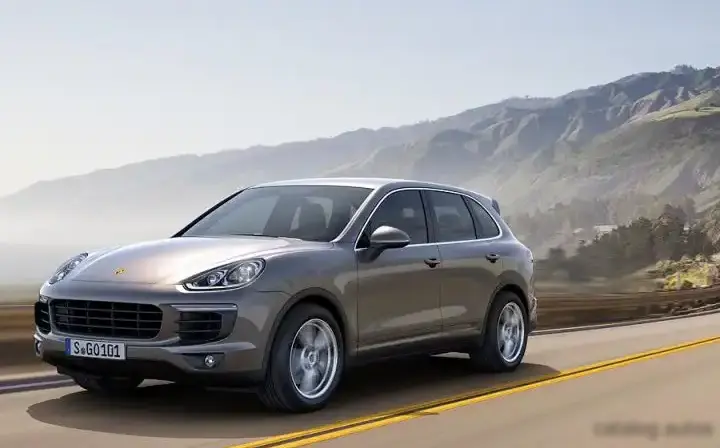
The Porsche Cayenne II (facelift, introduced in 2014) S 4.2 diesel represents a significant iteration of Porsche’s entry into the luxury SUV market. Produced from 2014 to 2017, this variant combined a potent diesel V8 engine with Porsche’s Tiptronic S automatic transmission, aiming to deliver a blend of performance, efficiency, and luxury. It sat within the second generation (958) Cayenne lineup, positioned as a high-performance diesel option appealing to buyers seeking strong torque and long-distance cruising capability. This model was primarily aimed at the European market, where diesel engines enjoyed greater popularity due to fuel costs and emissions regulations, though it was also available in limited quantities in other regions.
Technical Specifications
| Brand | Porsche |
| Model | Cayenne |
| Generation | Cayenne II (facelift 2014) |
| Type (Engine) | S 4.2 diesel V8 (385 Hp) Tiptronic |
| Start of production | 2014 |
| End of production | 2017 |
| Powertrain Architecture | Internal Combustion engine |
| Body type | SUV |
| Seats | 5 |
| Doors | 5 |
| Fuel consumption (urban) | 10 l/100 km (23.5 US mpg) |
| Fuel consumption (extra urban) | 7 l/100 km (33.6 US mpg) |
| Fuel consumption (combined) | 8 l/100 km (29.4 US mpg) |
| CO2 emissions | 209 g/km |
| Fuel Type | Diesel |
| Acceleration 0 – 100 km/h | 5.4 sec |
| Acceleration 0 – 62 mph | 5.4 sec |
| Acceleration 0 – 60 mph | 5.1 sec |
| Maximum speed | 252 km/h (156.59 mph) |
| Emission standard | Euro 5 |
| Weight-to-power ratio | 5.8 kg/Hp |
| Weight-to-torque ratio | 2.6 kg/Nm |
| Power | 385 Hp @ 3750 rpm |
| Torque | 850 Nm @ 2000-2750 rpm (626.93 lb.-ft.) |
| Engine layout | Front, Longitudinal |
| Engine Model/Code | CUDC |
| Engine displacement | 4134 cm3 (252.27 cu. in.) |
| Number of cylinders | 8 |
| Engine configuration | V-engine |
| Cylinder Bore | 83 mm (3.27 in.) |
| Piston Stroke | 95.5 mm (3.76 in.) |
| Compression ratio | 16.4:1 |
| Number of valves per cylinder | 4 |
| Fuel injection system | Diesel Commonrail |
| Engine aspiration | BiTurbo, Intercooler |
| Engine oil capacity | 9 l (9.51 US qt | 7.92 UK qt) |
| Kerb Weight | 2215 kg (4883.24 lbs.) |
| Max. weight | 2955 kg (6514.66 lbs.) |
| Max load | 740 kg (1631.42 lbs.) |
| Trunk (boot) space – minimum | 670 l (23.66 cu. ft.) |
| Trunk (boot) space – maximum | 1780 l (62.86 cu. ft.) |
| Fuel tank capacity | 85 l (22.45 US gal | 18.7 UK gal) |
| Length | 4855 mm (191.14 in.) |
| Width | 1939 mm (76.34 in.) |
| Height | 1705 mm (67.13 in.) |
| Wheelbase | 2895 mm (113.98 in.) |
| Front track | 1655 mm (65.16 in.) |
| Rear (Back) track | 1669 mm (65.71 in.) |
| Drag coefficient (Cd) | 0.36 |
| Drive wheel | All wheel drive (4×4) |
| Number of gears and type of gearbox | 8 gears, automatic transmission Tiptronic S |
| Front suspension | Double wishbone |
| Rear suspension | Independent multi-link suspension |
| Front brakes | Ventilated discs |
| Rear brakes | Ventilated discs |
| Assisting systems | ABS (Anti-lock braking system) |
| Steering type | Steering rack and pinion |
| Tires size | 255/55 R18 |
| Wheel rims size | 8.0J x 18 |
INTRODUCTION
The 2014-2017 Porsche Cayenne S 4.2 diesel was a key component of Porsche’s strategy to broaden the Cayenne’s appeal. It offered a compelling alternative to the gasoline-powered models, particularly for customers prioritizing fuel economy and long-range driving. Built on the second-generation Cayenne platform (958), which debuted in 2010 and received a facelift in 2014, this variant aimed to deliver the Porsche driving experience within the practical confines of a luxury SUV. The facelift brought updated styling, improved interior materials, and enhanced technology compared to the original 958.
Powertrain & Engine Architecture
At the heart of the Cayenne S 4.2 diesel lies the CUDC engine, a 4.1-liter V8 diesel. This engine utilizes a sophisticated common rail direct injection system, delivering fuel at extremely high pressure for optimized combustion. The engine is bi-turbocharged, employing two turbochargers – one smaller unit for quick response at low RPMs and a larger unit for increased power at higher speeds. An intercooler further enhances performance by cooling the compressed intake air. The engine produces 385 horsepower at 3750 rpm and a substantial 850 Nm (626.93 lb.-ft.) of torque between 2000 and 2750 rpm. This torque output is a defining characteristic of the engine, providing effortless acceleration and strong pulling power. The engine features four valves per cylinder and a compression ratio of 16.4:1. Paired with the engine is Porsche’s Tiptronic S eight-speed automatic transmission. This transmission offers both fully automatic operation and manual gear selection via steering wheel-mounted paddles, providing drivers with greater control. The Tiptronic S is known for its smooth and quick shifts.
Driving Characteristics
The Cayenne S 4.2 diesel delivers a markedly different driving experience compared to its gasoline-powered siblings. The abundant torque allows for brisk acceleration, with 0-60 mph times around 5.1 seconds. While not as outright sporty as the Cayenne S or Turbo models, the diesel offers a relaxed and confident feel, particularly during highway cruising. The Tiptronic S transmission is well-matched to the engine, providing smooth gear changes and responsive performance. The gear ratios are tuned to maximize fuel efficiency while still providing ample power for overtaking and climbing hills. Compared to the base V6 Cayenne, the 4.2 diesel offers significantly more power and torque, resulting in a more effortless driving experience. Compared to the Cayenne Turbo, it sacrifices some ultimate performance but gains in fuel economy and low-end grunt.
Equipment & Trim Levels
The Cayenne S 4.2 diesel came well-equipped as standard. Typical features included leather upholstery, power-adjustable front seats with memory function, a touchscreen infotainment system with navigation, dual-zone automatic climate control, and a panoramic sunroof. Optional extras were plentiful, allowing buyers to customize their Cayenne to their preferences. These included adaptive air suspension, Porsche Dynamic Chassis Control (PDCC), upgraded sound systems (such as Bose or Burmester), and a variety of interior trim options. The interior design was refined during the 2014 facelift, with improved materials and a more modern layout.
Chassis & Braking
The Cayenne S 4.2 diesel features a fully independent suspension system, with double wishbones at the front and a multi-link setup at the rear. This suspension provides a comfortable ride while maintaining good handling characteristics. The vehicle is equipped with ventilated disc brakes on all four wheels, providing ample stopping power. Anti-lock braking system (ABS) is standard, along with other electronic stability control systems. The Cayenne’s weight, around 2215 kg (4883.24 lbs), is managed effectively by the suspension and braking systems. The standard wheel size is 18 inches, with larger alloy wheels available as an option.
Market Reception & Comparison
The Cayenne S 4.2 diesel was generally well-received by automotive critics. It was praised for its strong performance, fuel efficiency, and comfortable ride. However, some reviewers noted that the diesel engine lacked the aural excitement of the gasoline engines. Compared to the gasoline-powered Cayenne S, the diesel offered comparable performance with significantly better fuel economy. The diesel also proved to be a more practical choice for long-distance drivers. However, the diesel variant typically commanded a higher price than the base V6 model.
Legacy
The Porsche Cayenne S 4.2 diesel has proven to be a relatively reliable vehicle, although, like any complex machine, it is not without its potential issues. Common maintenance items include regular oil changes, filter replacements, and inspection of the turbochargers and fuel injection system. The diesel particulate filter (DPF) requires periodic regeneration, and failure to do so can lead to costly repairs. On the used car market, these Cayennes hold their value reasonably well, particularly well-maintained examples with a full service history. The combination of Porsche’s brand reputation, the engine’s robust torque output, and the vehicle’s overall practicality continue to make it an attractive option for buyers seeking a luxury SUV with diesel power.