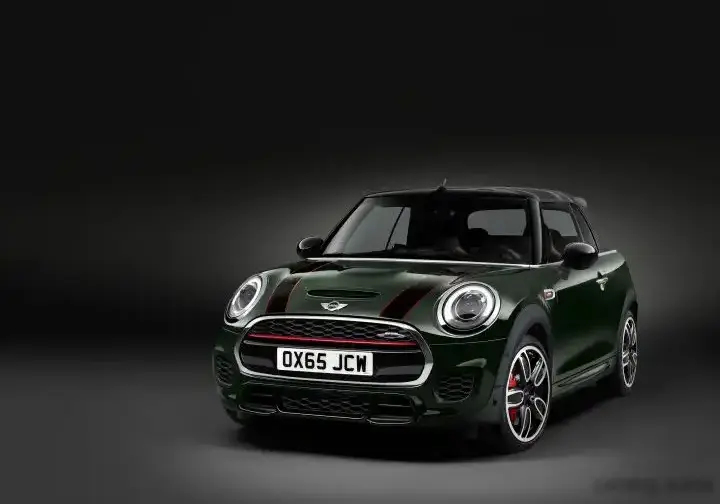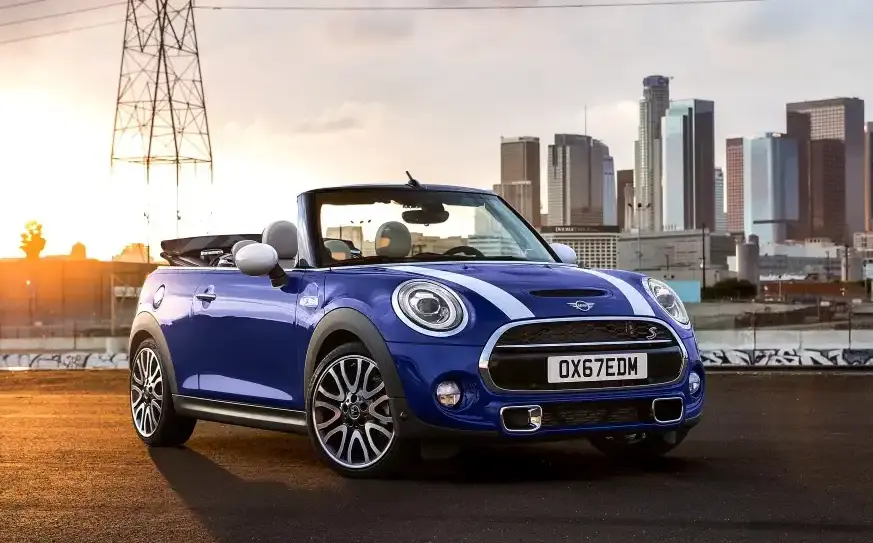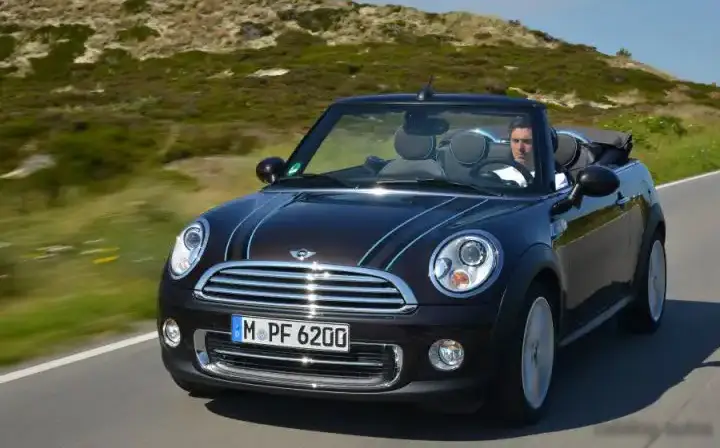
The Mini Convertible (R57) facelift, produced from 2011 to 2015, represented a mid-cycle refresh of the second-generation convertible model. The Cooper D 1.6, powered by the N47C16A engine producing 112 horsepower, occupied a key position in the lineup as the diesel-powered, economy-focused variant. This model aimed to provide the open-air Mini experience with improved fuel efficiency and lower running costs compared to its petrol counterparts. It was positioned as an attractive option for drivers prioritizing practicality and fuel economy without sacrificing the Mini’s iconic style and handling.
Technical Specifications
| Brand | Mini |
| Model | Convertible |
| Generation | Convertible (R57, Facelift 2011) |
| Type (Engine) | Cooper D 1.6 (112 Hp) |
| Start of production | 2011 |
| End of production | 2015 |
| Powertrain Architecture | Internal Combustion engine |
| Body type | Cabriolet |
| Seats | 4 |
| Doors | 2 |
| Fuel consumption (urban) | 4.5 l/100 km (52.3 US mpg, 62.8 UK mpg, 22.2 km/l) |
| Fuel consumption (extra urban) | 3.7 l/100 km (63.6 US mpg, 76.3 UK mpg, 27 km/l) |
| Fuel consumption (combined) | 4 l/100 km (58.8 US mpg, 70.6 UK mpg, 25 km/l) |
| CO2 emissions | 105 g/km |
| Fuel Type | Diesel |
| Acceleration 0 – 100 km/h | 10.3 sec |
| Acceleration 0 – 62 mph | 10.3 sec |
| Acceleration 0 – 60 mph | 9.8 sec |
| Maximum speed | 194 km/h (120.55 mph) |
| Emission standard | Euro 5 |
| Weight-to-power ratio | 10.7 kg/Hp, 93.3 Hp/tonne |
| Weight-to-torque ratio | 4.4 kg/Nm, 225 Nm/tonne |
| Power | 112 Hp @ 4000 rpm |
| Power per litre | 70.1 Hp/l |
| Torque | 270 Nm @ 1750-2250 rpm (199.14 lb.-ft. @ 1750-2250 rpm) |
| Engine layout | Front, Transverse |
| Engine Model/Code | N47C16A |
| Engine displacement | 1598 cm3 (97.52 cu. in.) |
| Number of cylinders | 4 |
| Engine configuration | Inline |
| Cylinder Bore | 78 mm (3.07 in.) |
| Piston Stroke | 83.6 mm (3.29 in.) |
| Compression ratio | 16.5:1 |
| Number of valves per cylinder | 4 |
| Fuel injection system | Diesel Commonrail |
| Engine aspiration | Turbocharger, Intercooler |
| Engine oil capacity | 5.2 l (5.49 US qt | 4.58 UK qt) |
| Coolant capacity | 5.2 l (5.49 US qt | 4.58 UK qt) |
| Kerb Weight | 1200 kg (2645.55 lbs.) |
| Max. weight | 1630 kg (3593.53 lbs.) |
| Max load | 430 kg (947.99 lbs.) |
| Trunk (boot) space – minimum | 125 l (4.41 cu. ft.) |
| Trunk (boot) space – maximum | 660 l (23.31 cu. ft.) |
| Fuel tank capacity | 40 l (10.57 US gal | 8.8 UK gal) |
| Length | 3723 mm (146.57 in.) |
| Width | 1683 mm (66.26 in.) |
| Height | 1414 mm (55.67 in.) |
| Wheelbase | 2467 mm (97.13 in.) |
| Front track | 1459 mm (57.44 in.) |
| Rear track | 1467 mm (57.76 in.) |
| Ride height (ground clearance) | 139 mm (5.47 in.) |
| Minimum turning circle | 10.7 m (35.1 ft.) |
| Drivetrain Architecture | Front wheel drive |
| Number of gears | 6 gears, manual transmission |
| Front suspension | Independent, type McPherson with coil spring and anti-roll bar |
| Rear suspension | Independent multi-link suspension |
| Front brakes | Ventilated discs |
| Rear brakes | Disc |
| Assisting systems | ABS (Anti-lock braking system) |
| Steering type | Steering rack and pinion |
| Tires size | 175/65 R15 84H |
| Wheel rims size | 5.5J x 15 LM |
Powertrain & Engine Architecture
The heart of the Cooper D Convertible was the N47C16A 1.6-liter four-cylinder diesel engine. This engine was a product of BMW’s (who owned Mini at the time) diesel technology, known for its efficiency and refinement. It featured a common rail direct injection system, delivering fuel at extremely high pressure for optimized combustion. The engine also employed a variable geometry turbocharger (VGT) and an intercooler to boost power and torque while maintaining good fuel economy. The N47 engine family was known for its timing chain issues in some applications, but the R57’s implementation generally proved relatively reliable with regular maintenance. The 112 hp output was achieved at 4000 rpm, while the peak torque of 270 Nm (199 lb-ft) was available from 1750-2250 rpm. This broad torque curve provided good responsiveness in everyday driving. The engine was paired with a 6-speed manual transmission, offering precise shifts and contributing to the car’s engaging driving experience. An optional 6-speed automatic transmission was also available, though it slightly impacted fuel economy and performance.
Driving Characteristics
The Cooper D 1.6 Automatic offered a comfortable and refined driving experience. While not overtly sporty, the engine’s torque delivery made it feel surprisingly brisk in typical driving situations. Acceleration from 0-60 mph took around 9.8 seconds, and top speed was 120.55 mph. The automatic transmission, while smooth, wasn’t particularly quick to shift, and could sometimes feel hesitant during overtaking maneuvers. Compared to the more powerful Cooper S models, the Cooper D lacked the outright punch, but it excelled in fuel efficiency. The suspension, tuned for comfort, provided a reasonably compliant ride, absorbing bumps and imperfections in the road well. The steering was light and precise, typical of Mini’s character, making the car easy to maneuver in urban environments.
Equipment & Trim Levels
The Cooper D Convertible typically came equipped with features such as air conditioning, power windows, central locking, and a basic audio system. Standard safety equipment included ABS, airbags, and stability control. Higher trim levels offered options like leather upholstery, heated seats, a premium sound system, and a panoramic sunroof. The Chili package was a popular option, adding sport seats, a sport steering wheel, and exterior styling enhancements. The convertible top was a fully automatic fabric roof, available in a range of colors. Interior trim options included various cloth and leather combinations, allowing buyers to personalize their vehicle.
Chassis & Braking
The R57 Convertible utilized a McPherson strut front suspension and a multi-link rear suspension, providing a good balance of handling and ride comfort. The front brakes were ventilated discs, while the rear brakes were solid discs. ABS (Anti-lock Braking System) was standard, enhancing braking performance and stability. The chassis was reinforced to compensate for the lack of a fixed roof, maintaining structural rigidity. The car’s relatively low weight (around 2645 lbs) contributed to its nimble handling characteristics.
Market Reception & Comparison
The Cooper D Convertible was generally well-received by critics for its fuel efficiency and enjoyable driving experience. It was seen as a practical and stylish alternative to other small convertibles. Compared to the petrol-powered Cooper, the Cooper D offered significantly better fuel economy, making it an attractive option for drivers covering long distances. However, the Cooper S provided a more exhilarating driving experience with its more powerful engine. The Cooper D also faced competition from other diesel-powered convertibles, such as the Fiat 500C Diesel, but the Mini’s brand image and more premium feel gave it an edge.
Legacy
The N47 engine, while having some known issues, proved to be a durable and reliable powerplant when properly maintained. The Cooper D Convertible remains a popular choice in the used car market, particularly for those seeking a stylish and economical open-top car. Its combination of fuel efficiency, practicality, and the iconic Mini design continues to appeal to a wide range of buyers. Regular servicing, including oil changes and timing chain inspections, is crucial to ensure the long-term reliability of this model. The R57 Cooper D Convertible represents a compelling blend of fun, efficiency, and style, cementing its place as a desirable entry point into the Mini convertible world.