
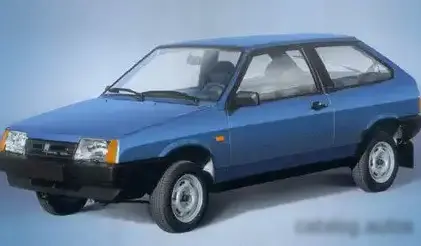
The Lada 21083 1.5i, produced from 1994 to 2004, represents a significant evolution of the original Lada 2108, often referred to as the “eight.” This variant, designated 21083-20, was a mainstay of the Lada lineup during this period, primarily aimed at the Russian domestic market and export markets in Eastern Europe and developing countries. It offered a balance of affordability, practicality, and relative modernity compared to earlier Lada models. The 21083 series was the first Lada to feature a fully modern hatchback body style, moving away from the more boxy designs of its predecessors. This particular 1.5-liter, 78 horsepower configuration served as the entry-level engine option for the 2108 series, offering a more economical alternative to the larger 1.6-liter engines.
Technical Specifications
| Brand | Lada |
| Model | 2108 |
| Generation | 21083 |
| Type (Engine) | 1.5 i (78 Hp) 21083-20 |
| Start of production | 1994 |
| End of production | 2004 |
| Powertrain Architecture | Internal Combustion engine |
| Body type | Hatchback |
| Doors | 5 |
| Fuel Type | Petrol (Gasoline) |
| Power | 78 Hp @ 5400 rpm |
| Power per litre | 52 Hp/l |
| Torque | 115 Nm @ 3000 rpm / 84.82 lb.-ft. @ 3000 rpm |
| Engine layout | Front, Transverse |
| Engine displacement | 1500 cm3 / 91.54 cu. in. |
| Number of cylinders | 4 |
| Engine configuration | Inline |
| Cylinder Bore | 82 mm / 3.23 in. |
| Piston Stroke | 71 mm / 2.8 in. |
| Compression ratio | 9.9:1 |
| Number of valves per cylinder | 2 |
| Fuel injection system | Multi-port manifold injection |
| Engine aspiration | Naturally aspirated engine |
| Valvetrain | OHC |
Powertrain & Engine Architecture
The heart of the 21083 1.5i is the Lada 2108 engine, a four-cylinder, inline engine displacing 1499 cubic centimeters. This engine, while based on earlier Lada designs, incorporated significant updates including multi-port fuel injection, replacing the carburetor systems found in older models. The engine utilizes an overhead camshaft (OHC) valvetrain with two valves per cylinder. The 2108 engine family, including this 1.5-liter variant, was known for its robust construction and relative simplicity, making it relatively easy to maintain and repair. The 78 horsepower output is achieved at 5400 rpm, while peak torque of 115 Nm (84.82 lb-ft) arrives at 3000 rpm. The engine is transversely mounted at the front of the vehicle. The 21083-20 was typically paired with a four-speed or five-speed manual transmission, but also offered a four-speed automatic transmission, though the automatic was less common due to its impact on fuel economy and performance. The automatic transmission was sourced from external suppliers and wasn’t known for its refinement or efficiency.
Driving Characteristics
The 21083 1.5i with the automatic transmission offered a comfortable, if uninspiring, driving experience. Acceleration was modest, with a 0-60 mph time estimated to be around 14-16 seconds. The four-speed automatic transmission had relatively wide gear ratios, which contributed to a noticeable lack of responsiveness during overtaking maneuvers. The engine felt strained at higher speeds, and the automatic transmission often hunted for the correct gear. Compared to the five-speed manual version, the automatic significantly reduced performance and increased fuel consumption. The manual transmission offered a more engaging driving experience and better fuel economy. The suspension, while basic, provided a reasonably comfortable ride on most road surfaces. The steering was light but lacked precision, and the car exhibited noticeable body roll in corners.
Equipment & Trim Levels
The 21083 1.5i typically came with a fairly basic level of equipment. Standard features included cloth upholstery, a simple dashboard with analog gauges, and manual windows and door locks. Power steering was often an optional extra, as were central locking and an upgraded stereo system. The interior was functional but lacked the refinement of more modern vehicles. Higher trim levels, though rare on the 1.5i variant, might include features like a sunroof, upgraded seat fabric, and a more comprehensive instrument cluster. The 21083-20 was positioned as the entry-level model, appealing to budget-conscious buyers who prioritized practicality and affordability over luxury and performance.
Chassis & Braking
The Lada 21083 utilized a relatively simple chassis design. It featured a MacPherson strut front suspension and a twist-beam rear suspension. The braking system consisted of disc brakes on the front wheels and drum brakes on the rear wheels. The brakes were adequate for normal driving conditions but lacked the stopping power of more modern braking systems. The car’s relatively light weight helped to compensate for the basic braking setup. Stabilizer bars were typically fitted to the front suspension to reduce body roll, but their effectiveness was limited. The steering system was a recirculating ball system, which provided light steering but lacked precision and feedback.
Market Reception & Comparison
The Lada 21083 1.5i was generally well-received in its target markets as an affordable and reliable means of transportation. Critics often praised its robust construction and ease of maintenance, but criticized its outdated design, poor performance, and lack of refinement. Compared to other trims in the 2108 lineup, such as the 1.6-liter versions, the 1.5i offered lower running costs but significantly reduced performance. Fuel economy was a strong point for the 1.5i, averaging around 30-35 mpg in mixed driving conditions. Reliability was generally good, although the automatic transmission was known to be less durable than the manual transmission. The 21083 competed with other budget-oriented hatchbacks in Eastern Europe and developing countries, such as the Skoda Favorit and the Fiat Uno.
Legacy
The Lada 21083 1.5i, while not a technologically advanced vehicle, played an important role in providing affordable transportation to millions of people. The 2108 engine family proved to be remarkably durable, and many examples are still on the road today. The 21083’s simple design and robust construction make it relatively easy to maintain and repair, even with limited mechanical skills. In the used car market, the 21083 1.5i remains a popular choice for those seeking a cheap and reliable vehicle. However, potential buyers should be aware of the limitations of the automatic transmission and the car’s overall lack of refinement. The 21083 paved the way for subsequent Lada models and helped to establish the brand as a provider of affordable and practical vehicles.
