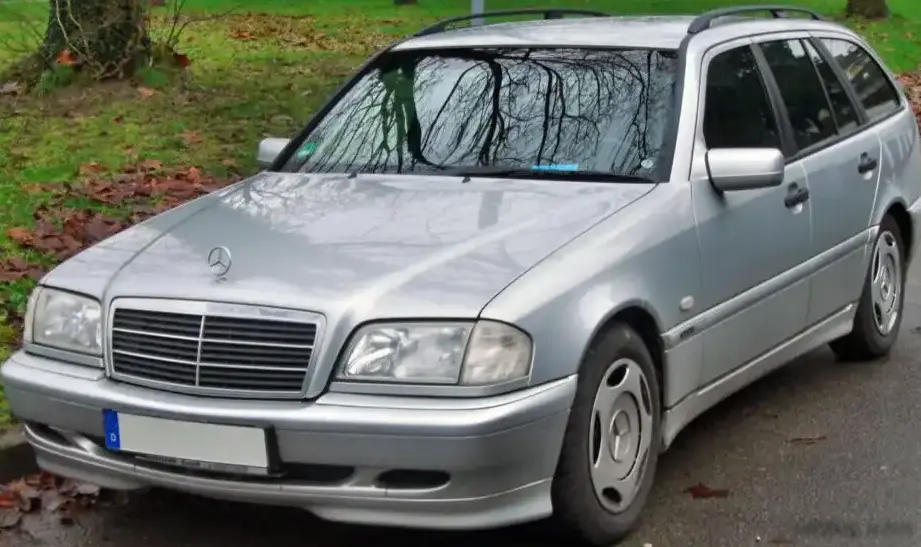
The Mercedes-Benz C-Class T-modell (S202), specifically the C 240 2.6 V6 variant produced from 2000 to 2001, represents a refined iteration of the first-generation C-Class estate. Introduced as part of the facelifted S202 series in 1997, this model aimed to blend practicality with Mercedes-Benz’s established luxury and engineering standards. Positioned as a mid-range offering within the T-modell lineup, the C 240 bridged the gap between the more economical four-cylinder models and the higher-performance C 36 AMG. It was primarily marketed towards European buyers seeking a versatile vehicle capable of both family duties and comfortable long-distance travel.
Technical Specifications
| Brand | Mercedes-Benz |
| Model | C-Class |
| Generation | C-Class T-modell (S202, facelift 1997) |
| Type (Engine) | C 240 2.6 V6 (170 Hp) |
| Start of production | March, 2000 |
| End of production | January, 2001 |
| Powertrain Architecture | Internal Combustion engine |
| Body type | Station wagon (estate) |
| Seats | 5 |
| Doors | 5 |
| Fuel consumption (urban) | 15.8 l/100 km (14.9 US mpg, 17.9 UK mpg, 6.3 km/l) |
| Fuel consumption (extra urban) | 8.1 l/100 km (29 US mpg, 34.9 UK mpg, 12.3 km/l) |
| Fuel consumption (combined) | 10.9 l/100 km (21.6 US mpg, 25.9 UK mpg, 9.2 km/l) |
| Fuel Type | Petrol (Gasoline) |
| Acceleration 0 – 100 km/h | 9 sec |
| Acceleration 0 – 62 mph | 9 sec |
| Acceleration 0 – 60 mph | 8.6 sec |
| Maximum speed | 218 km/h (135.46 mph) |
| Weight-to-power ratio | 8.7 kg/Hp, 114.9 Hp/tonne |
| Weight-to-torque ratio | 6.2 kg/Nm, 162.2 Nm/tonne |
| Power | 170 Hp @ 5500 rpm |
| Power per litre | 65.5 Hp/l |
| Torque | 240 Nm @ 4500 rpm (177.01 lb.-ft. @ 4500 rpm) |
| Engine layout | Front, Longitudinal |
| Engine Model/Code | M 112 E 26 / 112.950 |
| Engine displacement | 2597 cm3 (158.48 cu. in.) |
| Number of cylinders | 6 |
| Engine configuration | V-engine |
| Cylinder Bore | 89.9 mm (3.54 in.) |
| Piston Stroke | 68.2 mm (2.69 in.) |
| Compression ratio | 10.5:1 |
| Number of valves per cylinder | 3 |
| Fuel injection system | Multi-port manifold injection |
| Engine aspiration | Naturally aspirated engine |
| Valvetrain | SOHC |
| Engine oil capacity | 8 l (8.45 US qt | 7.04 UK qt) |
| Coolant | 9.5 l (10.04 US qt | 8.36 UK qt) |
| Kerb Weight | 1480 kg (3262.84 lbs.) |
| Max. weight | 1980 kg (4365.15 lbs.) |
| Max load | 500 kg (1102.31 lbs.) |
| Fuel tank capacity | 62 l (16.38 US gal | 13.64 UK gal) |
| Length | 4516 mm (177.8 in.) |
| Width | 1723 mm (67.83 in.) |
| Height | 1460 mm (57.48 in.) |
| Wheelbase | 2690 mm (105.91 in.) |
| Front track | 1499 mm (59.02 in.) |
| Rear track | 1464 mm (57.64 in.) |
| Drivetrain Architecture | Rear wheel drive |
| Number of gears | 6 gears, manual transmission |
| Front suspension | Double wishbone |
| Rear suspension | Independent multi-link spring suspension with stabilizer |
| Front brakes | Ventilated discs |
| Rear brakes | Disc |
| Assisting systems | ABS (Anti-lock braking system) |
| Steering type | Cone worm with recirculation balls |
| Power steering | Hydraulic Steering |
| Tires size | 195/65 R15 |
| Wheel rims size | 6.5J x 15 |
Powertrain & Engine Architecture
The C 240 T-modell was powered by the M112 E 26 engine, a 2.6-liter naturally aspirated V6. This engine was a significant departure from the previous iron-block Mercedes-Benz designs, utilizing an all-aluminum construction for reduced weight and improved thermal management. The M112 featured a single overhead camshaft (SOHC) per cylinder bank, operating three valves per cylinder (two intake, one exhaust). Fuel delivery was handled by a multi-port fuel injection system, providing precise fuel metering for optimal combustion. The engine produced 170 horsepower at 5500 rpm and 240 Nm (177 lb-ft) of torque at 4500 rpm. The engine was paired with a 6-speed manual transmission, offering precise gear changes and contributing to a more engaging driving experience.
Driving Characteristics
The C 240 T-modell with the manual transmission offered a balanced driving experience. While not overtly sporty, the V6 engine provided ample power for everyday driving and comfortable highway cruising. Acceleration from 0 to 60 mph took approximately 8.6 seconds, and the car could reach a top speed of 218 km/h (135 mph). The six-speed manual transmission allowed drivers to keep the engine in its optimal power band, enhancing responsiveness. Compared to the four-cylinder C 180 or C 200 models, the C 240 offered noticeably more refinement and power. However, it lacked the outright performance of the C 36 AMG, which featured a larger, more powerful engine.
Equipment & Trim Levels
The C 240 T-modell typically came equipped with a respectable level of standard features, including power windows, central locking, and an air conditioning system. Interior upholstery was generally cloth, although leather options were available. The dashboard layout was typical of Mercedes-Benz at the time, featuring a functional and understated design. Optional extras included a sunroof, upgraded audio system, and automatic climate control. The T-modell designation itself added a significant level of practicality, with a spacious cargo area accessible through a rear tailgate.
Chassis & Braking
The S202 C-Class utilized a double wishbone front suspension and an independent multi-link rear suspension, providing a comfortable ride and good handling characteristics. The C 240 was equipped with ventilated disc brakes at the front and solid discs at the rear. Anti-lock braking system (ABS) was standard, enhancing safety and stability during braking maneuvers. The steering system was a cone worm with recirculation balls, offering a reasonably precise steering feel.
Market Reception & Comparison
The C 240 T-modell was generally well-received by automotive critics. It was praised for its comfortable ride, refined engine, and practical estate body style. Fuel economy was considered reasonable for a V6 engine of its size, averaging around 10.9 l/100 km (21.6 US mpg). Compared to other trims, the C 240 offered a compelling balance of performance and economy. While the four-cylinder models were more affordable, they lacked the refinement and power of the V6. The C 36 AMG, while offering significantly more performance, came at a substantial price premium.
Legacy
The M112 engine family, including the 2.6-liter variant found in the C 240, proved to be relatively reliable. With proper maintenance, these engines can provide many years of service. Today, the C 240 T-modell is a sought-after classic among Mercedes-Benz enthusiasts, particularly those looking for a practical and refined estate car. Parts availability is generally good, and the car’s relatively simple mechanical design makes it a viable option for DIY mechanics. However, as with any older vehicle, potential buyers should be aware of potential issues such as corrosion and wear on suspension components.