
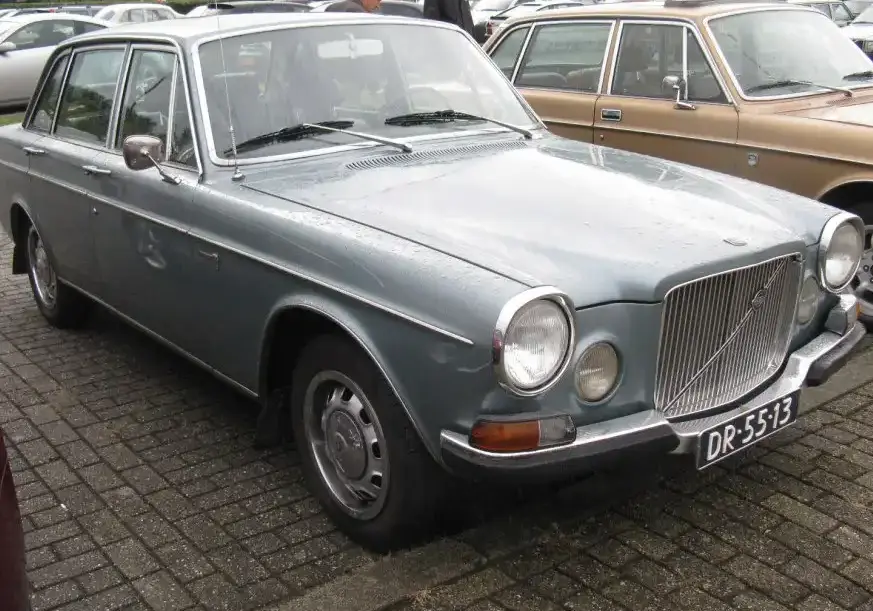
The Volvo 164 2.9 E, produced between 1972 and 1974, represents a significant step in Volvo’s evolution towards more sophisticated and powerful vehicles. Positioned as the top-of-the-line model in the 164 series, it offered a larger displacement engine and increased horsepower compared to the earlier 164 and 144 models. The 164 series, introduced in 1968, was Volvo’s first six-cylinder car, and the 2.9 E variant aimed to provide a more refined and capable driving experience for buyers seeking a premium sedan. It was a key offering in Volvo’s lineup during a period of increasing safety awareness and a growing demand for comfortable, reliable family cars, particularly in the North American market where Volvo was gaining a strong foothold.
Technical Specifications
| Brand | Volvo |
| Model | 164 |
| Generation | 164 |
| Type (Engine) | 2.9 E (131 Hp) |
| Start of production | 1972 |
| End of production | 1974 |
| Powertrain Architecture | Internal Combustion engine |
| Body type | Sedan |
| Doors | 4 |
| Fuel Type | Petrol (Gasoline) |
| Power | 131 Hp |
| Engine Model/Code | B30E |
| Engine aspiration | Naturally aspirated engine |
| Engine oil capacity | 6 l (6.34 US qt | 5.28 UK qt) |
| Coolant capacity | 13 l (13.74 US qt | 11.44 UK qt) |
| Fuel tank capacity | 58 l (15.32 US gal | 12.76 UK gal) |
Powertrain & Engine Architecture
The heart of the Volvo 164 2.9 E is the B30E engine, a 2.9-liter (2851 cc) inline-six cylinder powerplant. This engine represented a significant upgrade over the earlier B18 and B20 four-cylinder engines found in the 144 and initial 164 models. The B30E featured a cast iron block and an aluminum cylinder head, contributing to its durability and relatively lightweight construction. It utilized a single overhead camshaft (SOHC) design, operating two valves per cylinder. Fuel delivery was managed by a Bosch mechanical fuel injection system, a relatively advanced feature for the time, replacing the earlier carburetor setups. This injection system improved fuel efficiency and provided smoother power delivery compared to carbureted engines. The B30E produced 131 horsepower at 5200 rpm and 178 lb-ft of torque at 3000 rpm. The engine was typically paired with either a four-speed manual transmission or a three-speed automatic transmission, the latter being a popular choice for buyers prioritizing comfort and ease of driving. The automatic transmission was a Borg-Warner unit, known for its robustness, though not particularly known for its quick shifts.
Driving Characteristics
The Volvo 164 2.9 E, particularly when equipped with the automatic transmission, offered a comfortable and refined driving experience. While not a sports car, the 2.9-liter engine provided ample power for highway cruising and overtaking maneuvers. The automatic transmission, while smooth, did result in some power loss compared to the manual version. Acceleration from 0 to 60 mph was typically around 10-11 seconds, respectable for the early 1970s. The car’s relatively heavy weight (around 3,200 lbs) contributed to a stable and planted feel on the road. The steering was relatively heavy, typical of the era, but provided good feedback. Compared to the standard 164 with the smaller engine, the 2.9 E offered a noticeable improvement in performance, particularly at higher speeds. The torque advantage of the larger engine made it more capable of handling hills and carrying a full load of passengers and luggage. The automatic transmission, while convenient, did diminish the driver’s control and responsiveness compared to the manual option.
Equipment & Trim Levels
The 164 2.9 E was positioned as the premium trim level within the 164 range. Standard features included comfortable cloth upholstery, woodgrain interior trim, and a comprehensive instrument panel. Power steering and power-assisted disc brakes on the front wheels were also standard. The interior was known for its spaciousness and comfortable seating. Optional extras included air conditioning, a sunroof, and a radio. The exterior styling was relatively understated, reflecting Volvo’s emphasis on functional design and safety. Chrome trim was used sparingly, and the overall appearance was one of understated elegance. The 2.9 E often featured a slightly more refined interior trim compared to the base 164 models, with higher-quality materials and more attention to detail.
Chassis & Braking
The Volvo 164 utilized a robust chassis with independent front suspension featuring coil springs and a stabilizer bar. The rear suspension employed a solid axle with leaf springs and shock absorbers. This setup provided a comfortable ride, although it wasn’t particularly sporty. Braking was handled by disc brakes on the front wheels and drum brakes on the rear. The power-assisted braking system provided adequate stopping power for the car’s weight. The steering system was a recirculating ball type, offering good durability but lacking the precision of more modern steering systems. The chassis was designed with safety in mind, incorporating a reinforced passenger compartment and crumple zones to absorb impact energy in the event of a collision. The stabilizer bar thickness was relatively standard for the period, contributing to reduced body roll during cornering.
Market Reception & Comparison
The Volvo 164 2.9 E was generally well-received by automotive critics and buyers alike. It was praised for its comfortable ride, spacious interior, and robust build quality. The fuel injection system was seen as a significant improvement over carbureted engines, offering better fuel economy and smoother performance. However, some critics noted that the car was relatively expensive compared to its competitors. Compared to other trims in the 164 lineup, the 2.9 E offered a noticeable performance advantage, making it a popular choice for buyers who prioritized power and refinement. Fuel economy was reasonable for the time, averaging around 17-20 mpg in mixed driving. Reliability was generally good, although the Bosch fuel injection system could require occasional maintenance. The 164 2.9 E competed with other luxury sedans from European manufacturers such as Mercedes-Benz and BMW, but offered a more affordable alternative.
Legacy
The Volvo 164 2.9 E holds a respected place in Volvo’s history as a pioneering model that helped establish the brand’s reputation for safety, reliability, and understated elegance. The B30E engine proved to be a durable and long-lasting powerplant, and many examples are still on the road today. In the used car market, the 164 2.9 E is sought after by collectors and enthusiasts who appreciate its classic styling and robust construction. While maintenance can be challenging due to the age of the vehicle and the complexity of the fuel injection system, parts availability is generally good. The 164 2.9 E represents a significant milestone in Volvo’s development, paving the way for the more modern and sophisticated models that followed. Its emphasis on safety and practicality continues to be a hallmark of the Volvo brand today.
