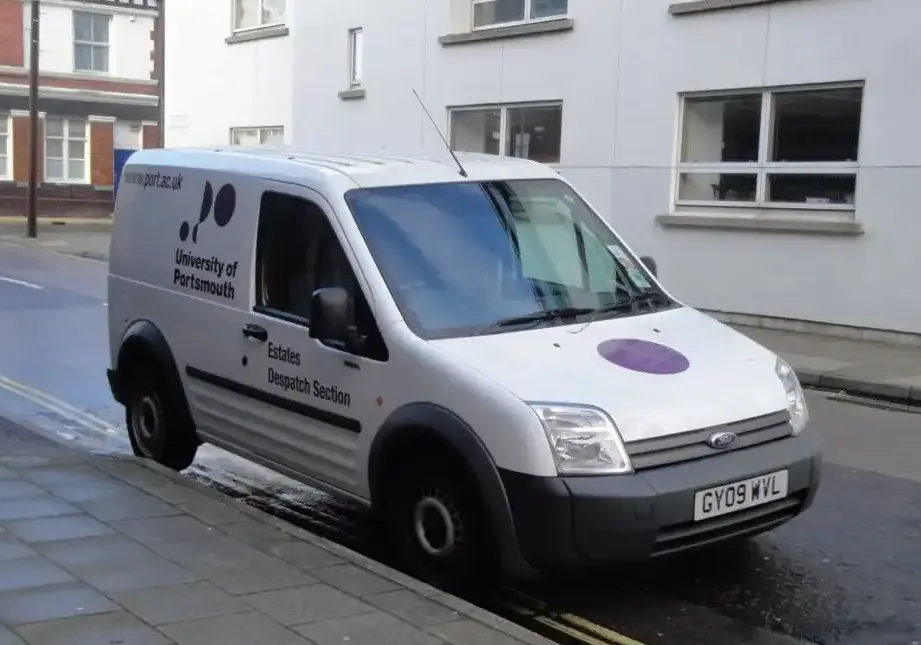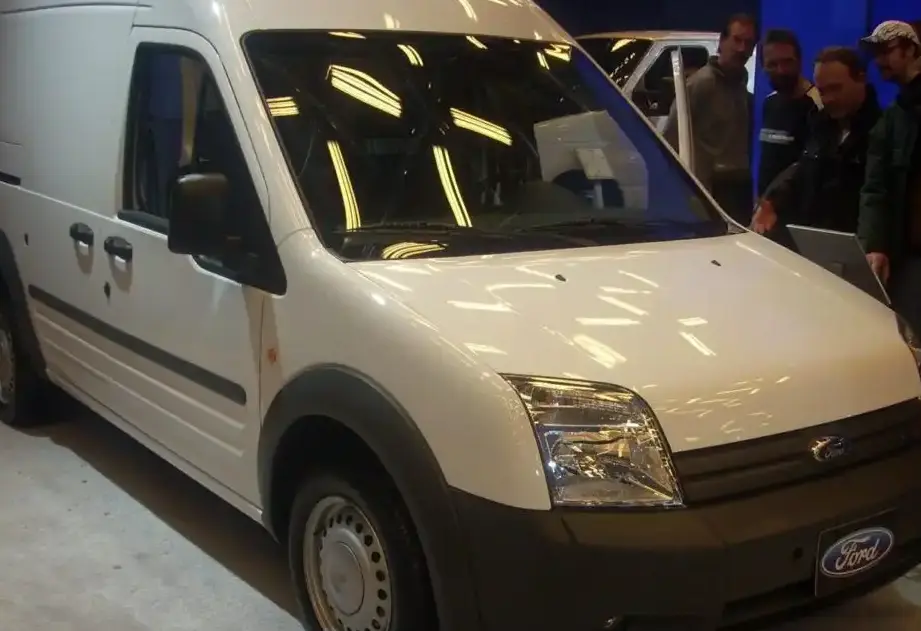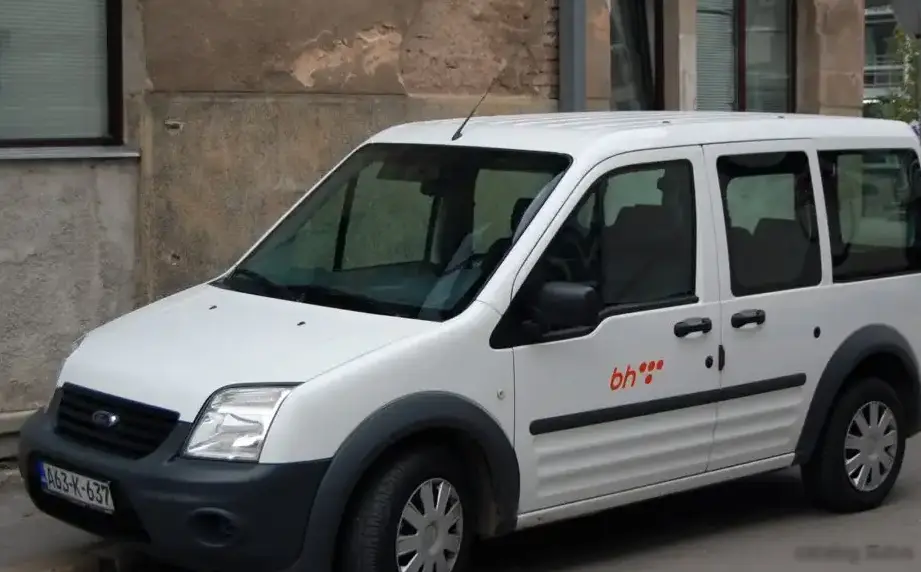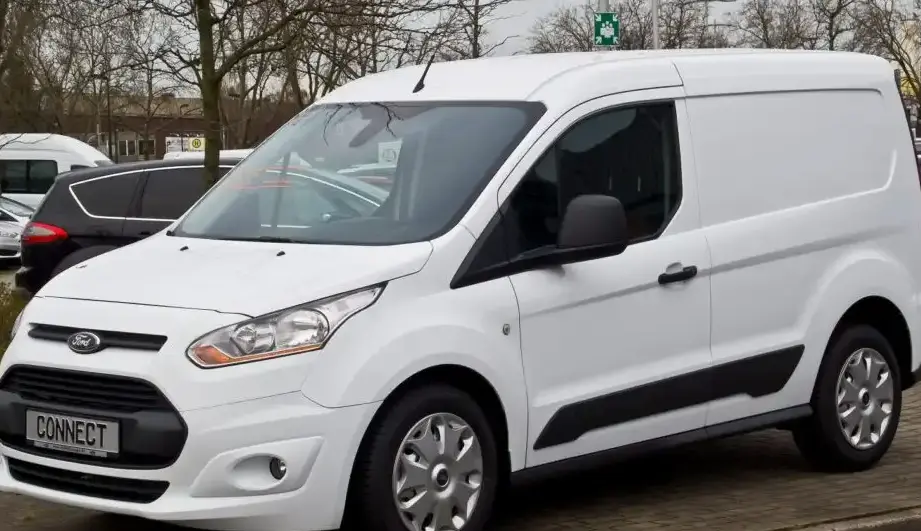
The Ford Transit Connect II Panel Van L1 1.6 TDCi, produced from 2013 to 2016, represents a significant iteration of Ford’s compact commercial vehicle line. This variant, powered by the 1.6-liter Duratorq turbodiesel engine producing 115 horsepower, was a mainstay in the European and increasingly, the North American, small business and fleet markets. Positioned as a practical and fuel-efficient option, it served as a versatile workhorse for deliveries, service calls, and various trades. The L1 designation indicates the short wheelbase version, making it particularly maneuverable in urban environments. It falls within the second generation of the Transit Connect, built on the Ford global C/C+ platform.
Technical Specifications
| Brand | Ford |
| Model | Transit Connect |
| Generation | Transit Connect II Panel Van L1 |
| Type (Engine) | 1.6 TDCi (115 Hp) |
| Start of production | 2013 |
| End of production | 2016 |
| Powertrain Architecture | Internal Combustion engine |
| Body type | Minivan |
| Seats | 2-3 |
| Doors | 4-5 |
| Fuel consumption (urban) | 5.5 l/100 km (42.8 US mpg) |
| Fuel consumption (extra urban) | 4.3 l/100 km (54.7 US mpg) |
| Fuel consumption (combined) | 4.7-4.8 l/100 km (50-49 US mpg) |
| CO2 emissions | 124 g/km |
| Fuel Type | Diesel |
| Emission standard | Euro 5 |
| Weight-to-power ratio | 12.1 kg/Hp |
| Weight-to-torque ratio | 5.1 kg/Nm |
| Power | 115 Hp @ 3600 rpm |
| Torque | 270 Nm @ 1750-2500 rpm (199.14 lb.-ft.) |
| Engine layout | Front, Transverse |
| Engine Model/Code | Duratorq / T1GA |
| Engine displacement | 1560 cm3 (95.2 cu. in.) |
| Number of cylinders | 4 |
| Engine configuration | Inline |
| Cylinder Bore | 75 mm (2.95 in.) |
| Piston Stroke | 88.3 mm (3.48 in.) |
| Compression ratio | 16:1 |
| Number of valves per cylinder | 2 |
| Fuel injection system | Diesel Commonrail |
| Engine aspiration | Turbocharger, Intercooler |
| Valvetrain | SOHC |
| Engine oil capacity | 6.2 l (6.55 US qt | 5.46 UK qt) |
| Coolant capacity | 7.3 l (7.71 US qt | 6.42 UK qt) |
| Kerb Weight | 1389-1416 kg (3062.22 – 3121.75 lbs.) |
| Max. weight | 2015-2230 kg (4442.31 – 4916.31 lbs.) |
| Max load | 626-814 kg (1380.09 – 1794.56 lbs.) |
| Trunk (boot) space (min) | 2630 l (92.88 cu. ft.) |
| Trunk (boot) space (max) | 3700 l (130.66 cu. ft.) |
| Fuel tank capacity | 60 l (15.85 US gal | 13.2 UK gal) |
| Permitted trailer load (braked) | 1300 kg (2866.01 lbs.) |
| Permitted trailer load (unbraked) | 735 kg (1620.4 lbs.) |
| Length | 4418 mm (173.94 in.) |
| Width | 1835 mm (72.24 in.) |
| Width including mirrors | 2137 mm (84.13 in.) |
| Height | 1861 mm (73.27 in.) |
| Wheelbase | 2662 mm (104.8 in.) |
| Front track | 1568 mm (61.73 in.) |
| Rear track | 1584-1585 mm (62.36 – 62.4 in.) |
| Front overhang | 878 mm (34.57 in.) |
| Rear overhang | 878 mm (34.57 in.) |
| Ride height | 152 mm (5.98 in.) |
| Turning circle | 11.7 m (38.39 ft.) |
| Drivetrain | Front wheel drive |
| Number of gears | 6 |
| Gearbox type | Manual |
| Front suspension | Independent, McPherson with coil spring and anti-roll bar |
| Rear suspension | Coil spring, Torsion |
| Front brakes | Ventilated discs, 300 mm |
| Rear brakes | Disc, 280 mm |
| Assisting systems | ABS |
| Steering type | Steering rack and pinion |
| Power steering | Electric |
| Tires size | 205/60 R16 |
| Wheel rims size | 6.5J x 16 |
Powertrain & Engine Architecture
The heart of this Transit Connect variant is the 1.6-liter Duratorq TDCi engine, part of Ford’s Duratorq family of diesel engines. This engine, identified by the code T1GA, is a four-cylinder, inline configuration with a displacement of 1560cc. It features a single overhead camshaft (SOHC) and utilizes a common rail direct fuel injection system, delivering fuel at extremely high pressure for optimized combustion. A turbocharger with an intercooler is employed to boost power and efficiency. The engine produces 115 horsepower at 3600 rpm and 270 Nm (199 lb-ft) of torque between 1750 and 2500 rpm. This torque curve provides good low-end grunt, suitable for hauling loads. The engine’s 16:1 compression ratio is typical for a diesel engine, contributing to its thermal efficiency. The 6-speed manual transmission was the standard offering, providing a good balance between fuel economy and drivability.
Driving Characteristics
The 1.6 TDCi with the manual transmission delivers a practical, if not exhilarating, driving experience. The 115 horsepower is adequate for typical commercial use, allowing for reasonable acceleration and the ability to maintain highway speeds, even when loaded. The torque band is relatively broad, making it easy to drive in urban environments without constant gear changes. However, compared to higher-output versions of the Transit Connect, such as those with the 1.6-liter EcoBoost gasoline engine, this diesel variant feels noticeably slower. The gear ratios in the 6-speed manual are well-spaced, contributing to both fuel efficiency and usable power. The suspension, tuned for carrying loads, provides a comfortable ride, but can feel somewhat firm when unladen.
Equipment & Trim Levels
The Transit Connect L1 1.6 TDCi typically came with a fairly basic level of equipment, reflecting its commercial focus. Standard features included power steering, ABS brakes, a driver’s airbag, and a basic audio system. The interior was primarily functional, with durable plastic trim and cloth upholstery. Higher trim levels, if selected, could add features like air conditioning, power windows, and a more advanced audio system with Bluetooth connectivity. Options also included a passenger airbag and rear parking sensors. The van’s interior was designed for practicality, with a flat load floor and numerous tie-down points for securing cargo.
Chassis & Braking
The Transit Connect II utilizes an independent McPherson strut front suspension with a coil spring and anti-roll bar. The rear suspension employs a semi-independent torsion beam setup. This configuration provides a good balance between ride comfort and load-carrying capacity. The braking system consists of ventilated discs on the front wheels and solid discs on the rear. ABS (Anti-lock Braking System) is standard. The steering is rack and pinion with electric power assistance, providing a light and responsive feel. The tires are typically 205/60 R16, offering a good compromise between grip and rolling resistance.
Market Reception & Comparison
The Transit Connect 1.6 TDCi was generally well-received by critics and customers alike. It was praised for its fuel efficiency, practicality, and maneuverability. Compared to the gasoline-powered versions, the diesel offered significantly better fuel economy, making it a popular choice for businesses that rack up high mileage. However, some reviewers noted that the engine could be somewhat noisy and that the performance was not as refined as some of its competitors. Compared to other small vans like the Volkswagen Caddy or the Citroën Berlingo, the Transit Connect offered a competitive package in terms of price, space, and fuel efficiency.
Legacy
The Ford Transit Connect II 1.6 TDCi has proven to be a relatively reliable powertrain. The Duratorq engine is known for its durability, and with regular maintenance, it can withstand high mileage. Common issues include wear and tear on the turbocharger and potential problems with the fuel injection system. In the used car market, these vans remain popular due to their affordability and practicality. They are often sought after by small businesses and tradespeople looking for a dependable and economical work vehicle. The Transit Connect’s success helped establish Ford as a major player in the small commercial van segment, paving the way for future generations of the vehicle.