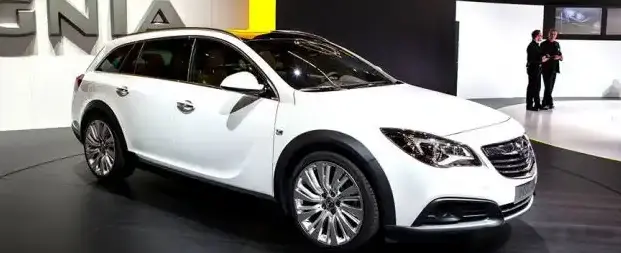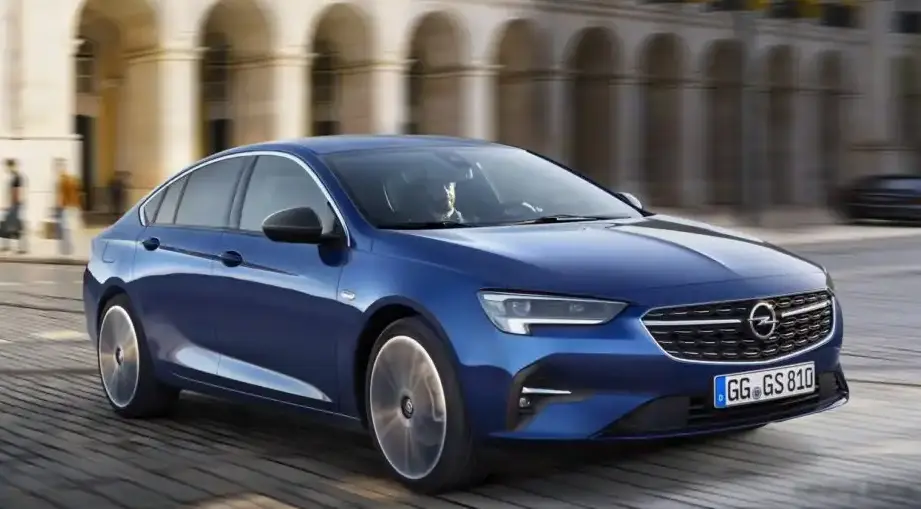
The Opel Insignia Grand Sport, specifically the 2.0d (174 hp) Automatic variant produced from March 2020 onwards, represents a mid-cycle refresh of the second-generation Insignia (designated as the B model). This liftback, positioned as a mainstream family car in the European market, aimed to blend practicality, comfort, and reasonable fuel efficiency. The facelift brought styling updates and technological enhancements to an already competitive segment. This particular engine and transmission combination occupied a middle ground within the Insignia lineup, offering a balance between performance and economy, appealing to drivers prioritizing a comfortable driving experience over outright speed.
Technical Specifications
| Brand | Opel |
| Model | Insignia |
| Generation | Insignia Grand Sport (B, facelift 2020) |
| Type (Engine) | 2.0d (174 Hp) Automatic |
| Start of production | March, 2020 |
| Powertrain Architecture | Internal Combustion engine |
| Body type | Liftback |
| Seats | 5 |
| Doors | 5 |
| Fuel consumption (urban) | 5.9 l/100 km (39.9 US mpg, 47.9 UK mpg, 16.9 km/l) |
| Fuel consumption (extra urban) | 4 l/100 km (58.8 US mpg, 70.6 UK mpg, 25 km/l) |
| Fuel consumption (combined) | 4.7 l/100 km (50 US mpg, 60.1 UK mpg, 21.3 km/l) |
| CO2 emissions | 123 g/km |
| Fuel Type | Diesel |
| Acceleration 0 – 100 km/h | 8 sec |
| Acceleration 0 – 62 mph | 8 sec |
| Acceleration 0 – 60 mph | 7.6 sec |
| Maximum speed | 223 km/h (138.57 mph) |
| Emission standard | Euro 6d |
| Power | 174 Hp @ 3500 rpm |
| Power per litre | 89 Hp/l |
| Torque | 380 Nm @ 1500-2750 rpm (280.27 lb.-ft. @ 1500-2750 rpm) |
| Engine layout | Front, Transverse |
| Engine Model/Code | F20DVH |
| Engine displacement | 1955 cm3 (119.3 cu. in.) |
| Number of cylinders | 4 |
| Engine configuration | Inline |
| Compression ratio | 15.5:1 |
| Number of valves per cylinder | 4 |
| Fuel injection system | Diesel Commonrail |
| Engine aspiration | Turbocharger, Intercooler |
| Engine oil capacity | 5 l (5.28 US qt | 4.4 UK qt) |
| Trunk (boot) space – minimum | 490 l (17.3 cu. ft.) |
| Trunk (boot) space – maximum | 1450 l (51.21 cu. ft.) |
| Fuel tank capacity | 62 l (16.38 US gal | 13.64 UK gal) |
| AdBlue tank | 15 l (3.96 US gal | 3.3 UK gal) |
| Length | 4897 mm (192.8 in.) |
| Width | 1863 mm (73.35 in.) |
| Width with mirrors folded | 1941 mm (76.42 in.) |
| Width including mirrors | 2093 mm (82.4 in.) |
| Height | 1455 mm (57.28 in.) |
| Wheelbase | 2829 mm (111.38 in.) |
| Front track | 1607 mm (63.27 in.) |
| Rear track | 1610 mm (63.39 in.) |
| Front overhang | 990 mm (38.98 in.) |
| Rear overhang | 1078 mm (42.44 in.) |
| Minimum turning circle | 11.74 m (38.52 ft.) |
| Drivetrain Architecture | Front wheel drive |
| Number of gears | 8 |
| Gearbox type | Automatic transmission |
| Tires size | 215/55 R17; 245/45 R18; 245/35 R20 |
| Wheel rims size | 7.5J x 17; 8.5J x 18; 8.5J x 20 |
Powertrain & Engine Architecture
At the heart of this Insignia variant lies the F20DVH, a 2.0-liter inline-four cylinder diesel engine. This engine is a member of Opel’s/Vauxhall’s family of turbocharged diesel engines, known for its relatively refined operation and fuel efficiency. The engine utilizes a common rail direct injection system, delivering fuel directly into the combustion chamber at extremely high pressure for optimized combustion. A turbocharger with an intercooler is employed to increase power output by forcing more air into the engine. The engine produces 174 horsepower at 3500 rpm and 380 Nm (280 lb-ft) of torque between 1500 and 2750 rpm. This broad torque curve contributes to strong mid-range acceleration. The engine also incorporates a particulate filter to reduce emissions, meeting Euro 6d standards. Paired with the engine is an eight-speed automatic transmission, providing smooth and efficient gear changes. This transmission is designed to optimize fuel economy and provide a comfortable driving experience.
Driving Characteristics
The 174 hp 2.0d Automatic Insignia Grand Sport delivers a composed and comfortable driving experience. Acceleration from 0-60 mph takes around 7.6 seconds, which is adequate for everyday driving and highway merging. The automatic transmission is well-tuned, offering seamless shifts and responsive performance. Compared to the more powerful 2.0-liter turbocharged gasoline engines available in the Insignia range, this diesel variant prioritizes fuel economy and low-end torque over outright speed. While the gasoline engines offer a more engaging driving experience, the diesel provides a more relaxed and efficient ride. The eight-speed automatic transmission helps to keep the engine in its optimal power band, maximizing efficiency and minimizing noise. The gear ratios are well-spaced, providing ample power for overtaking maneuvers.
Equipment & Trim Levels
The 2.0d Automatic trim typically included a generous level of standard equipment. This often included features such as automatic climate control, a touchscreen infotainment system with Apple CarPlay and Android Auto compatibility, and a suite of safety features like lane departure warning, automatic emergency braking, and adaptive cruise control. Interior upholstery was typically cloth or a combination of cloth and leatherette, depending on optional packages. Higher trim levels offered upgrades such as leather seats, a premium sound system, and a panoramic sunroof. Optional extras included a head-up display, heated seats, and a 360-degree parking camera system.
Chassis & Braking
The Insignia Grand Sport features a front-wheel-drive chassis with independent suspension at all four corners. The front suspension utilizes MacPherson struts, while the rear suspension employs a multi-link setup. This configuration provides a good balance between ride comfort and handling. Depending on the trim level and optional packages, the suspension could be electronically controlled, allowing the driver to adjust the damping settings. Braking duties are handled by disc brakes at the front and either disc or drum brakes at the rear, depending on the specific configuration. Anti-lock braking system (ABS) and electronic stability control (ESC) are standard features, enhancing safety and control.
Market Reception & Comparison
The Opel Insignia Grand Sport 2.0d Automatic was generally well-received by automotive critics. It was praised for its comfortable ride, spacious interior, and fuel efficiency. However, some critics noted that the interior design was somewhat conservative and that the driving experience lacked the engagement of some of its rivals. Compared to other trims in the Insignia lineup, the 2.0d Automatic offered a compelling balance between performance and economy. The more powerful gasoline engines provided more exhilarating performance, but at the expense of fuel efficiency. The lower-powered diesel variants were more affordable but lacked the refinement and performance of the 174 hp version.
Legacy
The F20DVH engine, while generally reliable, is known to require regular maintenance, particularly regarding the diesel particulate filter (DPF) and the exhaust gas recirculation (EGR) system. Proper servicing and the use of high-quality oil are crucial for ensuring long-term reliability. In the used car market, the Insignia Grand Sport 2.0d Automatic remains a popular choice for buyers seeking a spacious, comfortable, and fuel-efficient family car. Its relatively affordable price and generous equipment levels make it an attractive option. However, potential buyers should be aware of the potential maintenance costs associated with the diesel engine and its emissions control systems.