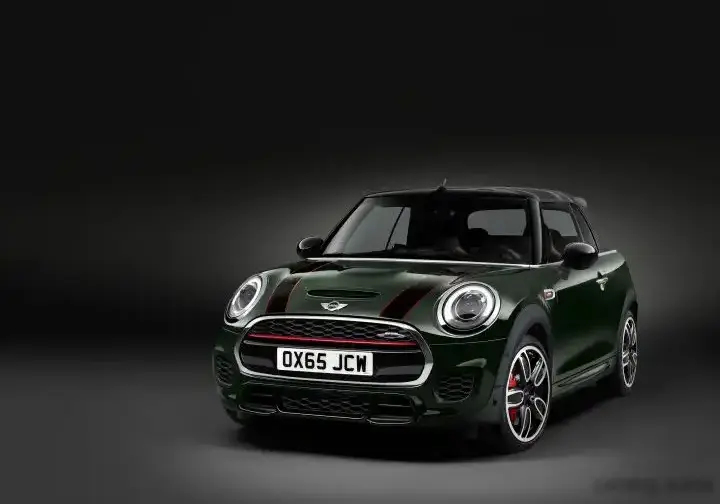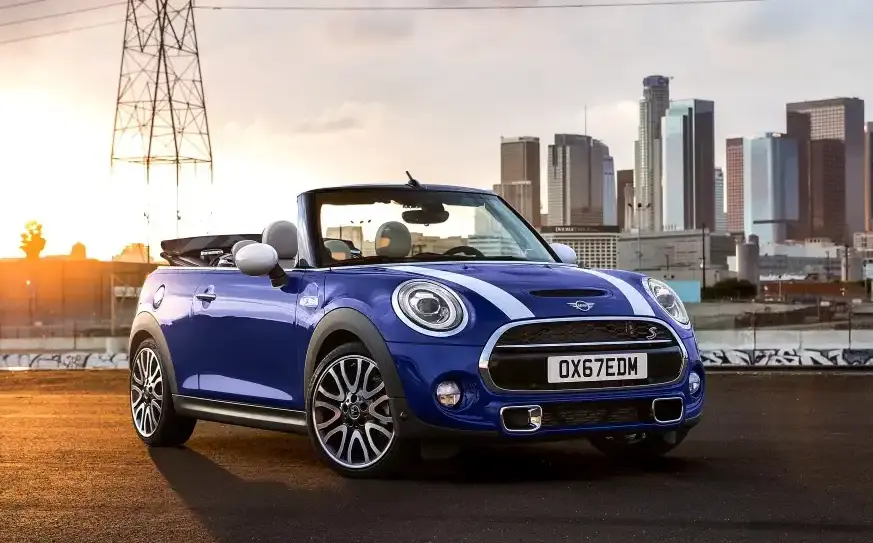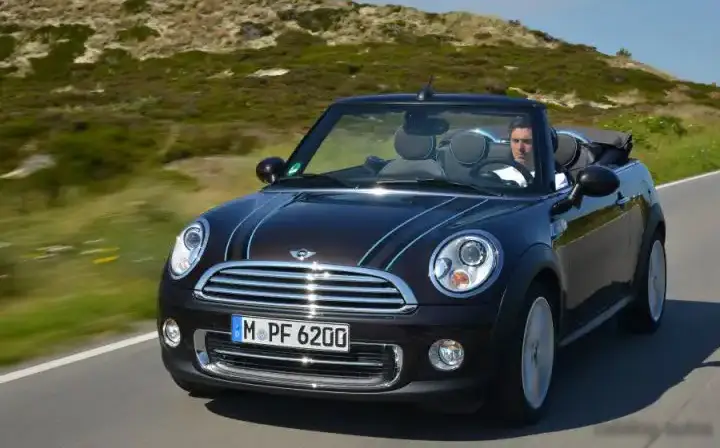
The Mini Convertible (R57) facelift, produced from 2012 to 2015, represented a mid-cycle refresh of the second-generation convertible model. The Cooper S 1.6 (184 hp) Automatic variant occupied a performance-oriented position within the lineup, bridging the gap between the base Cooper models and the more potent John Cooper Works (JCW) version. This particular configuration aimed to deliver a sporty driving experience with the convenience of an automatic transmission, appealing to buyers seeking a balance between fun and usability. It was positioned as a premium offering, boasting enhanced features and performance compared to the standard Cooper Convertible.
Technical Specifications
| Brand | Mini |
| Model | Convertible |
| Generation | Convertible (R57, Facelift 2011) |
| Type (Engine) | Cooper S 1.6 (184 Hp) Automatic |
| Start of production | 2012 |
| End of production | 2015 |
| Powertrain Architecture | Internal Combustion engine |
| Body type | Cabriolet |
| Seats | 4 |
| Doors | 2 |
| Fuel consumption (urban) | 9.1 l/100 km (25.8 US mpg, 31 UK mpg, 11 km/l) |
| Fuel consumption (extra urban) | 5.1 l/100 km (46.1 US mpg, 55.4 UK mpg, 19.6 km/l) |
| Fuel consumption (combined) | 6.6 l/100 km (35.6 US mpg, 42.8 UK mpg, 15.2 km/l) |
| CO2 emissions | 153 g/km |
| Fuel Type | Petrol (Gasoline) |
| Acceleration 0 – 100 km/h | 7.6 sec |
| Acceleration 0 – 62 mph | 7.6 sec |
| Acceleration 0 – 60 mph | 7.2 sec |
| Maximum speed | 220 km/h (136.7 mph) |
| Emission standard | Euro 5 |
| Weight-to-power ratio | 6.8 kg/Hp, 146.6 Hp/tonne |
| Weight-to-torque ratio | 4.8 kg/Nm, 207.2 Nm/tonne |
| Power | 184 Hp @ 5500 rpm |
| Power per litre | 115.1 Hp/l |
| Torque | 260 Nm @ 1700-4500 rpm (191.77 lb.-ft. @ 1700-4500 rpm) |
| Engine layout | Front, Transverse |
| Engine Model/Code | N18B16A |
| Engine displacement | 1598 cm3 (97.52 cu. in.) |
| Number of cylinders | 4 |
| Engine configuration | Inline |
| Cylinder Bore | 77 mm (3.03 in.) |
| Piston Stroke | 85.8 mm (3.38 in.) |
| Compression ratio | 10.5:1 |
| Number of valves per cylinder | 4 |
| Fuel injection system | Multi-port manifold injection |
| Engine aspiration | Turbocharger, Intercooler |
| Engine oil capacity | 4.2 l (4.44 US qt | 3.7 UK qt) |
| Coolant | 7.5 l (7.93 US qt | 6.6 UK qt) |
| Kerb Weight | 1255 kg (2766.8 lbs.) |
| Max. weight | 1685 kg (3714.79 lbs.) |
| Max load | 430 kg (947.99 lbs.) |
| Trunk (boot) space – minimum | 125 l (4.41 cu. ft.) |
| Trunk (boot) space – maximum | 660 l (23.31 cu. ft.) |
| Fuel tank capacity | 50 l (13.21 US gal | 11 UK gal) |
| Length | 3729 mm (146.81 in.) |
| Width | 1683 mm (66.26 in.) |
| Height | 1414 mm (55.67 in.) |
| Wheelbase | 2467 mm (97.13 in.) |
| Front track | 1453 mm (57.2 in.) |
| Rear (Back) track | 1461 mm (57.52 in.) |
| Ride height (ground clearance) | 130 mm (5.12 in.) |
| Minimum turning circle | 10.7 m (35.1 ft.) |
| Drivetrain Architecture | Front wheel drive |
| Number of gears and type of gearbox | 6 gears, automatic transmission |
| Front suspension | Independent, type McPherson with coil spring and anti-roll bar |
| Rear suspension | Independent multi-link suspension |
| Front brakes | Ventilated discs |
| Rear brakes | Disc |
| Assisting systems | ABS (Anti-lock braking system) |
| Steering type | Steering rack and pinion |
| Tires size | 195/55 R16 87V |
| Wheel rims size | 6.5J x 16 LM |
Powertrain & Engine Architecture
The Cooper S Automatic was powered by the N18B16A 1.6-liter turbocharged inline-four cylinder engine. This engine was a key component of the R57 facelift, offering a significant power upgrade over the naturally aspirated engines found in the base Cooper models. The N18 featured direct fuel injection, a twin-scroll turbocharger, and variable valve timing (Double VANOS) on both the intake and exhaust camshafts. These technologies contributed to its responsive performance and relatively good fuel efficiency. The engine produced 184 horsepower at 5500 rpm and 260 Nm (192 lb-ft) of torque between 1700 and 4500 rpm. The automatic transmission was a six-speed unit, designed to provide smooth shifts and optimized gear ratios for both city driving and highway cruising. While not a dual-clutch transmission, it offered a convenient alternative to the six-speed manual gearbox available on other Cooper S models.
Driving Characteristics
The 184 hp Cooper S Automatic offered a noticeably more engaging driving experience than the base Cooper models. Acceleration from 0 to 60 mph took approximately 7.2 seconds, making it a reasonably quick vehicle for its class. The automatic transmission, while convenient, did slightly diminish the sense of control compared to the manual version. Gear changes were generally smooth, but could occasionally feel hesitant during aggressive driving. The turbocharger provided a noticeable boost in power, delivering strong acceleration in the mid-range. The front-wheel-drive layout, combined with the engine’s torque output, could sometimes result in torque steer, particularly under hard acceleration. Overall, the driving experience was characterized by a blend of sporty performance and everyday usability.
Equipment & Trim Levels
The Cooper S Automatic typically came standard with features such as air conditioning, power windows and locks, a multi-function steering wheel, and a basic audio system. Upholstery was usually cloth, but leather options were available. Common optional extras included a premium sound system, navigation system, heated seats, and a panoramic sunroof. The R57 facelift also introduced updated interior trim options and improved infotainment systems. The Cooper S trim level generally offered a more refined interior finish compared to the base Cooper, with additional chrome accents and higher-quality materials.
Chassis & Braking
The R57 Cooper S featured independent suspension on all four wheels, with McPherson struts at the front and a multi-link setup at the rear. This suspension configuration provided a good balance between ride comfort and handling. The Cooper S models typically had a slightly stiffer suspension setup compared to the base Cooper, enhancing its cornering ability. Braking duties were handled by ventilated disc brakes at the front and solid discs at the rear. Anti-lock braking system (ABS) was standard. The chassis was reinforced compared to earlier models to handle the increased power output of the Cooper S engine.
Market Reception & Comparison
The Cooper S Automatic was generally well-received by automotive critics, who praised its performance and handling. However, some reviewers noted that the automatic transmission didn’t fully exploit the engine’s potential, and that the manual version offered a more engaging driving experience. Fuel economy was considered reasonable for a performance-oriented vehicle, averaging around 35.6 US mpg in combined driving. Compared to the base Cooper Automatic, the Cooper S offered a significant performance upgrade, but at a higher price point. Compared to the JCW model, it offered a more accessible price and a slightly more comfortable ride, while still providing a sporty driving experience.
Legacy
The N18 engine, while generally reliable, has been known to exhibit some issues over time, including oil leaks and occasional turbocharger failures. The six-speed automatic transmission has also proven to be relatively durable, but regular maintenance is crucial to ensure its longevity. Today, the R57 Cooper S Automatic remains a popular choice in the used car market, appealing to buyers seeking a stylish and fun-to-drive convertible. Its relatively compact size and nimble handling make it well-suited for city driving, while its turbocharged engine provides ample power for highway cruising. Properly maintained examples continue to offer a rewarding driving experience and a distinctive Mini aesthetic.