
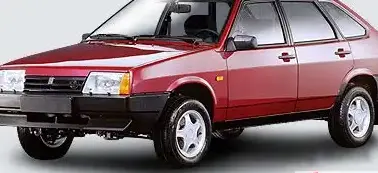
The Lada 21093-20 1.5i, producing 78 horsepower, was a mainstay of the Lada lineup from 1997 to 2005. Representing an evolution of the original 2109, the ‘21093-20’ designation signified updates to the bodywork and interior, aiming for a more modern aesthetic. This variant occupied the entry-level position within the 2109 series, offering a budget-friendly option for consumers in Eastern Europe and other markets where Lada had a strong presence. It was built on the aging, but robust, 2109 platform, a derivative of the Fiat 124, and served as a practical and affordable means of transportation.
Technical Specifications
| Brand | Lada |
| Model | 2109 |
| Generation | 21093-20 |
| Type (Engine) | 1.5 i (78 Hp) |
| Start of production | 1997 |
| End of production | 2005 |
| Powertrain Architecture | Internal Combustion engine |
| Body type | Hatchback |
| Seats | 5 |
| Doors | 5 |
| Fuel consumption (urban) | 10 l/100 km (23.5 US mpg) |
| Fuel consumption (extra urban) | 5.7 l/100 km (41.3 US mpg) |
| Fuel consumption (combined) | 7.3 l/100 km (32.2 US mpg) |
| Fuel Type | Petrol (Gasoline) |
| Acceleration 0 – 100 km/h | 13 sec |
| Acceleration 0 – 62 mph | 13 sec |
| Acceleration 0 – 60 mph | 12.4 sec |
| Maximum speed | 160 km/h (99.42 mph) |
| Weight-to-power ratio | 12.1 kg/Hp |
| Weight-to-torque ratio | 8.2 kg/Nm |
| Power | 78 Hp @ 5400 rpm |
| Power per litre | 52 Hp/l |
| Torque | 115 Nm @ 3000 rpm (84.82 lb.-ft. @ 3000 rpm) |
| Engine layout | Front, Transverse |
| Engine displacement | 1500 cm3 (91.54 cu. in.) |
| Number of cylinders | 4 |
| Engine configuration | Inline |
| Cylinder Bore | 82 mm (3.23 in.) |
| Piston Stroke | 71 mm (2.8 in.) |
| Compression ratio | 9.9:1 |
| Number of valves per cylinder | 2 |
| Fuel injection system | Multi-port manifold injection |
| Engine aspiration | Naturally aspirated engine |
| Valvetrain | OHC |
| Kerb Weight | 945 kg (2083.37 lbs.) |
| Max. weight | 1370 kg (3020.33 lbs.) |
| Max load | 425 kg (936.96 lbs.) |
| Trunk (boot) space – minimum | 270 l (9.53 cu. ft.) |
| Trunk (boot) space – maximum | 1000 l (35.31 cu. ft.) |
| Fuel tank capacity | 43 l (11.36 US gal) |
| Length | 4006 mm (157.72 in.) |
| Width | 1650 mm (64.96 in.) |
| Height | 1402 mm (55.2 in.) |
| Wheelbase | 2460 mm (96.85 in.) |
| Front track | 1400 mm (55.12 in.) |
| Rear (Back) track | 1370 mm (53.94 in.) |
| Drivetrain Architecture | The Internal combustion engine (ICE) drives the front wheels of the vehicle. |
| Drive wheel | Front wheel drive |
| Number of gears and type of gearbox | 5 gears, manual transmission |
| Front suspension | Spring Strut |
| Rear suspension | Coil spring |
| Front brakes | Disc |
| Rear brakes | Drum |
| Steering type | Steering rack and pinion |
| Tires size | 165/70 SR13 |
Powertrain & Engine Architecture
The heart of the 21093-20 was the 1.5-liter inline-four cylinder engine. While variations existed, the most common engine code for this output was likely a derivative of the earlier 2108 series engines. This engine featured a single overhead camshaft (OHC) valvetrain operating two valves per cylinder. Fuel delivery was handled by a multi-port fuel injection system, a significant upgrade from the carburetors found on earlier Lada models. This injection system, while relatively basic by modern standards, improved fuel efficiency and reduced emissions. The engine produced 78 horsepower at 5400 rpm and 115 Nm (84.82 lb-ft) of torque at 3000 rpm. The engine was transversely mounted, driving the front wheels through a standard five-speed manual transmission. An optional, but less common, four-speed automatic transmission was also available, though it significantly impacted performance.
Driving Characteristics
The 1.5-liter engine, paired with the five-speed manual, provided adequate, though not exhilarating, performance. Acceleration from 0 to 60 mph took around 12.4 seconds, and top speed was limited to approximately 99 mph. The automatic transmission version was noticeably slower, with a 0-60 mph time closer to 14-15 seconds. The gear ratios in the manual transmission were relatively tall, prioritizing fuel economy over outright acceleration. The engine felt most comfortable in the mid-range, offering sufficient power for everyday driving. Handling was predictable but unremarkable, typical of a front-wheel-drive car with a relatively simple suspension setup. The steering, while not particularly precise, was light and easy to use.
Equipment & Trim Levels
The 21093-20 1.5i was generally sparsely equipped, reflecting its position as an entry-level model. Standard features typically included basic cloth upholstery, a simple dashboard layout, and manual windows and door locks. Power steering was often an optional extra, as were features like a radio and upgraded interior trim. The interior was functional and durable, but lacked the refinement of more modern vehicles. The exterior styling featured updated headlights and taillights compared to earlier 2109 models, along with revised body trim. Available colors were typically limited to a range of basic solid colors.
Chassis & Braking
The 21093-20 utilized a relatively simple chassis design. The front suspension consisted of MacPherson strut springs, while the rear suspension employed a coil spring setup. The front brakes were disc brakes, providing adequate stopping power, while the rear brakes were drum brakes, a cost-saving measure. The steering system was a rack-and-pinion type, offering reasonable steering response. Tire size was typically 165/70 SR13. The car’s relatively light weight (around 2083 lbs) helped to offset the modest engine output.
Market Reception & Comparison
The Lada 21093-20 1.5i was primarily targeted at budget-conscious buyers in Eastern Europe and other developing markets. Critics generally acknowledged its affordability and practicality, but also noted its lack of refinement and relatively slow performance. Compared to other trims in the 2109 lineup, such as the 1.6-liter versions, the 1.5i offered lower running costs but significantly less power. Fuel economy was a strong point, with combined fuel consumption around 32.2 US mpg. Reliability was generally good, owing to the engine’s simple design, but parts quality could be inconsistent.
Legacy
The Lada 21093-20 1.5i, while not a performance icon, remains a significant vehicle in automotive history, particularly in Eastern Europe. Its affordability and durability made it a popular choice for many years. Today, these cars are increasingly sought after by enthusiasts and collectors, particularly well-maintained examples. The 1.5-liter engine, while not known for its power, is generally considered reliable and relatively easy to maintain. The availability of spare parts is still reasonably good, making it a viable option for those seeking a classic and affordable vehicle. The 21093-20 represents a bygone era of automotive simplicity and practicality.
