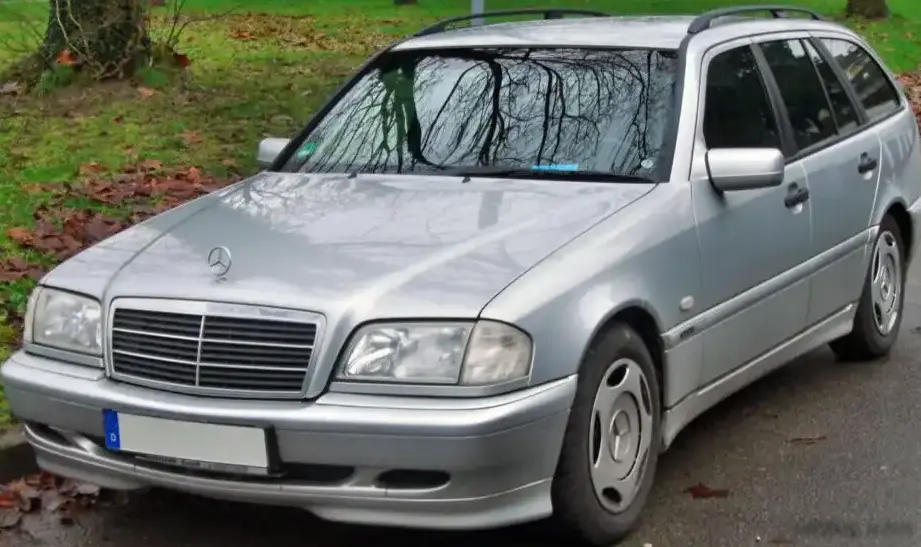
The Mercedes-Benz C-Class T-modell (S202) C 250 Turbodiesel, produced from June 1997 to November 2000, represents a compelling blend of practicality and performance within the compact executive estate car segment. This variant, part of the facelifted S202 generation, offered a diesel-powered option aimed at buyers prioritizing fuel efficiency and torque for towing or long-distance travel. Positioned as a mid-range offering within the C-Class T-modell lineup, it sat between the lower-powered C 220 Turbodiesel and the more potent C 320 CDI. The C 250 Turbodiesel was primarily sold in Europe, where demand for diesel estates was significantly higher than in the United States.
Technical Specifications
| Brand | Mercedes-Benz |
| Model | C-Class |
| Generation | C-Class T-modell (S202, facelift 1997) |
| Type (Engine) | C 250 Turbodiesel (150 Hp) |
| Start of production | June, 1997 |
| End of production | November, 2000 |
| Powertrain Architecture | Internal Combustion engine |
| Body type | Station wagon (estate) |
| Seats | 5 |
| Doors | 5 |
| Fuel consumption (urban) | 9.4 l/100 km (25 US mpg, 30.1 UK mpg, 10.6 km/l) |
| Fuel consumption (extra urban) | 5.3 l/100 km (44.4 US mpg, 53.3 UK mpg, 18.9 km/l) |
| Fuel Type | Diesel |
| Acceleration 0 – 100 km/h | 10.5 sec |
| Acceleration 0 – 62 mph | 10.5 sec |
| Acceleration 0 – 60 mph | 10 sec |
| Maximum speed | 200 km/h (124.27 mph) |
| Weight-to-power ratio | 10.1 kg/Hp, 98.7 Hp/tonne |
| Weight-to-torque ratio | 5.4 kg/Nm, 184.2 Nm/tonne |
| Power | 150 Hp @ 4400 rpm |
| Power per litre | 60.1 Hp/l |
| Torque | 280 Nm @ 1800-3600 rpm (206.52 lb.-ft. @ 1800-3600 rpm) |
| Engine layout | Front, Longitudinal |
| Engine Model/Code | OM 605 D 25 LA / 605.960 |
| Engine displacement | 2497 cm3 (152.38 cu. in.) |
| Number of cylinders | 5 |
| Engine configuration | Inline |
| Cylinder Bore | 87 mm (3.43 in.) |
| Piston Stroke | 84 mm (3.31 in.) |
| Compression ratio | 22:1 |
| Number of valves per cylinder | 4 |
| Fuel injection system | Precombustion chamber injection |
| Engine aspiration | Turbocharger, Intercooler |
| Valvetrain | DOHC |
| Engine oil capacity | 7 l (7.4 US qt | 6.16 UK qt) |
| Coolant | 7.5 l (7.93 US qt | 6.6 UK qt) |
| Kerb Weight | 1520 kg (3351.03 lbs.) |
| Max. weight | 2000 kg (4409.25 lbs.) |
| Max load | 480 kg (1058.22 lbs.) |
| Fuel tank capacity | 62 l (16.38 US gal | 13.64 UK gal) |
| Length | 4516 mm (177.8 in.) |
| Width | 1723 mm (67.83 in.) |
| Height | 1460 mm (57.48 in.) |
| Wheelbase | 2690 mm (105.91 in.) |
| Front track | 1499 mm (59.02 in.) |
| Rear track | 1464 mm (57.64 in.) |
| Drag coefficient (Cd) | 0.33 |
| Drivetrain Architecture | The Internal combustion engine (ICE) drives the rear wheels of the vehicle. |
| Drive wheel | Rear wheel drive |
| Number of gears and type of gearbox | 5 gears, manual transmission |
| Front suspension | Double wishbone |
| Rear suspension | Independent multi-link spring suspension with stabilizer |
| Front brakes | Ventilated discs |
| Rear brakes | Disc |
| Assisting systems | ABS (Anti-lock braking system) |
| Steering type | Cone worm with recirculation balls |
| Power steering | Hydraulic Steering |
| Tires size | 195/65 R15 |
| Wheel rims size | 6.5J x 15 |
Powertrain & Engine Architecture
The heart of the C 250 Turbodiesel is the OM 605 D 25 LA engine, a 2.5-liter inline five-cylinder diesel. This engine utilizes precombustion chamber injection, a system common in Mercedes-Benz diesels of the era, known for its relatively quiet operation and good combustion efficiency. The addition of a turbocharger and intercooler significantly boosted power output to 150 horsepower at 4400 rpm and 280 Nm (206.52 lb-ft) of torque between 1800 and 3600 rpm. The engine features a double overhead camshaft (DOHC) valvetrain and a compression ratio of 22:1. The five-speed manual transmission was standard, providing a balance between fuel economy and drivability. While an automatic transmission was available as an option, it impacted acceleration and fuel consumption.
Driving Characteristics
The C 250 Turbodiesel offered a distinctly different driving experience compared to its gasoline-powered siblings. The high torque output provided strong acceleration from low engine speeds, making it well-suited for overtaking and hauling loads. However, the engine lacked the high-revving character of the gasoline engines, and the five-speed manual transmission, while adequate, didn’t offer the same level of engagement as the six-speed gearboxes found in some higher-performance C-Class models. The rear-wheel-drive configuration provided a balanced feel, but traction could be limited on slippery surfaces. Compared to the C 220 Turbodiesel, the C 250 offered noticeably more power, while the C 320 CDI provided even greater performance but at a higher price point.
Equipment & Trim Levels
The C 250 Turbodiesel T-modell typically came equipped with features such as power windows, central locking, and an adjustable steering column. Interior upholstery was generally cloth, with leather options available at extra cost. Standard safety equipment included ABS anti-lock brakes and airbags. Optional extras included a sunroof, automatic climate control, and a premium sound system. Trim levels varied depending on the market, but generally offered a progression of features and luxury appointments.
Chassis & Braking
The S202 C-Class T-modell featured a double wishbone front suspension and an independent multi-link rear suspension with a stabilizer bar, providing a comfortable and controlled ride. The braking system consisted of ventilated discs at the front and solid discs at the rear. The ABS anti-lock braking system was standard, enhancing safety during emergency stops. The suspension was tuned to prioritize comfort and stability, rather than outright sportiness.
Market Reception & Comparison
The C 250 Turbodiesel T-modell was well-received in Europe as a practical and fuel-efficient estate car. Critics praised its strong torque output and comfortable ride. However, some noted that the engine could be somewhat noisy compared to modern diesel engines. In terms of fuel economy, the C 250 Turbodiesel offered a significant advantage over the gasoline-powered C-Class models. Reliability was generally good, although the precombustion chamber injection system required regular maintenance. Compared to competitors such as the BMW 3 Series Touring and Audi A4 Avant, the C 250 Turbodiesel offered a compelling combination of value, practicality, and refinement.
Legacy
The OM 605 engine family, including the 605.960 variant found in the C 250 Turbodiesel, is known for its durability and longevity. Properly maintained examples can still be found on the road today. While the precombustion chamber injection system requires specialized knowledge for servicing, the engine is generally considered reliable. In the used car market, the C 250 Turbodiesel T-modell represents a relatively affordable entry point into Mercedes-Benz ownership, offering a practical and fuel-efficient estate car with a classic Mercedes-Benz feel. Its robust engine and practical body style continue to appeal to buyers seeking a dependable and versatile vehicle.