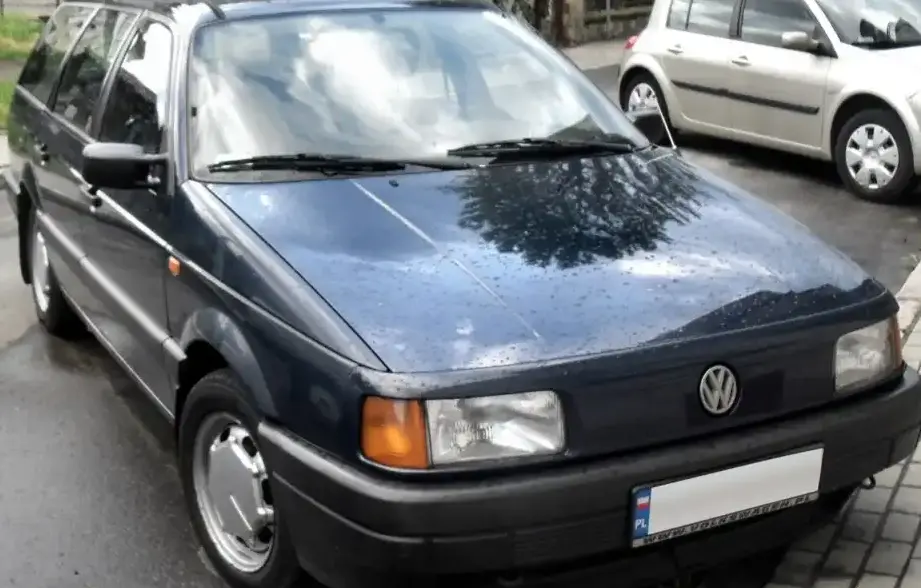
The Volkswagen Passat Variant (B3) 1.8 16V, produced from 1988 to 1989, represented a significant step forward for Volkswagen’s popular estate car. Positioned as a mid-range offering within the B3 Passat lineup, it combined a relatively potent 16-valve engine with the practicality of a station wagon body style. This variant was primarily aimed at the European market, where estate cars held a strong appeal for families and those requiring substantial cargo space. It built upon the success of the B2 Passat, offering increased refinement and a more modern design, while remaining a practical and reliable family vehicle. The B3 generation, internally designated as the 1HX0, marked a departure from the earlier, more angular designs, adopting a smoother, more aerodynamic aesthetic.
Technical Specifications
| Brand | Volkswagen |
| Model | Passat |
| Generation | Passat Variant (B3) |
| Type (Engine) | 1.8 16V (136 Hp) |
| Start of production | 1988 |
| End of production | 1989 |
| Powertrain Architecture | Internal Combustion engine |
| Body type | Station wagon (estate) |
| Seats | 5 |
| Doors | 3/5 |
| Fuel Type | Petrol (Gasoline) |
| Acceleration 0 – 100 km/h | 8.7 sec |
| Acceleration 0 – 62 mph | 8.7 sec |
| Acceleration 0 – 60 mph | 8.3 sec |
| Maximum speed | 270 km/h (167.77 mph) |
| Power | 136 Hp @ 7500 rpm |
| Power per litre | 76 Hp/l |
| Engine Model/Code | KR |
| Engine displacement | 1789 cm3 (109.17 cu. in.) |
| Engine configuration | Inline |
| Fuel injection system | Multi-port manifold injection |
| Engine aspiration | Naturally aspirated engine |
| Engine oil capacity | 4 l (4.23 US qt | 3.52 UK qt) |
| Fuel tank capacity | 60 l (15.85 US gal | 13.2 UK gal) |
| Front brakes | Ventilated discs |
| Rear brakes | Disc |
| Assisting systems | ABS (Anti-lock braking system) |
Powertrain & Engine Architecture
The heart of the Passat Variant 1.8 16V was the KR engine code, a 1.8-liter, inline four-cylinder powerplant. This engine was a significant upgrade over the earlier 8-valve versions, featuring dual overhead camshafts and four valves per cylinder – hence the “16V” designation. This configuration allowed for improved breathing and higher engine speeds, resulting in increased power output. The engine utilized Bosch Motronic fuel injection, a multi-port system that precisely controlled fuel delivery for optimal combustion and efficiency. The KR engine was known for its relatively smooth operation and willingness to rev. The engine’s 7500 rpm redline was fairly high for the era, encouraging drivers to utilize the engine’s power band. The transmission offered was typically a four-speed automatic, designed to provide comfortable and convenient shifting. While not as sporty as a manual gearbox, the automatic was well-suited to the Passat’s role as a family vehicle.
Driving Characteristics
The 1.8 16V automatic Passat Variant offered a blend of performance and practicality. Acceleration from 0-60 mph in approximately 8.3 seconds was respectable for the late 1980s, and the car felt reasonably sprightly in everyday driving. However, compared to the manual transmission versions or the more powerful engines available in the B3 Passat range (like the G60 or VR6), the automatic felt somewhat less responsive. The four-speed automatic transmission, while smooth, had relatively widely spaced gear ratios, which could sometimes result in the engine feeling strained during hard acceleration. The automatic transmission did, however, contribute to a more relaxed driving experience, particularly on long journeys. The suspension was tuned for comfort, providing a compliant ride, although it wasn’t particularly sporty. Steering was light and easy, making the car maneuverable in urban environments.
Equipment & Trim Levels
The 1.8 16V Passat Variant typically came with a reasonable level of standard equipment. This included power steering, central locking, electric windows, and an adjustable steering column. Interior upholstery was usually cloth, with options for upgraded materials available. The dashboard layout was functional and straightforward, with clear instrumentation. Optional extras included a sunroof, alloy wheels, and a more sophisticated audio system. The trim level generally sat in the mid-range of the B3 Passat lineup, offering a good balance of features and affordability. It was a step up from the base models but didn’t have the luxury appointments of the higher-spec versions.
Chassis & Braking
The B3 Passat Variant featured an independent suspension system at the front, utilizing MacPherson struts and stabilizer bar. The rear suspension employed a semi-independent torsion beam axle. This setup provided a good compromise between ride comfort and handling. Braking was handled by ventilated discs at the front and solid discs at the rear. An Anti-lock Braking System (ABS) was standard, enhancing safety by preventing wheel lockup during hard braking. The braking system was generally considered adequate for the car’s weight and performance, although it wasn’t particularly powerful by modern standards. The stabilizer bar thickness was moderate, contributing to the car’s neutral handling characteristics.
Market Reception & Comparison
The Passat Variant 1.8 16V was generally well-received by automotive critics. It was praised for its spacious interior, comfortable ride, and relatively strong performance. However, some reviewers noted that the automatic transmission detracted from the driving experience compared to the manual versions. Compared to other trims in the B3 Passat lineup, the 1.8 16V automatic offered a good balance of fuel economy and performance. It was more economical than the larger-engined models but provided more power than the base 1.6-liter versions. Reliability was generally good, although the Motronic fuel injection system could occasionally require attention. The 1.8 16V was often seen as a sensible choice for families who needed a practical and reliable estate car.
Legacy
The Volkswagen Passat Variant (B3) 1.8 16V has proven to be a relatively durable and reliable vehicle. Many examples are still on the road today, testament to the quality of Volkswagen engineering. The KR engine, while not without its quirks, is generally considered to be a robust and long-lasting unit. In the used car market, these Passats are often sought after by enthusiasts and collectors who appreciate their classic styling and practicality. Maintenance costs are generally reasonable, although finding parts for older models can sometimes be a challenge. The B3 Passat Variant 1.8 16V remains a popular choice for those seeking a classic European estate car that offers a blend of comfort, practicality, and reliability.