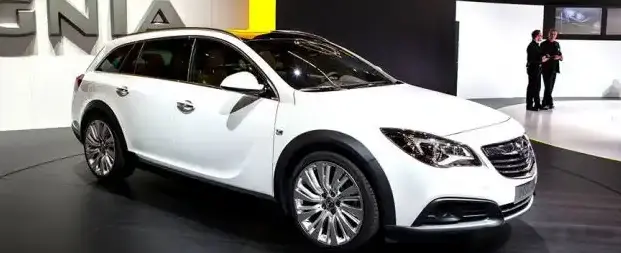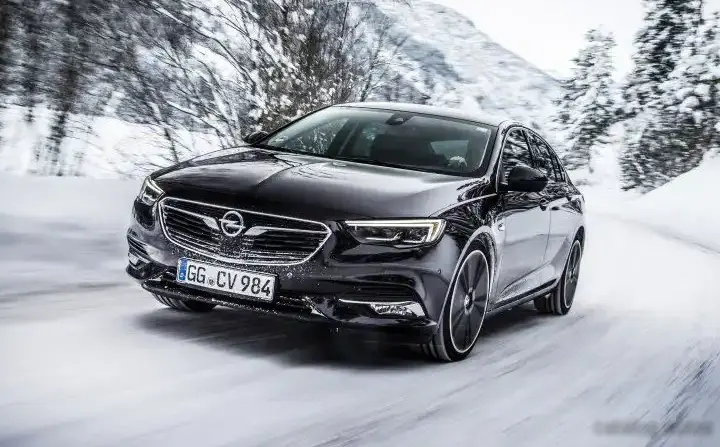
The Opel Insignia Grand Sport GSi 2.0 CDTI BiTurbo, produced from September 2017 to April 2019, represented a performance-oriented variant within the second generation (B) of the Insignia model line. Positioned as a flagship trim, it aimed to blend practicality with enhanced driving dynamics, appealing to buyers seeking a sporty yet comfortable grand tourer. This model was primarily marketed in Europe, offering a more premium alternative to mainstream Insignia trims. It utilized a sophisticated all-wheel-drive system and a powerful bi-turbo diesel engine, setting it apart from the standard Insignia offerings.
Technical Specifications
| Brand | Opel |
| Model | Insignia |
| Generation | Insignia Grand Sport (B) |
| Type | GSi 2.0 CDTI BiTurbo (210 Hp) AWD Automatic |
| Start of production | September, 2017 |
| End of production | April, 2019 |
| Powertrain Architecture | Internal Combustion engine |
| Body type | Hatchback |
| Seats | 5 |
| Doors | 5 |
| Fuel consumption (urban) | 8.9 l/100 km (26.4 US mpg, 31.7 UK mpg, 11.2 km/l) |
| Fuel consumption (extra urban) | 6.1 l/100 km (38.6 US mpg, 46.3 UK mpg, 16.4 km/l) |
| Fuel consumption (combined) | 7.3 l/100 km (32.2 US mpg, 38.7 UK mpg, 13.7 km/l) |
| CO2 emissions | 192 g/km |
| Fuel Type | Diesel |
| Acceleration 0 – 100 km/h | 7.8 sec |
| Acceleration 0 – 62 mph | 7.8 sec |
| Acceleration 0 – 60 mph | 7.4 sec |
| Maximum speed | 233 km/h (144.78 mph) |
| Emission standard | Euro 6 |
| Weight-to-power ratio | 8.1 kg/Hp, 123.7 Hp/tonne |
| Weight-to-torque ratio | 3.5 kg/Nm, 282.9 Nm/tonne |
| Power | 210 Hp @ 4000 rpm |
| Power per litre | 107.4 Hp/l |
| Torque | 480 Nm @ 1500 rpm (354.03 lb.-ft. @ 1500 rpm) |
| Engine layout | Front, Transverse |
| Engine Model/Code | B20DTR |
| Engine displacement | 1956 cm3 (119.36 cu. in.) |
| Number of cylinders | 4 |
| Engine configuration | Inline |
| Cylinder Bore | 83 mm (3.27 in.) |
| Piston Stroke | 90.4 mm (3.56 in.) |
| Compression ratio | 16.5:1 |
| Number of valves per cylinder | 4 |
| Fuel injection system | Diesel Commonrail |
| Engine aspiration | BiTurbo, Intercooler |
| Engine oil capacity | 4.9 l (5.18 US qt | 4.31 UK qt) |
| Coolant | 5.9 l (6.23 US qt | 5.19 UK qt) |
| Kerb Weight | 1697 kg (3741.24 lbs.) |
| Max. weight | 2315 kg (5103.7 lbs.) |
| Max load | 618 kg (1362.46 lbs.) |
| Trunk (boot) space – minimum | 490 l (17.3 cu. ft.) |
| Trunk (boot) space – maximum | 1450 l (51.21 cu. ft.) |
| Fuel tank capacity | 62 l (16.38 US gal | 13.64 UK gal) |
| Max. roof load | 100 kg (220.46 lbs.) |
| Permitted trailer load with brakes (12%) | 1805 kg (3979.34 lbs.) |
| Permitted trailer load without brakes | 750 kg (1653.47 lbs.) |
| Permitted towbar download | 90 kg (198.42 lbs.) |
| Length | 4910 mm (193.31 in.) |
| Width | 1863 mm (73.35 in.) |
| Width including mirrors | 2093 mm (82.4 in.) |
| Height | 1445 mm (56.89 in.) |
| Wheelbase | 2829 mm (111.38 in.) |
| Front track | 1607 mm (63.27 in.) |
| Rear (Back) track | 1610 mm (63.39 in.) |
| Front overhang | 1000 mm (39.37 in.) |
| Rear overhang | 1081 mm (42.56 in.) |
| Minimum turning circle | 11.74 m (38.52 ft.) |
| Drive wheel | All wheel drive (4×4) |
| Number of gears | 8 |
| Gearbox type | automatic transmission |
| Front brakes | Ventilated discs |
| Rear brakes | Ventilated discs |
INTRODUCTION
The Opel Insignia Grand Sport GSi 2.0 CDTI BiTurbo, launched in 2017, was a performance-focused iteration of the Insignia B, a model designed to compete in the mid-size segment. The “Grand Sport” designation indicated the hatchback body style, offering increased cargo capacity compared to the traditional sedan. The GSi trim level, historically associated with Opel’s sporty models, brought with it a more aggressive aesthetic and enhanced mechanical components. This particular variant, equipped with the 2.0-liter bi-turbo diesel engine and an eight-speed automatic transmission, aimed to deliver a balance of performance, efficiency, and all-weather capability. It sat at the top of the Insignia range, offering a more premium experience than the lower-spec models.
Powertrain & Engine Architecture
At the heart of the GSi was the B20DTR engine, a 2.0-liter inline-four cylinder diesel engine featuring sequential twin-turbocharging. This configuration employed two turbochargers of different sizes – a smaller turbocharger for quick response at low engine speeds and a larger turbocharger for increased power at higher RPMs. The engine utilized a common-rail direct injection system, delivering fuel at extremely high pressure for optimized combustion. The engine produced 210 horsepower at 4000 rpm and a substantial 480 Nm (354 lb-ft) of torque from just 1500 rpm. The eight-speed automatic transmission, sourced from Aisin, was chosen for its smooth shifting and efficiency. It featured a wide gear ratio spread, allowing for both relaxed cruising and responsive acceleration. The transmission was electronically controlled and offered a manual shift mode for driver engagement.
Driving Characteristics
The 2.0 CDTI BiTurbo powertrain delivered a surprisingly potent driving experience. The twin-turbo setup minimized turbo lag, providing strong and readily available torque across a broad rev range. Acceleration from 0-60 mph was achieved in approximately 7.4 seconds, and the car felt confident at highway speeds. Compared to the lower-powered 1.6-liter diesel variants, the GSi offered a significantly more engaging and responsive driving experience. While not as overtly sporty as some of its gasoline-powered rivals, the GSi provided a comfortable and capable grand touring experience. The all-wheel-drive system, utilizing a multi-plate clutch, distributed torque between the front and rear axles as needed, enhancing traction and stability, particularly in adverse weather conditions. The automatic transmission generally shifted smoothly, although some drivers noted a slight hesitation during kickdown maneuvers.
Equipment & Trim Levels
The GSi trim level came standard with a comprehensive list of features. Interior appointments included sport seats upholstered in Morrocana (a synthetic leather) and fabric, with GSi-specific badging. The dashboard featured aluminum trim accents and a touchscreen infotainment system with navigation. Standard equipment also included automatic climate control, parking sensors, and a suite of safety features such as lane departure warning and automatic emergency braking. Optional extras included a panoramic sunroof, adaptive cruise control, and a premium sound system. The exterior styling was enhanced with a unique front grille, side skirts, and a rear spoiler, giving the GSi a more aggressive appearance.
Chassis & Braking
The Insignia GSi featured a chassis tuned for a balance of comfort and handling. The suspension utilized a McPherson strut front suspension and a multi-link rear suspension. The GSi variant benefited from stiffer springs and dampers compared to the standard Insignia, reducing body roll and improving steering response. Braking duties were handled by ventilated discs on all four wheels, providing ample stopping power. The GSi also featured an electronic stability control system (ESC) that helped to maintain control during challenging driving conditions. The steering system was an electric power steering (EPS) system, offering a variable steering ratio for improved maneuverability at low speeds and enhanced stability at high speeds.
Market Reception & Comparison
The Insignia GSi 2.0 CDTI BiTurbo was generally well-received by automotive critics. It was praised for its strong performance, comfortable ride, and spacious interior. However, some reviewers noted that the diesel engine, while powerful, lacked the refinement of some of its gasoline-powered competitors. Compared to the 1.6-liter diesel Insignia, the GSi offered a significant performance upgrade, but at a higher price point. The GSi also competed with other mid-size hatchbacks such as the Ford Mondeo and the Volkswagen Passat, offering a compelling alternative with its unique blend of performance and practicality. Fuel economy was a strong point, with combined figures around 32.2 US mpg, making it a relatively efficient option for long-distance driving.
Legacy
The Opel Insignia GSi 2.0 CDTI BiTurbo represents a capable and well-rounded grand tourer. The B20DTR engine, while complex, has proven to be relatively reliable when properly maintained. Common issues include turbocharger wear and potential problems with the diesel particulate filter (DPF), particularly on vehicles primarily used for short trips. On the used car market, the GSi commands a premium over lower-spec Insignia models, reflecting its higher level of equipment and performance. It remains a popular choice for buyers seeking a comfortable, spacious, and efficient vehicle with a sporty edge. The Insignia, in general, helped to elevate Opel’s image and establish it as a competitor in the mid-size segment.