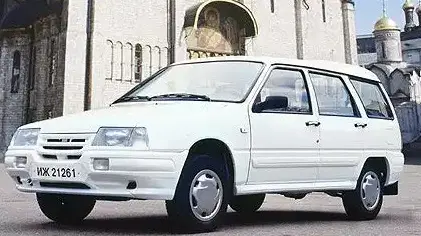
The Izh 21261 4×4 1.8, producing 99 horsepower, was a station wagon produced by the Izhevsk Automobile Plant (IzhAvto) in Russia between 2002 and 2005. It represented a continuation of the Izh 2126 series, offering four-wheel drive capability in a relatively affordable package. This variant occupied a unique niche in the Russian automotive market, providing a practical and robust vehicle for challenging road conditions. It was based on the earlier Izh 2124 platform, itself a derivative of the Fiat 124, but significantly updated with a more modern drivetrain and four-wheel drive system. The 21261 4×4 aimed to bridge the gap between basic, utilitarian vehicles and more expensive imported SUVs.
Technical Specifications
| Brand | Izh |
| Model | 21261 |
| Generation | 21261 4×4 |
| Type (Engine) | 1.8 (99 Hp) |
| Start of production | 2002 |
| End of production | 2005 |
| Powertrain Architecture | Internal Combustion engine |
| Body type | Station wagon (estate) |
| Seats | 5 |
| Doors | 5 |
| Fuel consumption (combined) | 13 l/100 km (18.1 US mpg, 21.7 UK mpg, 7.7 km/l) |
| Fuel Type | Petrol (Gasoline) |
| Acceleration 0 – 100 km/h | 13 sec |
| Acceleration 0 – 62 mph | 13 sec |
| Acceleration 0 – 60 mph | 12.4 sec |
| Maximum speed | 165 km/h (102.53 mph) |
| Weight-to-power ratio | 10.1 kg/Hp, 99 Hp/tonne |
| Weight-to-torque ratio | 7.1 kg/Nm, 140 Nm/tonne |
| Power | 99 Hp @ 5500 rpm |
| Power per litre | 54.5 Hp/l |
| Torque | 140 Nm @ 3200 rpm (103.26 lb.-ft. @ 3200 rpm) |
| Engine layout | Front, Longitudinal |
| Engine displacement | 1816 cm3 (110.82 cu. in.) |
| Number of cylinders | 4 |
| Engine configuration | Inline |
| Compression ratio | 10:1 |
| Number of valves per cylinder | 2 |
| Fuel injection system | Multi-port manifold injection |
| Engine aspiration | Naturally aspirated engine |
| Valvetrain | OHC |
| Kerb Weight | 1000 kg (2204.62 lbs) |
| Trunk (boot) space – minimum | 320 l (11.3 cu. ft.) |
| Trunk (boot) space – maximum | 1890 l (66.74 cu. ft.) |
| Length | 4053 mm (159.57 in) |
| Width | 1660 mm (65.35 in) |
| Height | 1437 mm (56.57 in) |
| Wheelbase | 2470 mm (97.24 in) |
| Front track | 1390 mm (54.72 in) |
| Rear (Back) track | 1370 mm (53.94 in) |
| Drive wheel | All wheel drive (4×4) |
| Number of gears and type of gearbox | 5 gears, manual transmission |
| Front suspension | Spring Strut |
| Rear suspension | Coil spring |
| Front brakes | Disc |
| Rear brakes | Drum |
| Assisting systems | ABS (Anti-lock braking system) |
| Steering type | Steering rack and pinion |
| Tires size | 175/65 R13 |
Powertrain & Engine Architecture
The Izh 21261 4×4 1.8 was powered by a 1.8-liter inline-four cylinder engine. While the exact origins of the engine are complex, it was based on designs originating from the GAZ Volga lineage. The engine featured a single overhead camshaft (OHC) valvetrain with two valves per cylinder. Fuel delivery was handled by a multi-port fuel injection system, a significant upgrade over the carbureted engines found in earlier Izh models. The engine produced 99 horsepower at 5500 rpm and 140 Nm (103.26 lb-ft) of torque at 3200 rpm. The engine was mounted longitudinally in the front of the vehicle. The transmission was a five-speed manual, chosen for its robustness and simplicity. The 4×4 system employed a part-time four-wheel drive setup, typically with a high and low range, engaged via a separate lever.
Driving Characteristics
The 99 horsepower engine, coupled with the weight of the 4×4 system, resulted in modest performance. Acceleration from 0 to 100 km/h (0-62 mph) took approximately 13 seconds. The car’s strength wasn’t in outright speed, but in its ability to traverse difficult terrain. The manual transmission offered a reasonable level of control, but the gear ratios were geared towards low-speed torque rather than high-speed acceleration. The 4×4 system provided enhanced traction on loose surfaces, making it suitable for rural roads and off-road conditions. Compared to potential higher-output versions (which were not commonly available), this 1.8L engine prioritized fuel economy and reliability over performance.
Equipment & Trim Levels
The Izh 21261 4×4 1.8 was generally sparsely equipped, reflecting its position as an affordable vehicle. Standard features typically included basic instrumentation, cloth upholstery, and a heater. Power steering and air conditioning were rarely fitted, even as optional extras. The interior design was functional but lacked the refinement of more modern vehicles. Trim levels were limited, with most cars featuring a similar level of equipment. Optional extras, when available, might include upgraded audio systems or minor cosmetic enhancements.
Chassis & Braking
The chassis of the Izh 21261 4×4 was a body-on-frame construction, providing a robust and durable platform. The front suspension utilized a spring strut setup, while the rear suspension employed coil springs. The braking system consisted of disc brakes on the front wheels and drum brakes on the rear. An Anti-lock Braking System (ABS) was included as a standard safety feature. The tires were typically 175/65 R13, chosen for their balance of affordability and all-terrain capability. The steering system was a rack and pinion type, providing reasonable steering precision.
Market Reception & Comparison
The Izh 21261 4×4 1.8 was primarily sold in the Russian domestic market. It was viewed as a practical and affordable option for those needing a vehicle capable of handling challenging road conditions. Critics noted its basic interior and modest performance, but acknowledged its value for money and robust construction. Compared to other trims in the Izh 2126 series, the 1.8L engine offered a reasonable balance of power and fuel economy. Fuel economy was around 13 liters per 100 kilometers (18.1 US mpg), which was typical for vehicles of this type and era. Reliability was generally good, although maintenance could be demanding due to the vehicle’s relatively simple technology.
Legacy
The Izh 21261 4×4 1.8 represents a significant chapter in the history of the Russian automotive industry. While production ceased in 2005, the vehicle remains a common sight on Russian roads today. The 1.8L engine and manual transmission combination proved to be relatively durable, and many examples are still in service. In the used car market, the 21261 4×4 is valued for its affordability, simplicity, and off-road capability. It has become a popular choice for those seeking a rugged and reliable vehicle for rural applications. Parts availability can be a challenge, but a dedicated community of enthusiasts continues to support the vehicle, ensuring its continued presence on the road.