
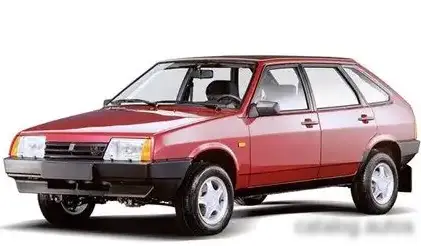
The Lada 21099 1.5, producing 70 horsepower, represents a significant iteration of the Lada 2109 series, manufactured from 1990 to 2005. Positioned as an entry-level offering within the 2109 lineup, it served as a practical and affordable transportation solution, particularly in Eastern European and Russian markets. The 21099 designation signified a modernized version of the original 2109, featuring subtle cosmetic updates and, in some cases, improved interior appointments. It was built on the aging but robust 2109 platform, a derivative of the Fiat 124, and remained in production long after its Western counterparts had been superseded.
Technical Specifications
| Brand | Lada |
| Model | 2109 |
| Generation | 21099 |
| Type (Engine) | 1.5 (70 Hp) |
| Start of production | 1990 year |
| End of production | 2005 year |
| Powertrain Architecture | Internal Combustion engine |
| Body type | Sedan |
| Seats | 5 |
| Doors | 4 |
| Fuel consumption (urban) | 8.8 l/100 km (26.7 US mpg, 32.1 UK mpg, 11.4 km/l) |
| Fuel Type | Petrol (Gasoline) |
| Acceleration 0 – 100 km/h | 15 sec |
| Acceleration 0 – 62 mph | 15 sec |
| Acceleration 0 – 60 mph | 14.3 sec |
| Maximum speed | 156 km/h (96.93 mph) |
| Weight-to-power ratio | 13.9 kg/Hp, 72.2 Hp/tonne |
| Weight-to-torque ratio | 9.2 kg/Nm, 109.3 Nm/tonne |
| Power | 70 Hp @ 5600 rpm |
| Power per litre | 46.7 Hp/l |
| Torque | 106 Nm @ 3500 rpm (78.18 lb.-ft. @ 3500 rpm) |
| Engine layout | Front, Transverse |
| Engine displacement | 1500 cm3 (91.54 cu. in.) |
| Number of cylinders | 4 |
| Engine configuration | Inline |
| Cylinder Bore | 82 mm (3.23 in.) |
| Piston Stroke | 71 mm (2.8 in.) |
| Compression ratio | 9.9:1 |
| Number of valves per cylinder | 2 |
| Fuel injection system | Carburettor |
| Engine aspiration | Naturally aspirated engine |
| Valvetrain | OHC |
| Kerb Weight | 970 kg (2138.48 lbs.) |
| Max. weight | 1395 kg (3075.45 lbs.) |
| Max load | 425 kg (936.96 lbs.) |
| Trunk (boot) space – maximum | 400 l (14.13 cu. ft.) |
| Fuel tank capacity | 43 l (11.36 US gal | 9.46 UK gal) |
| Length | 4205 mm (165.55 in.) |
| Width | 1650 mm (64.96 in.) |
| Height | 1402 mm (55.2 in.) |
| Wheelbase | 2460 mm (96.85 in.) |
| Front track | 1400 mm (55.12 in.) |
| Rear (Back) track | 1370 mm (53.94 in.) |
| Drivetrain Architecture | The Internal combustion engine (ICE) drives the front wheels of the vehicle. |
| Drive wheel | Front wheel drive |
| Number of gears and type of gearbox | 5 gears, manual transmission |
| Front suspension | Spring Strut |
| Rear suspension | Coil spring |
| Front brakes | Disc |
| Rear brakes | Drum |
| Steering type | Steering rack and pinion |
| Tires size | 175/70 SR13 |
| Wheel rims size | 5J x 13 |
Powertrain & Engine Architecture
The heart of the Lada 21099 1.5 was the 1492cc inline-four cylinder engine. This engine, often referred to by its internal codes, was a relatively simple design, utilizing a single overhead camshaft (OHC) and two valves per cylinder. Crucially, this variant employed a carburetor for fuel delivery, a technology increasingly outdated in the West by the 1990s, but still common in the Soviet and post-Soviet automotive industries due to its simplicity and lower production cost. The carburetor, typically a K-151D model, was known for its relative unreliability and sensitivity to adjustment. The engine produced 70 horsepower at 5600 rpm and 106 Nm (78.18 lb-ft) of torque at 3500 rpm. The engine was transversely mounted, driving the front wheels through a five-speed manual transmission. Automatic transmissions were not offered on this specific engine configuration.
Driving Characteristics
The 21099 1.5 offered modest performance. Acceleration to 60 mph took approximately 14.3 seconds, and the top speed was around 97 mph. The carburetor contributed to a somewhat sluggish throttle response, and the engine felt strained at higher speeds. The five-speed manual transmission was not particularly refined, with a long throw and a somewhat notchy feel. Compared to the more powerful 1.6L and 1.8L versions of the 2109, the 1.5 felt significantly underpowered, especially when fully loaded or tackling inclines. However, the lower power output also translated to slightly better fuel economy, although still modest by modern standards. The gear ratios were geared towards economy rather than performance.
Equipment & Trim Levels
The 21099 1.5 was typically offered in a fairly basic trim level. Standard features included cloth upholstery, a simple dashboard layout with analog gauges, and manual windows and door locks. Heating and ventilation were standard, but air conditioning was rarely fitted, even as an option. Optional extras included a radio, upgraded seat covers, and sometimes, a more sophisticated instrument cluster. The interior materials were generally of low quality, reflecting the car’s budget-oriented positioning. The exterior trim was also minimal, with basic steel wheels and limited chrome accents.
Chassis & Braking
The 21099 utilized a relatively simple chassis design. The front suspension consisted of MacPherson struts, while the rear suspension employed a coil spring and trailing arm setup. The braking system featured disc brakes on the front wheels and drum brakes on the rear. The steering was a rack-and-pinion system, but it lacked power assistance, requiring considerable effort at low speeds. The suspension was tuned for comfort rather than handling, resulting in a somewhat soft and wallowy ride. Stabilizer bars were often omitted on the base 1.5L model, further contributing to the car’s tendency to roll in corners.
Market Reception & Comparison
The Lada 21099 1.5 was primarily viewed as a utilitarian vehicle, prized for its affordability and durability rather than its performance or refinement. Critics often pointed to the outdated carburetor, the low-quality interior materials, and the lack of modern safety features. However, it was considered a reliable and easy-to-maintain vehicle, particularly in harsh climates. Compared to the higher-spec 2109 models with larger engines, the 1.5 offered significantly lower running costs but at the expense of performance and driving enjoyment. The 1.6L and 1.8L versions, while more expensive, provided a more refined driving experience and were better suited for highway driving.
Legacy
The Lada 21099 1.5, while not a technologically advanced vehicle, holds a significant place in automotive history as a symbol of affordable transportation in Eastern Europe and Russia. The 1.5L engine, while simple, proved to be remarkably durable and relatively easy to repair, making it a popular choice for budget-conscious buyers. Today, the 21099 1.5 is a relatively common sight in the used car market, often selling for very low prices. While not sought after by collectors, it remains a practical and affordable option for those seeking a basic and reliable vehicle. Its simplicity also makes it a popular choice for amateur mechanics and restoration projects. The carburetor, while a source of frustration for some, is relatively straightforward to rebuild and maintain, ensuring that these vehicles can remain on the road for many years to come.
