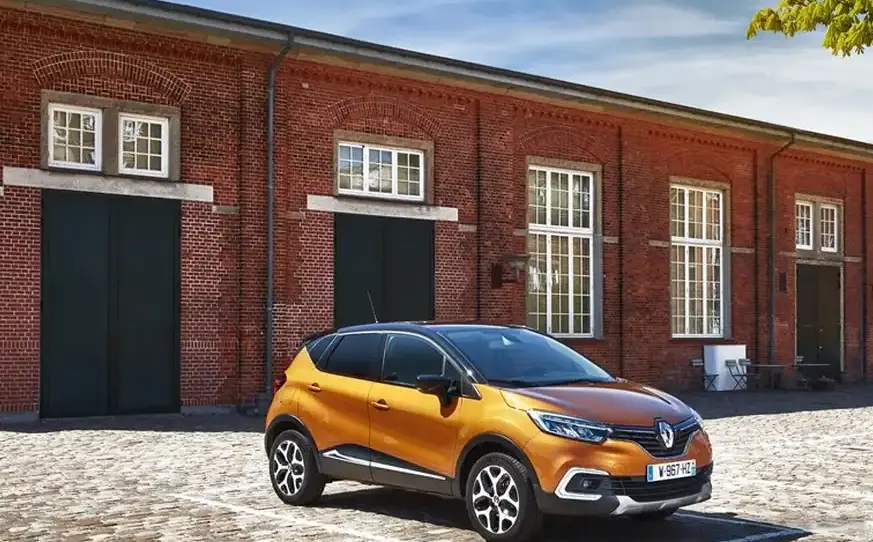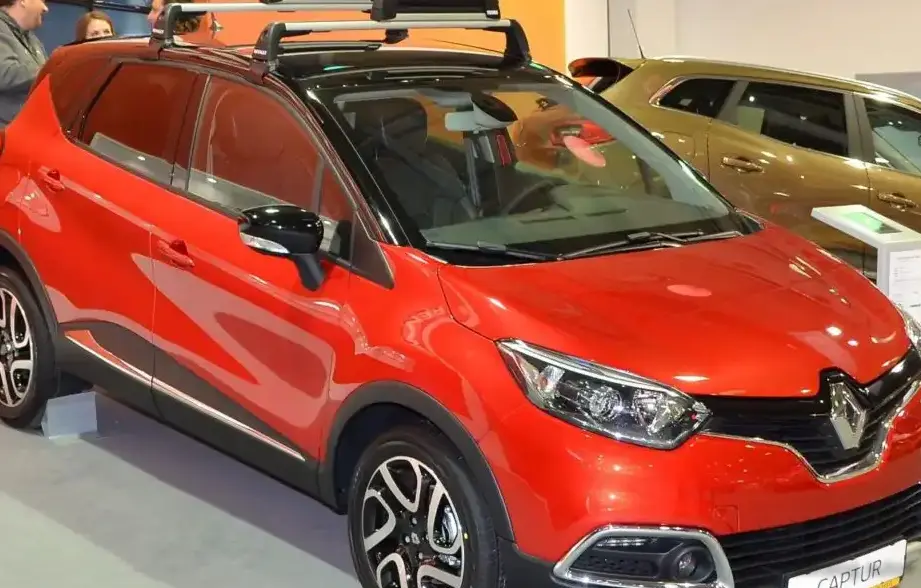
The Renault Captur 1.5 dCi (110 hp) was a popular subcompact crossover produced by the French automaker Renault from 2013 to 2017. Positioned as a mid-range offering within the first generation Captur lineup, it aimed to balance fuel efficiency with reasonable performance for European drivers. The Captur, built on the Renault-Nissan Alliance’s V platform (also known as the B0 platform), represented Renault’s entry into the rapidly growing crossover market, offering a more stylish and practical alternative to traditional hatchbacks. This particular variant, with its 1.5-liter diesel engine and 110 horsepower output, was a mainstay in many European markets due to favorable taxation and running costs.
Technical Specifications
| Brand | Renault |
| Model | Captur |
| Generation | Captur |
| Type (Engine) | 1.5 dCi (110 Hp) |
| Start of production | 2013 |
| End of production | 2017 |
| Powertrain Architecture | Internal Combustion engine |
| Body type | Crossover |
| Seats | 5 |
| Doors | 5 |
| Fuel consumption (urban) | 4 l/100 km (58.8 US mpg, 70.6 UK mpg, 25 km/l) |
| Fuel consumption (extra urban) | 3.6 l/100 km (65.3 US mpg, 78.5 UK mpg, 27.8 km/l) |
| Fuel consumption (combined) | 3.7 l/100 km (63.6 US mpg, 76.3 UK mpg, 27 km/l) |
| CO2 emissions | 98 g/km |
| Fuel Type | Diesel |
| Acceleration 0 – 100 km/h | 11.03 sec |
| Acceleration 0 – 62 mph | 11.03 sec |
| Acceleration 0 – 60 mph | 10.5 sec |
| Maximum speed | 175 km/h (108.74 mph) |
| Emission standard | Euro 6 |
| Weight-to-power ratio | 10.8 kg/Hp, 92.4 Hp/tonne |
| Weight-to-torque ratio | 4.6 kg/Nm, 218.5 Nm/tonne |
| Power | 110 Hp @ 4000 rpm |
| Power per litre | 75.3 Hp/l |
| Torque | 260 Nm @ 1750 rpm (191.77 lb.-ft. @ 1750 rpm) |
| Engine layout | Front, Transverse |
| Engine Model/Code | K9K 646 |
| Engine displacement | 1461 cm3 (89.16 cu. in.) |
| Number of cylinders | 4 |
| Engine configuration | Inline |
| Cylinder Bore | 76 mm (2.99 in.) |
| Piston Stroke | 80.5 mm (3.17 in.) |
| Compression ratio | 16:1 |
| Number of valves per cylinder | 2 |
| Fuel injection system | Diesel Commonrail |
| Engine aspiration | Turbocharger, Intercooler |
| Engine oil capacity | 4.5 l (4.76 US qt | 3.96 UK qt) |
| Coolant | 5 l (5.28 US qt | 4.4 UK qt) |
| Kerb Weight | 1190 kg (2623.5 lbs.) |
| Max. weight | 1743 kg (3842.66 lbs.) |
| Max load | 553 kg (1219.16 lbs.) |
| Trunk (boot) space – minimum | 377 l (13.31 cu. ft.) |
| Trunk (boot) space – maximum | 1235 l (43.61 cu. ft.) |
| Fuel tank capacity | 45 l (11.89 US gal | 9.9 UK gal) |
| Permitted trailer load with brakes (12%) | 1200 kg (2645.55 lbs.) |
| Permitted trailer load without brakes | 630 kg (1388.91 lbs.) |
| Length | 4122 mm (162.28 in.) |
| Width | 1778 mm (70 in.) |
| Height | 1566 mm (61.65 in.) |
| Wheelbase | 2606 mm (102.6 in.) |
| Front track | 1531 mm (60.28 in.) |
| Rear (Back) track | 1516 mm (59.69 in.) |
| Front overhang | 866 mm (34.09 in.) |
| Rear overhang | 650 mm (25.59 in.) |
| Ride height (ground clearance) | 170 mm (6.69 in.) |
| Minimum turning circle (turning diameter) | 11.00 m (36.09 ft.) |
| Drivetrain Architecture | The Internal combustion engine (ICE) drives the front wheels of the vehicle. |
| Drive wheel | Front wheel drive |
| Number of gears and type of gearbox | 6 gears, manual transmission |
| Front suspension | Independent, type McPherson with coil spring and anti-roll bar |
| Rear suspension | Semi-independent, coil spring |
| Front brakes | Ventilated discs |
| Rear brakes | Drum |
| Assisting systems | ABS (Anti-lock braking system) |
| Steering type | Steering rack and pinion |
| Power steering | Electric Steering |
| Tires size | 205/60 R16; 205/55 R17 |
| Wheel rims size | 16; 17 |
Powertrain & Engine Architecture
The heart of the Captur 1.5 dCi (110 hp) is the K9K 646 engine, a 1.5-liter inline-four cylinder diesel. This engine is a member of Renault’s well-established K9K family, known for its robustness and fuel efficiency. The K9K engine utilizes a common rail direct injection system, delivering fuel at extremely high pressure for optimized combustion. A turbocharger with an intercooler is employed to boost power output and improve torque across a wider rev range. The engine features two valves per cylinder and a compression ratio of 16:1. The 110 hp variant benefits from revised engine mapping compared to lower-powered versions of the same engine. The transmission is a six-speed manual gearbox, chosen for its efficiency and driver engagement. While an automatic transmission was offered on other Captur variants, it wasn’t typically paired with this specific 110 hp diesel engine.
Driving Characteristics
The 1.5 dCi (110 hp) Captur offered a comfortable and economical driving experience. While not particularly sporty, the engine provided adequate power for everyday driving, with a noticeable surge of torque from around 1750 rpm. The six-speed manual transmission allowed drivers to keep the engine in its optimal power band. Acceleration from 0-60 mph took around 10.5 seconds, and top speed was approximately 108.74 mph. Compared to the lower-powered 90 hp version of the same engine, the 110 hp variant felt more responsive, particularly when overtaking or climbing hills. However, it didn’t offer the same performance as the petrol-powered Capturs. The gear ratios were tuned for fuel efficiency, resulting in a slightly longer first gear and closely spaced ratios for smooth cruising.
Equipment & Trim Levels
The 1.5 dCi (110 hp) Captur was typically offered in mid-range trim levels, such as ‘Dynamique’ or equivalent. Standard equipment generally included air conditioning, power windows, power door mirrors, a basic audio system with USB connectivity, and alloy wheels. Safety features included ABS, ESP (Electronic Stability Program), and multiple airbags. Optional extras included a touchscreen infotainment system with navigation, rear parking sensors, automatic climate control, and a panoramic sunroof. Interior upholstery was typically cloth, with a choice of colors and patterns. The dashboard design was modern and functional, with a focus on ergonomics.
Chassis & Braking
The Captur’s chassis featured a McPherson strut front suspension and a semi-independent coil spring rear suspension. This setup provided a good balance between ride comfort and handling. The front brakes were ventilated discs, while the rear brakes were drums. ABS (Anti-lock Braking System) was standard, providing enhanced braking performance in emergency situations. The steering was electric power-assisted, offering light and precise control. Stabilizer bars were fitted to both the front and rear axles to reduce body roll during cornering.
Market Reception & Comparison
The Renault Captur 1.5 dCi (110 hp) was well-received by critics and consumers alike. It was praised for its fuel efficiency, comfortable ride, and stylish design. Compared to the 90 hp diesel version, the 110 hp model offered a noticeable improvement in performance, making it a more appealing option for drivers who frequently traveled on motorways or carried passengers. However, it was more expensive to purchase and maintain than the lower-powered variant. Compared to petrol-powered Capturs, the 1.5 dCi offered significantly better fuel economy, but lacked the same level of refinement and responsiveness.
Legacy
The Renault Captur 1.5 dCi (110 hp) has proven to be a reliable and durable vehicle. The K9K engine is known for its longevity, and with regular maintenance, it can cover high mileages without major issues. On the used car market, these Capturs remain popular due to their affordability and fuel efficiency. Common issues include diesel particulate filter (DPF) problems, particularly on vehicles that have primarily been used for short journeys. However, these issues are generally manageable with proper maintenance and occasional DPF regeneration. The Captur helped establish Renault as a major player in the subcompact crossover segment, and its success paved the way for future generations of the model.