
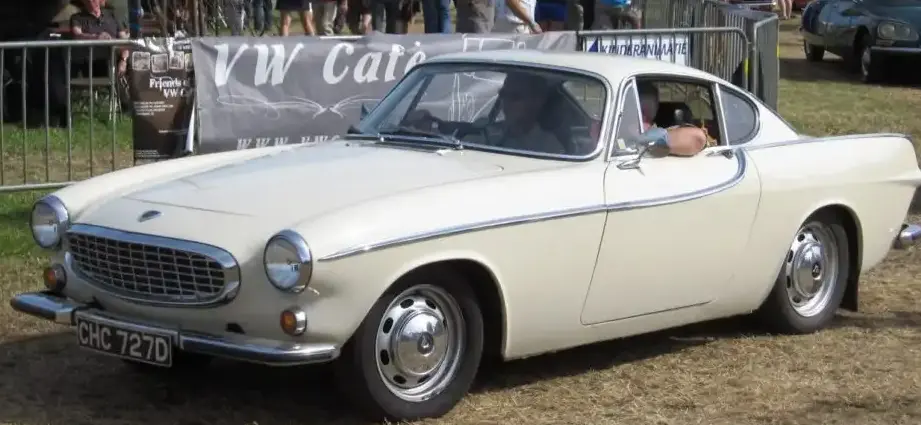
The Volvo 1800S 1.8, producing 115 horsepower, represents a significant evolution of the iconic Volvo 1800 series. Produced between 1965 and 1968, the 1800S was positioned as a more refined and powerful alternative to the original 1800, while remaining accessible to a broader market. It falls within the first generation of the 1800 (P1800) model line, known for its elegant Italian-inspired design penned by Pietro Frua. The “S” designation denoted a switch from the earlier model’s automatic choke to a manual choke, and other minor refinements. This variant played a crucial role in establishing Volvo’s reputation for safe, stylish, and reliable grand touring automobiles, particularly in the North American market where it found a substantial customer base.
Technical Specifications
| Brand | Volvo |
| Model | 1800 |
| Generation | 1800S |
| Type (Engine) | 1.8 (115 Hp) |
| Start of production | 1965 |
| End of production | 1968 |
| Powertrain Architecture | Internal Combustion engine |
| Body type | Coupe |
| Seats | 4 |
| Doors | 2 |
| Fuel Type | Petrol (Gasoline) |
| Maximum speed | 180 km/h (111.85 mph) |
| Weight-to-power ratio | 10.3 kg/Hp, 96.6 Hp/tonne |
| Weight-to-torque ratio | 7.8 kg/Nm, 127.7 Nm/tonne |
| Power | 115 Hp @ 6000 rpm |
| Power per litre | 64.6 Hp/l |
| Torque | 152 Nm @ 4000 rpm (112.11 lb.-ft. @ 4000 rpm) |
| Engine layout | Front, Longitudinal |
| Engine Model/Code | B18 |
| Engine displacement | 1780 cm3 (108.62 cu. in.) |
| Number of cylinders | 4 |
| Engine configuration | Inline |
| Cylinder Bore | 84.14 mm (3.31 in.) |
| Piston Stroke | 80 mm (3.15 in.) |
| Compression ratio | 10:1 |
| Number of valves per cylinder | 2 |
| Fuel injection system | Carburettor |
| Engine aspiration | Naturally aspirated engine |
| Valvetrain | OHV |
| Engine oil capacity | 3.75 l (3.96 US qt | 3.3 UK qt) |
| Coolant | 9 l (9.51 US qt | 7.92 UK qt) |
| Kerb Weight | 1190 kg (2623.5 lbs) |
| Max. weight | 1400 kg (3086.47 lbs) |
| Max load | 210 kg (462.97 lbs) |
| Fuel tank capacity | 45 l (11.89 US gal | 9.9 UK gal) |
| Length | 4400 mm (173.23 in) |
| Width | 1700 mm (66.93 in) |
| Height | 1285 mm (50.59 in) |
| Wheelbase | 2450 mm (96.46 in) |
| Front track | 1315 mm (51.77 in) |
| Rear (Back) track | 1315 mm (51.77 in) |
| Ride height (ground clearance) | 155 mm (6.1 in) |
| Minimum turning circle (turning diameter) | 10 m (32.81 ft) |
| Drivetrain Architecture | The Internal combustion engine (ICE) drives the rear wheels of the vehicle. |
| Drive wheel | Rear wheel drive |
| Number of gears and type of gearbox | 4 gears, manual transmission |
| Front suspension | Coil spring, Wishbone, Transverse stabilizer |
| Rear suspension | Rigid axle suspension, Trailing arm, Coil spring |
| Front brakes | Disc |
| Rear brakes | Drum |
| Tires size | 165/80 R15 |
| Wheel rims size | 4.5J x 15 |
Powertrain & Engine Architecture
The heart of the 1800S 1.8 is the Volvo B18 engine, an inline-four cylinder unit displacing 1778 cc (1.8 liters). This engine, a cornerstone of Volvo’s engineering during the 1960s, featured a cast iron block and an aluminum cylinder head. The 115 horsepower output was achieved through a single SU carburetor, a relatively simple fuel delivery system for the time. The B18 utilized an overhead valve (OHV) valvetrain, with two valves per cylinder. The engine’s longitudinal front-engine, rear-wheel-drive layout was conventional for sports coupes of the era. The four-speed manual transmission was standard, providing a direct connection between the engine and the rear wheels. The B18 engine was known for its robustness and relatively easy maintenance, contributing to the 1800S’s reputation for reliability.
Driving Characteristics
The 1800S 1.8 with the manual transmission offered a spirited, though not overtly powerful, driving experience. Acceleration to 60 mph took around 9.5 seconds, respectable for the mid-1960s. The four-speed gearbox provided adequate ratios for both cruising and spirited driving, although it lacked the versatility of a five-speed. The rear-wheel-drive configuration contributed to a balanced feel, but also required careful throttle control in slippery conditions. Compared to the later fuel-injected versions of the 1800, the carbureted 1.8 offered a more progressive power delivery, but lacked the ultimate responsiveness. Against the later 1800E with fuel injection, the 1.8 felt less refined and offered slightly lower peak power, but was generally considered more forgiving and easier to maintain.
Equipment & Trim Levels
The 1800S came reasonably well-equipped for its time, though options were available to enhance the experience. Standard features included comfortable bucket seats, a wood-rimmed steering wheel, and a comprehensive instrument panel. Interior upholstery was typically vinyl, with cloth options available. The dashboard layout was clean and functional, prioritizing driver information. Popular optional extras included a push-button radio, whitewall tires, and a factory-fitted overdrive unit for the manual transmission, improving highway cruising comfort and fuel economy. The 1800S occupied a middle ground in the 1800 lineup, offering more refinement than the base model but falling short of the luxury appointments found in the later 1800E.
Chassis & Braking
The 1800S utilized a robust chassis with coil-spring independent suspension at the front, employing wishbones and a transverse stabilizer bar. The rear suspension was a traditional rigid axle setup with trailing arms and coil springs. This configuration provided a good balance between ride comfort and handling. Braking was accomplished via disc brakes at the front and drum brakes at the rear. While adequate for the car’s performance, the drum brakes at the rear were a limitation compared to all-disc setups found on some contemporary sports cars. The steering was a recirculating ball system, providing a reasonably direct feel, though it lacked the precision of rack-and-pinion steering.
Market Reception & Comparison
The Volvo 1800S was generally well-received by automotive critics. It was praised for its stylish design, comfortable interior, and robust mechanicals. However, some critics noted its relatively modest performance compared to other sports coupes of the era. The 1.8-liter carbureted engine offered a good compromise between performance and fuel economy, achieving around 25-30 mpg in typical driving conditions. Compared to the later fuel-injected 1800E, the 1.8 was considered more affordable and easier to maintain, making it an attractive option for buyers seeking a reliable and stylish grand tourer. The 1800S also benefited from Volvo’s growing reputation for safety, a key selling point for many buyers.
Legacy
The Volvo 1800S 1.8 remains a highly sought-after classic car today. The B18 engine is known for its durability and relative simplicity, making it a relatively easy engine to maintain and rebuild. However, finding original parts can be challenging. Rust is a common issue with these cars, particularly in areas with harsh winters. Well-maintained examples command premium prices in the used car market, reflecting the 1800S’s enduring appeal and its place in automotive history. The 1800S helped solidify Volvo’s image as a manufacturer of safe, stylish, and reliable automobiles, paving the way for the company’s future success.
