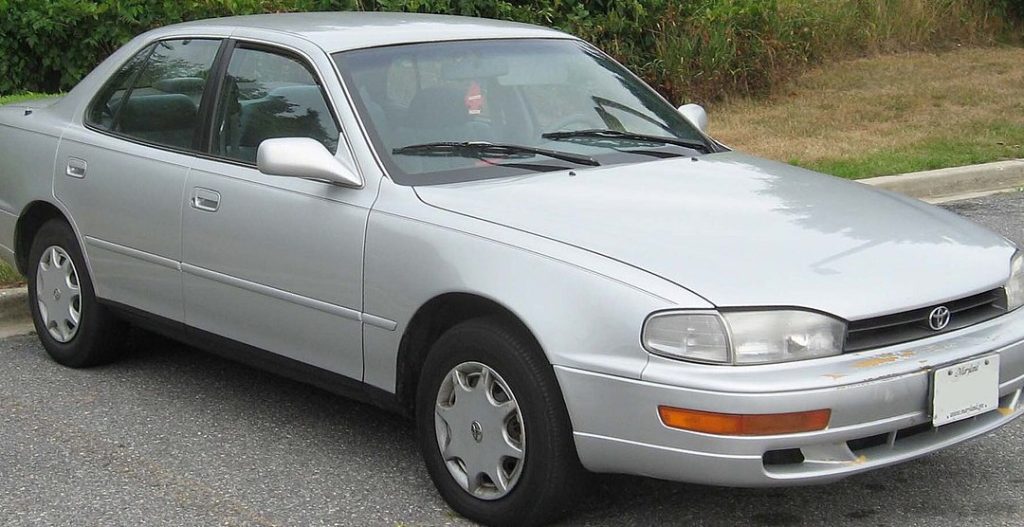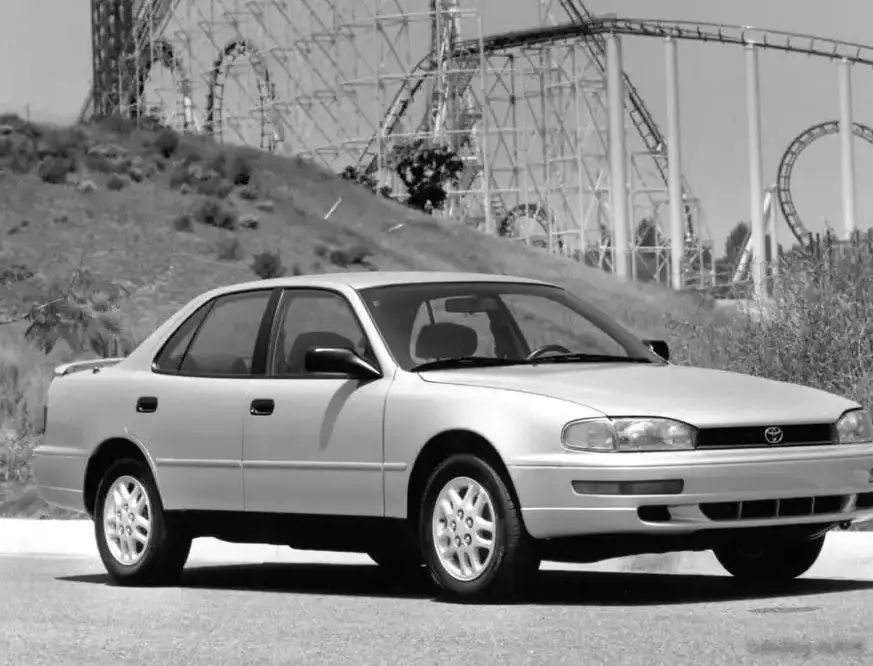
The Toyota Camry XV10, produced between 1991 and 1996, represented a significant step forward for Toyota’s mid-size sedan. The third generation Camry aimed to broaden its appeal, offering a more refined driving experience and a wider range of engine options. Within the XV10 lineup, the 3.0 V6 24V variant, paired with an automatic transmission, occupied the premium position, offering a substantial performance upgrade over the base four-cylinder models. This configuration was primarily marketed towards buyers seeking a comfortable, well-equipped, and relatively powerful family sedan. It was a key model in establishing the Camry’s reputation for reliability and value in the North American market.
Technical Specifications
| Brand | Toyota |
| Model | Camry |
| Generation | Camry III (XV10) |
| Type (Engine) | 3.0 V6 24V (188 Hp) Automatic |
| Start of production | 1991 |
| End of production | 1996 |
| Powertrain Architecture | Internal Combustion engine |
| Body type | Sedan |
| Seats | 5 |
| Doors | 4 |
| Fuel Type | Petrol (Gasoline) |
| Weight-to-power ratio | 8.5 kg/Hp, 117.9 Hp/tonne |
| Weight-to-torque ratio | 6.3 kg/Nm, 159.9 Nm/tonne |
| Power | 188 Hp @ 5400 rpm |
| Power per litre | 63.5 Hp/l |
| Torque | 255 Nm @ 4400 rpm (188.08 lb.-ft. @ 4400 rpm) |
| Engine layout | Front, Transverse |
| Engine Model/Code | 3VZ-FE |
| Engine displacement | 2959 cm3 (180.57 cu. in.) |
| Number of cylinders | 6 |
| Engine configuration | V-engine |
| Cylinder Bore | 87.5 mm (3.44 in.) |
| Piston Stroke | 82 mm (3.23 in.) |
| Compression ratio | 9.6:1 |
| Number of valves per cylinder | 4 |
| Fuel injection system | Multi-port manifold injection |
| Engine aspiration | Naturally aspirated engine |
| Valvetrain | DOHC |
| Engine oil capacity | 4.4 l (4.65 US qt | 3.87 UK qt) |
| Coolant | 8.4 l (8.88 US qt | 7.39 UK qt) |
| Kerb Weight | 1595 kg (3516.37 lbs.) |
| Max. weight | 1930 kg (4254.92 lbs.) |
| Max load | 335 kg (738.55 lbs.) |
| Trunk (boot) space – maximum | 517 l (18.26 cu. ft.) |
| Fuel tank capacity | 70 l (18.49 US gal | 15.4 UK gal) |
| Permitted trailer load with brakes (12%) | 1500 kg (3306.93 lbs.) |
| Permitted trailer load without brakes | 500 kg (1102.31 lbs.) |
| Length | 4725 mm (186.02 in.) |
| Width | 1770 mm (69.69 in.) |
| Height | 1420 mm (55.91 in.) |
| Wheelbase | 2620 mm (103.15 in.) |
| Front track | 1545 mm (60.83 in.) |
| Rear (Back) track | 1500 mm (59.06 in.) |
| Minimum turning circle (turning diameter) | 10.6 m (34.78 ft.) |
| Drivetrain Architecture | The Internal combustion engine (ICE) drives the front wheels of the vehicle. |
| Drive wheel | Front wheel drive |
| Number of gears and type of gearbox | 4 gears, automatic transmission |
| Front suspension | Independent, type McPherson with coil spring and anti-roll bar |
| Rear suspension | Independent multi-link suspension |
| Front brakes | Ventilated discs |
| Rear brakes | Disc |
| Assisting systems | ABS (Anti-lock braking system) |
| Steering type | Steering rack and pinion |
| Power steering | Hydraulic Steering |
| Tires size | 205/65 R15 |
| Wheel rims size | 15 |
Powertrain & Engine Architecture
The heart of this Camry variant is the 3VZ-FE 3.0-liter V6 engine. This engine is a naturally aspirated, 24-valve (DOHC) powerplant utilizing multi-port fuel injection. The 3VZ-FE was known for its smooth operation and relatively high output for its time. The engine’s design prioritized refinement and durability over outright performance. The automatic transmission used in this model is a conventional four-speed unit. While not offering the responsiveness of a manual transmission, it provided smooth and comfortable shifts, aligning with the Camry’s overall focus on ease of driving. The transmission was tuned for fuel efficiency and relaxed cruising, rather than aggressive acceleration.
Driving Characteristics
The 3.0 V6 automatic Camry offered a noticeable performance advantage over the base four-cylinder models. Acceleration was brisk, making highway merging and overtaking maneuvers relatively effortless. However, it wasn’t a sports sedan; the automatic transmission, while smooth, did result in some power loss compared to a manual transmission. The gear ratios were optimized for comfortable cruising, meaning the engine didn’t always feel particularly energetic at lower RPMs. Compared to the later, more powerful 3.3L V6 found in subsequent Camry generations, the 3.0L felt less urgent, but still provided ample power for most drivers. The suspension provided a comfortable ride, absorbing bumps and imperfections in the road well, but didn’t offer particularly sporty handling.
Equipment & Trim Levels
The 3.0 V6 automatic Camry typically came well-equipped, representing the upper end of the XV10 lineup. Standard features often included air conditioning, power windows and locks, cruise control, and an upgraded sound system. Interior upholstery was typically cloth, though leather options were available. Higher trim levels could add features like a sunroof, upgraded audio systems, and alloy wheels. The dashboard layout was functional and straightforward, prioritizing ease of use over stylistic flair. Optional extras included a CD player, and upgraded interior trim packages.
Chassis & Braking
The XV10 Camry utilized an independent suspension setup at all four wheels. The front suspension employed a McPherson strut design with coil springs and an anti-roll bar, while the rear featured an independent multi-link suspension. This setup provided a good balance of ride comfort and handling. Braking duties were handled by ventilated discs at the front and solid discs at the rear. An Anti-lock Braking System (ABS) was standard, enhancing safety and control during hard braking. The chassis was designed for rigidity and crash safety, meeting the standards of the early 1990s.
Market Reception & Comparison
The 3.0 V6 Camry was generally well-received by automotive critics. It was praised for its smooth engine, comfortable ride, and overall refinement. However, some critics noted that the automatic transmission dulled the engine’s performance somewhat. Compared to the four-cylinder models, the V6 offered a significant power boost, but at a higher price point and with slightly reduced fuel economy. Against competitors like the Honda Accord and Nissan Maxima, the Camry V6 offered a compelling combination of value, reliability, and comfort. Fuel economy was respectable for the time, averaging around 20-22 mpg in combined driving.
Legacy
The 3VZ-FE engine, when properly maintained, proved to be remarkably durable. Many examples of the XV10 Camry with this engine are still on the road today, a testament to Toyota’s engineering prowess. The automatic transmission, while not known for being particularly sporty, also proved to be reliable. In the used car market, these Camrys are often sought after for their affordability, reliability, and comfortable ride. However, age-related issues such as rubber component degradation and potential oil leaks should be considered when purchasing a used example. The XV10 Camry 3.0 V6 Automatic solidified the Camry’s reputation as a dependable and practical family sedan, paving the way for its continued success in the years to come.