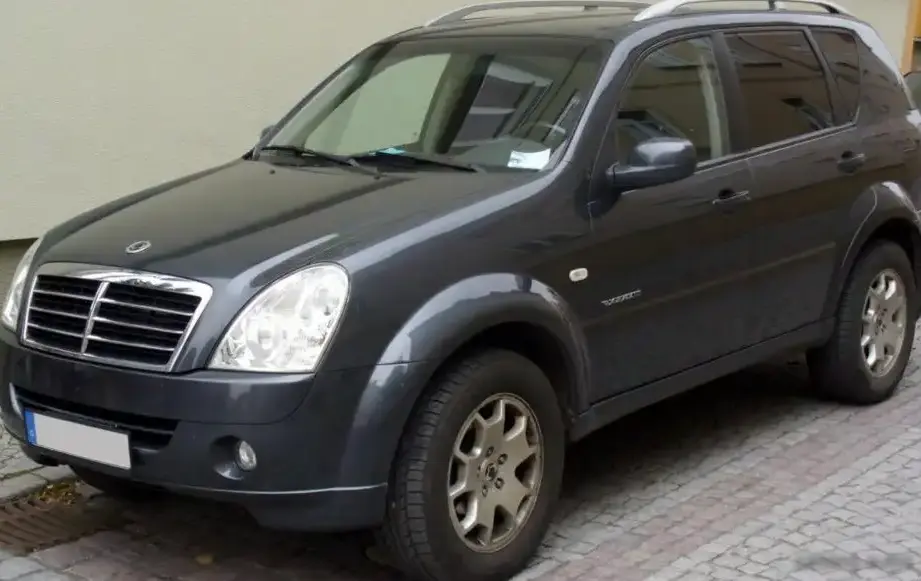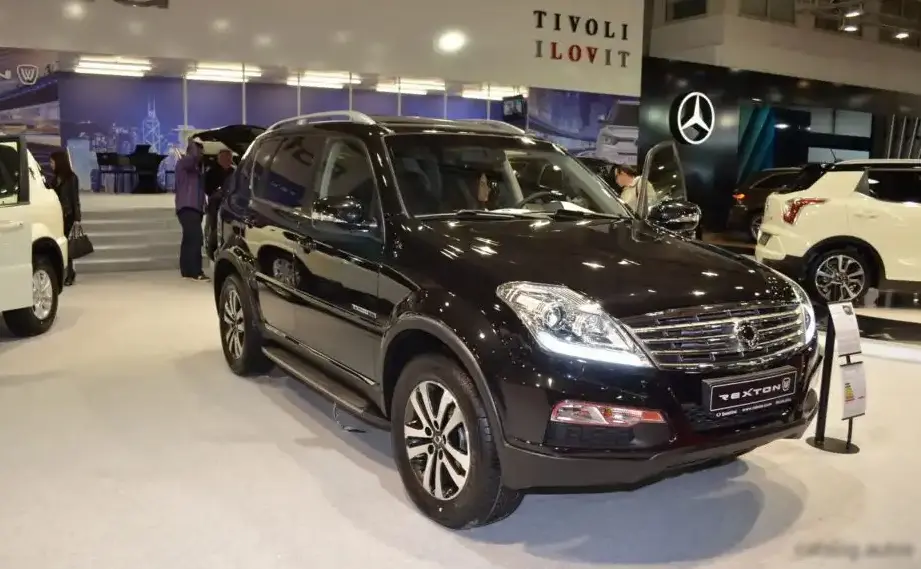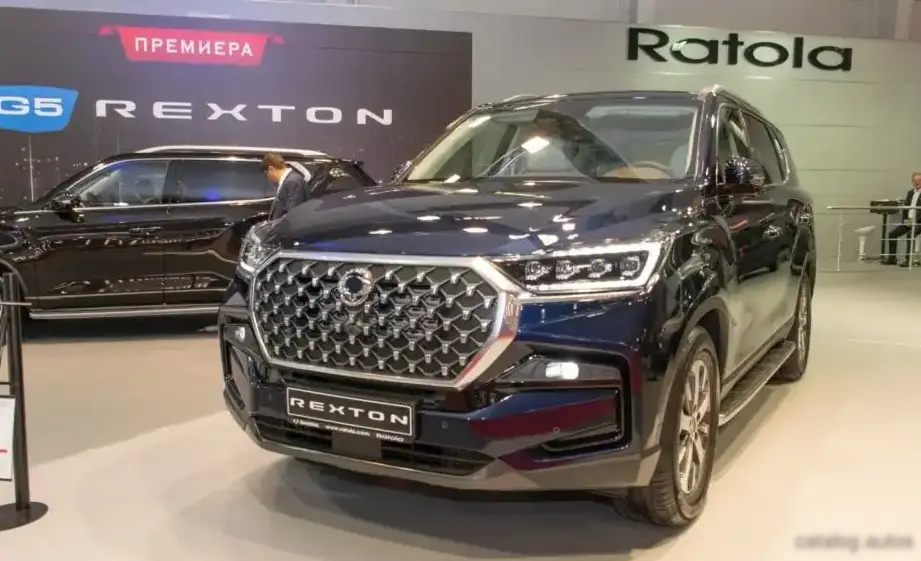
The SsangYong Rexton II (facelift 2021) 2.2 e-XDi is a seven-seat SUV produced by the South Korean manufacturer SsangYong Motor Company from March 2021 until 2023. This variant, equipped with a 2.2-liter diesel engine producing 202 horsepower and paired with an 8-speed E-Tronic automatic transmission, represents a mid-range offering within the Rexton II lineup. Positioned above the base models and below the potentially more luxurious trims, it aimed to balance performance, fuel efficiency, and family practicality for buyers seeking a capable and spacious SUV. The facelift brought updated styling, improved interior features, and refinements to the powertrain, building upon the foundation of the original Rexton II introduced in 2017.
Technical Specifications
| Brand | SsangYong |
| Model | Rexton |
| Generation | Rexton II (facelift 2021) |
| Type | 2.2 e-XDi (202 Hp) 4WD E-Tronic 7 Seat |
| Start of production | March, 2021 |
| End of production | 2023 |
| Powertrain Architecture | Internal Combustion engine |
| Body type | SUV |
| Seats | 7 |
| Doors | 5 |
| Fuel consumption at Low speed (WLTP) | 11.7 l/100 km (20.1 US mpg, 24.1 UK mpg, 8.5 km/l) |
| Fuel consumption at Medium speed (WLTP) | 8.5 l/100 km (27.7 US mpg, 33.2 UK mpg, 11.8 km/l) |
| Fuel consumption at high speed (WLTP) | 7.3 l/100 km (32.2 US mpg, 38.7 UK mpg, 13.7 km/l) |
| Fuel consumption at very high speed (WLTP) | 8.6 l/100 km (27.4 US mpg, 32.8 UK mpg, 11.6 km/l) |
| Combined fuel consumption (WLTP) | 8.6 l/100 km (27.4 US mpg, 32.8 UK mpg, 11.6 km/l) |
| CO2 emissions (WLTP) | 225 g/km |
| Fuel consumption (NEDC, WLTP equivalent) | 7.6-8.7 l/100 km (30.9 – 27 US mpg, 37.2 – 32.5 UK mpg, 13.2 – 11.5 km/l) |
| CO2 emissions (NEDC, WLTP equivalent) | 199-228 g/km |
| Fuel Type | Diesel |
| Acceleration 0 – 60 mph | 10.7 sec |
| Maximum speed | 184 km/h (114.33 mph) |
| Emission standard | Euro 6d |
| Weight-to-power ratio | 10.4 kg/Hp, 96 Hp/tonne |
| Weight-to-torque ratio | 4.8 kg/Nm, 209.5 Nm/tonne |
| Power | 202 Hp @ 3800 rpm |
| Torque | 441 Nm @ 1600-2600 rpm (325.26 lb.-ft. @ 1600-2600 rpm) |
| Engine layout | Front, Longitudinal |
| Engine Model/Code | D22DTR |
| Engine displacement | 2157 cm3 (131.63 cu. in.) |
| Number of cylinders | 4 |
| Engine configuration | Inline |
| Cylinder Bore | 86.2 mm (3.39 in.) |
| Piston Stroke | 92.4 mm (3.64 in.) |
| Compression ratio | 15.5:1 |
| Number of valves per cylinder | 4 |
| Fuel injection system | Diesel Commonrail |
| Engine aspiration | Turbocharger, Intercooler |
| Engine oil capacity | 6 l (6.34 US qt | 5.28 UK qt) |
| Coolant | 10.2 l (10.78 US qt | 8.97 UK qt) |
| Kerb Weight | 2105-2241 kg (4640.73 – 4940.56 lbs.) |
| Max. weight | 2950 kg (6503.64 lbs.) |
| Max load | 709-845 kg (1563.08 – 1862.91 lbs.) |
| Trunk (boot) space – minimum | 240 l (8.48 cu. ft.) |
| Trunk (boot) space – maximum | 1806 l (63.78 cu. ft.) |
| Fuel tank capacity | 70 l (18.49 US gal | 15.4 UK gal) |
| Permitted trailer load with brakes (12%) | 3000 kg (6613.87 lbs.) |
| Permitted trailer load without brakes | 750 kg (1653.47 lbs.) |
| Permitted towbar download | 145 kg (319.67 lbs.) |
| Length | 4850 mm (190.94 in.) |
| Width | 1960 mm (77.17 in.) |
| Height | 1825 mm (71.85 in.) |
| Wheelbase | 2865 mm (112.8 in.) |
| Front track | 1640 mm (64.57 in.) |
| Rear (Back) track | 1640 mm (64.57 in.) |
| Front overhang | 895 mm (35.24 in.) |
| Rear overhang | 1090 mm (42.91 in.) |
| Ride height (ground clearance) | 203 mm (7.99 in.) |
| Minimum turning circle (turning diameter) | 11 m (36.09 ft.) |
| Approach angle | 20° |
| Departure angle | 22.5° |
| Ramp-over (brakeover) angle | 20.5° |
| Drivetrain Architecture | The Internal combustion engine (ICE) drives the rear wheels permanently, and the front wheels are driven through an electrically or mechanically operated clutch if necessary. |
| Drive wheel | All wheel drive (4×4) |
| Number of gears and type of gearbox | 8 gears, automatic transmission E-Tronic |
| Front suspension | Double wishbone |
| Rear suspension | Independent multi-link suspension |
| Front brakes | Ventilated discs |
| Rear brakes | Ventilated discs |
| Assisting systems | ABS (Anti-lock braking system) |
| Steering type | Steering rack and pinion |
| Power steering | Electric Steering |
| Tires size | 235/70 R17; 255/60 R18; 255/50 R20 |
| Wheel rims size | 17; 18; 20 |
INTRODUCTION
The SsangYong Rexton II, particularly the 2.2 e-XDi variant introduced with the 2021 facelift, represents SsangYong’s attempt to establish a stronger foothold in the competitive mid-size SUV segment. Built on the 1HX0 platform (shared with the G4 Rexton), the Rexton II aimed to offer a compelling combination of space, capability, and value. The facelift brought significant cosmetic and technological updates, enhancing the vehicle’s appeal. This 2.2-liter diesel engine and 8-speed automatic transmission combination was a key offering, targeting buyers who prioritized a balance between fuel economy and sufficient power for both on-road and light off-road driving. It served as a step up from the lower-powered engine options, while remaining more accessible than the potentially more expensive and feature-rich top-tier trims.
Powertrain & Engine Architecture
The heart of the Rexton II 2.2 e-XDi is the D22DTR, a 2.2-liter four-cylinder diesel engine. This engine utilizes a common-rail direct injection system, delivering fuel at extremely high pressure for optimized combustion. A turbocharger with an intercooler further enhances performance by forcing more air into the cylinders. The engine produces 202 horsepower at 3800 rpm and a substantial 441 Nm (325.26 lb.-ft.) of torque between 1600 and 2600 rpm. This broad torque curve provides good responsiveness in everyday driving situations. The engine features a cast iron block and aluminum cylinder head, contributing to its durability. The 8-speed E-Tronic automatic transmission, sourced from AISIN, is a crucial component of this powertrain. It offers smooth and efficient gear changes, contributing to both performance and fuel economy. The transmission is electronically controlled and features adaptive learning to optimize shift patterns based on driving style.
Driving Characteristics
The Rexton II 2.2 e-XDi offers a comfortable and composed driving experience. While not a sports SUV, the 202 horsepower and 441 Nm of torque provide adequate power for overtaking and highway cruising. The 8-speed automatic transmission helps keep the engine in its optimal power band, delivering smooth acceleration. Compared to lower-powered Rexton II variants, this 2.2-liter engine offers a noticeable improvement in responsiveness. However, it doesn’t match the outright performance of potential higher-output engine options (if offered in some markets). The automatic transmission, while smooth, can sometimes feel slightly hesitant during quick downshifts. The Rexton II’s focus is on providing a relaxed and comfortable ride, and it excels in this regard. The suspension effectively absorbs bumps and imperfections in the road, making it a suitable vehicle for long journeys.
Equipment & Trim Levels
The 2.2 e-XDi variant typically came well-equipped, offering a good balance of features. Standard equipment often included automatic climate control, a touchscreen infotainment system with Apple CarPlay and Android Auto compatibility, rear parking sensors, and a rearview camera. Higher trim levels added features such as leather upholstery, heated and ventilated front seats, a premium audio system, and advanced driver-assistance systems (ADAS) like adaptive cruise control and lane-keeping assist. Interior upholstery was typically a combination of cloth and leatherette, with higher trims offering full leather options. The dashboard layout was functional and user-friendly, with a focus on practicality. Optional extras could include a sunroof, navigation system, and upgraded wheels.
Chassis & Braking
The Rexton II utilizes a body-on-frame construction, providing a robust and durable chassis. The front suspension consists of double wishbones, while the rear features an independent multi-link setup. This suspension configuration contributes to a comfortable ride and good handling characteristics. Braking duties are handled by ventilated discs on all four wheels, providing ample stopping power. An Anti-lock Braking System (ABS) is standard, enhancing safety. The Rexton II’s weight, ranging from 2105 to 2241 kg (4640.73 – 4940.56 lbs.), is typical for a mid-size SUV. Stabilizer bars are fitted to both the front and rear axles to reduce body roll during cornering.
Market Reception & Comparison
The SsangYong Rexton II 2.2 e-XDi was generally well-received by critics as a capable and value-for-money SUV. It was praised for its spacious interior, comfortable ride, and strong diesel engine. However, some reviewers noted that the interior materials weren’t as premium as those found in some competitors. Compared to other trims in the Rexton II lineup, the 2.2 e-XDi offered a sweet spot between performance and fuel economy. It provided more power than the lower-powered engine options, while remaining more affordable than the potentially more luxurious top-tier trims. Fuel economy figures of around 8.6 l/100 km (27.4 US mpg) were competitive for a vehicle of its size and class.
Legacy
The SsangYong Rexton II 2.2 e-XDi, while not a high-volume seller, has established a reputation for reliability and durability. The D22DTR diesel engine is known for its robustness, and the 8-speed automatic transmission has proven to be dependable. In the used car market, these models represent a good value proposition for buyers seeking a spacious, capable, and well-equipped SUV. Regular maintenance, including oil changes and filter replacements, is crucial for ensuring the long-term reliability of this powertrain. The Rexton II’s body-on-frame construction contributes to its longevity, making it a potentially good choice for buyers who prioritize durability.