
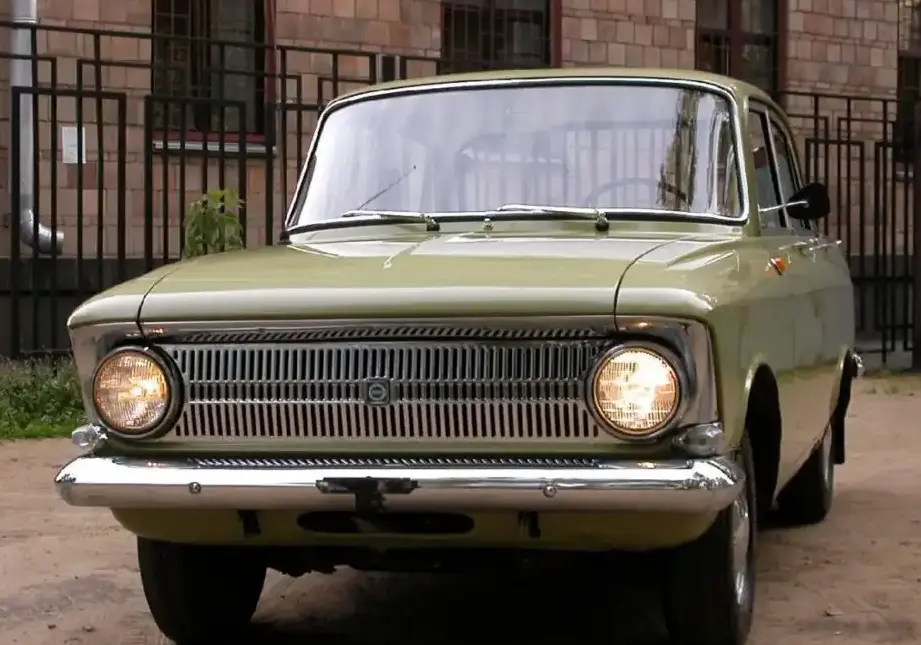
The Izh 412, produced between 1967 and 1982, was a significant automobile in the Soviet automotive landscape. Representing a modernization of the earlier Izh 408, the 412 aimed to provide a more comfortable and reliable vehicle for the Soviet populace. This article focuses specifically on the 1.5-liter, 75 horsepower variant, which was a mainstay of the 412 lineup throughout much of its production run. The Izh 412 was built by the Izhevsk Machine-Building Plant (IzhMash) and served as a popular choice for both private ownership and as a taxi or government vehicle. It was based on a relatively simple, robust design, prioritizing durability and ease of maintenance over outright performance.
Technical Specifications
| Brand | Izh |
| Model | 412 |
| Generation | 412 |
| Type (Engine) | 1.5 (75 Hp) |
| Start of production | 1967 |
| End of production | 1982 |
| Powertrain Architecture | Internal Combustion engine |
| Body type | Sedan |
| Seats | 5 |
| Doors | 4 |
| Fuel Type | Petrol (Gasoline) |
| Acceleration 0 – 100 km/h | 19 sec |
| Acceleration 0 – 62 mph | 19 sec |
| Acceleration 0 – 60 mph | 18.1 sec |
| Maximum speed | 140 km/h (86.99 mph) |
| Weight-to-power ratio | 13.3 kg/Hp, 75 Hp/tonne |
| Power | 75 Hp |
| Engine aspiration | Naturally aspirated engine |
| Kerb Weight | 1000 kg (2204.62 lbs) |
| Max. weight | 1400 kg (3086.47 lbs) |
| Max load | 400 kg (881.85 lbs) |
| Fuel tank capacity | 45 l (11.89 US gal | 9.9 UK gal) |
| Length | 4205 mm (165.55 in) |
| Width | 1555 mm (61.22 in) |
| Height | 1500 mm (59.06 in) |
| Drivetrain Architecture | The Internal combustion engine (ICE) drives the rear wheels of the vehicle. |
| Drive wheel | Rear wheel drive |
Powertrain & Engine Architecture
The heart of the Izh 412 1.5 was a 1482 cc (90.4 cubic inch) inline-four cylinder engine. This engine, designated as a variation of the UMZ-412 series, was a relatively simple design featuring a cast iron block and cylinder head. It employed a single overhead camshaft (SOHC) operating a two-valve per cylinder configuration. Fuel delivery was managed by a carburetor, typically a K-126 or similar Soviet-designed unit. The engine produced 75 horsepower at approximately 5,600 rpm and 88 lb-ft of torque at 3,200 rpm. The engine was known for its robustness and tolerance of lower-quality fuel, a necessity in the Soviet Union. The transmission paired with this engine was typically a three-speed automatic, a relatively uncommon feature for vehicles of this era, particularly in the Eastern Bloc. This automatic transmission was designed to provide smoother operation, especially in urban environments, but at the cost of some performance.
Driving Characteristics
The Izh 412 1.5 with the automatic transmission offered a comfortable, albeit slow, driving experience. Acceleration was leisurely, taking approximately 19 seconds to reach 100 km/h (62 mph). The three-speed automatic transmission had relatively widely spaced gear ratios, prioritizing fuel economy and ease of use over rapid acceleration. The automatic transmission did diminish the overall performance compared to the available four-speed manual transmission. The rear-wheel-drive layout provided predictable handling, but the car was not particularly nimble. The suspension, consisting of independent front suspension with wishbones and a live axle with leaf springs in the rear, offered a reasonably comfortable ride on paved roads, though it could be harsh on uneven surfaces. The steering was of the worm-and-roller type, providing a somewhat vague feel but requiring minimal effort.
Equipment & Trim Levels
The Izh 412 1.5 automatic was generally positioned as a mid-range offering within the 412 lineup. Standard equipment included basic instrumentation (speedometer, fuel gauge, temperature gauge), a heater, and simple vinyl upholstery. The dashboard was typically constructed of plastic and featured a functional, utilitarian design. Optional extras included a radio, upgraded upholstery, and whitewall tires. The interior was spartan but durable, designed to withstand heavy use. The exterior trim was minimal, typically consisting of chrome bumpers and relatively simple badging. The automatic transmission was often paired with a slightly more luxurious interior trim package compared to the base manual transmission models.
Chassis & Braking
The Izh 412 utilized a body-on-frame construction, providing a robust and durable chassis. The front suspension featured independent wishbones with coil springs and shock absorbers. The rear suspension employed a live axle with leaf springs. Braking was accomplished via drum brakes on all four wheels, which were adequate for the car’s weight and performance but lacked the stopping power of disc brakes. Steering was a recirculating ball type, providing relatively easy steering but lacking precision. The car’s weight distribution was fairly balanced, contributing to predictable handling characteristics.
Market Reception & Comparison
The Izh 412 1.5 automatic was generally well-received in the Soviet Union, particularly by those who preferred the convenience of an automatic transmission. However, it was often criticized for its relatively low performance and higher price compared to the manual transmission versions. Compared to other vehicles available in the Soviet market, such as the Moskvich 412, the Izh 412 offered a slightly more modern design and a reputation for greater reliability. Fuel economy was reasonable for the time, averaging around 8-10 liters per 100 kilometers (23-28 mpg). The automatic transmission did slightly reduce fuel economy compared to the manual version. Maintenance was relatively straightforward, and spare parts were readily available throughout the Soviet Union.
Legacy
The Izh 412, including the 1.5-liter automatic variant, remains a fondly remembered vehicle in many former Soviet countries. While not known for its performance or luxury, it was a reliable and affordable means of transportation for millions of people. Today, the Izh 412 is a popular choice for classic car enthusiasts and collectors. The 1.5-liter engine is generally considered to be relatively durable, although finding spare parts can be challenging outside of Eastern Europe. The automatic transmission, while less common, is also generally reliable if properly maintained. The Izh 412 represents a significant chapter in Soviet automotive history, embodying the design philosophies and engineering capabilities of the era.
