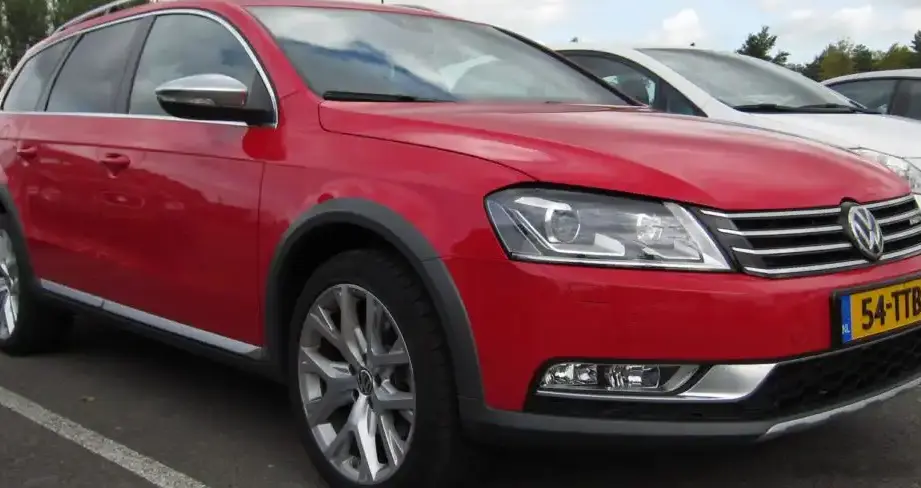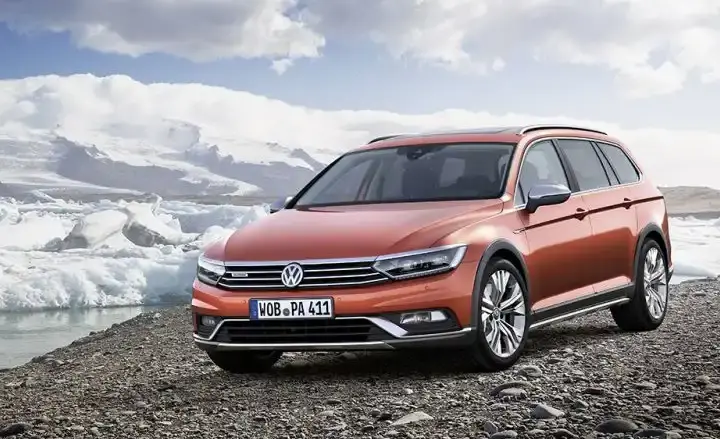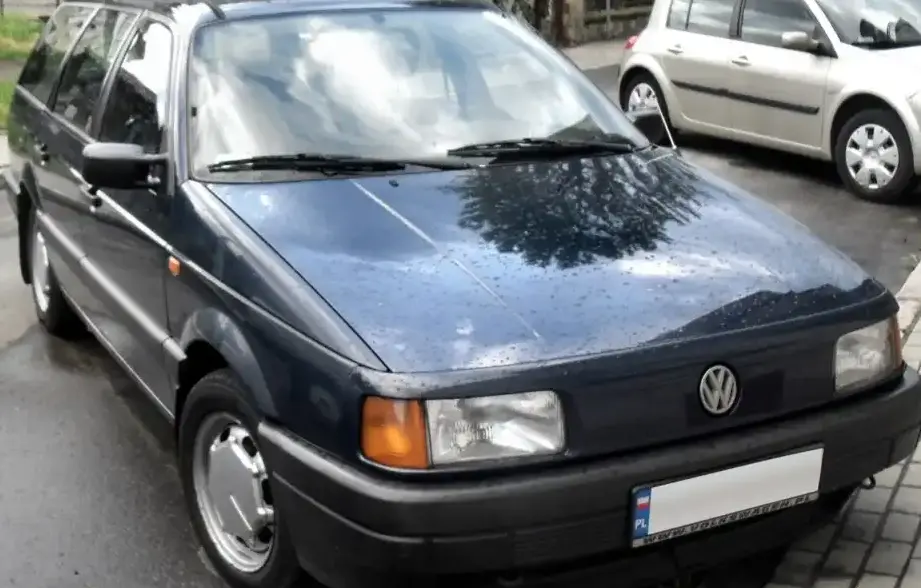
The Volkswagen Passat Variant (B3) 1.8, producing 90 horsepower, was a mainstay of the Passat lineup from 1988 to 1993. Positioned as an entry-level to mid-range offering, this variant catered to buyers seeking a practical and economical family vehicle within the popular B3 Passat generation (internally designated as the 1HX0/A3 platform). It represented a balance between affordability and usability, offering the spaciousness of the Variant (station wagon) body style with a reasonably efficient engine. This model was primarily sold in Europe, where station wagons held a significant market share, and to a lesser extent in other regions where the Passat was offered.
Technical Specifications
| Brand | Volkswagen |
| Model | Passat |
| Generation | Passat Variant (B3) |
| Type (Engine) | 1.8 (90 Hp) |
| Start of production | 1988 |
| End of production | 1993 |
| Powertrain Architecture | Internal Combustion engine |
| Body type | Station wagon (estate) |
| Seats | 5 |
| Doors | 5 |
| Fuel consumption (urban) | 11.3 l/100 km (20.8 US mpg, 25 UK mpg, 8.8 km/l) |
| Fuel consumption (extra urban) | 6.4 l/100 km (36.8 US mpg, 44.1 UK mpg, 15.6 km/l) |
| Fuel consumption (combined) | 8.3 l/100 km (28.3 US mpg, 34 UK mpg, 12 km/l) |
| Fuel Type | Petrol (Gasoline) |
| Acceleration 0 – 100 km/h | 14.7 sec |
| Acceleration 0 – 62 mph | 14.7 sec |
| Acceleration 0 – 60 mph | 14 sec |
| Maximum speed | 173 km/h (107.5 mph) |
| Weight-to-power ratio | 14.7 kg/Hp, 68.2 Hp/tonne |
| Weight-to-torque ratio | 9.1 kg/Nm, 109.8 Nm/tonne |
| Power | 90 Hp @ 5500 rpm |
| Power per litre | 50.5 Hp/l |
| Torque | 145 Nm @ 2500 rpm (106.95 lb.-ft. @ 2500 rpm) |
| Engine layout | Front, Transverse |
| Engine Model/Code | RP, ABS |
| Engine displacement | 1781 cm3 (108.68 cu. in.) |
| Number of cylinders | 4 |
| Engine configuration | Inline |
| Cylinder Bore | 81 mm (3.19 in.) |
| Piston Stroke | 86.4 mm (3.4 in.) |
| Compression ratio | 10:1 |
| Number of valves per cylinder | 2 |
| Fuel injection system | Single-point injection |
| Engine aspiration | Naturally aspirated engine |
| Valvetrain | OHC |
| Engine oil capacity | 3.8 l (4.02 US qt | 3.34 UK qt) |
| Coolant capacity | 6.5 l (6.87 US qt | 5.72 UK qt) |
| Kerb Weight | 1320 kg (2910.1 lbs.) |
| Max. weight | 1780 kg (3924.23 lbs.) |
| Max load | 460 kg (1014.13 lbs.) |
| Trunk (boot) space – minimum | 465 l (16.42 cu. ft.) |
| Trunk (boot) space – maximum | 1500 l (52.97 cu. ft.) |
| Fuel tank capacity | 70 l (18.49 US gal | 15.4 UK gal) |
| Length | 4595 mm (180.91 in.) |
| Width | 1720 mm (67.72 in.) |
| Height | 1445 mm (56.89 in.) |
| Wheelbase | 2625 mm (103.35 in.) |
| Front track | 1479 mm (58.23 in.) |
| Rear (Back) track | 1422 mm (55.98 in.) |
| Drivetrain Architecture | The Internal combustion engine (ICE) drives the front wheels of the vehicle. |
| Drive wheel | Front wheel drive |
| Number of gears and type of gearbox | 5 gears, manual transmission |
| Front suspension | Wishbone |
| Rear suspension | Suspension with traction connecting levers |
| Front brakes | Disc |
| Rear brakes | Drum |
| Assisting systems | ABS (Anti-lock braking system) |
| Steering type | Steering rack and pinion |
| Power steering | Hydraulic Steering |
| Tires size | 185/65 R14 |
| Wheel rims size | 14 |
Powertrain & Engine Architecture
The 1.8-liter inline four-cylinder engine, designated with engine codes RP or ABS depending on the specific year and market, formed the heart of this Passat Variant. This engine was a relatively simple design, utilizing a single overhead camshaft (OHC) and two valves per cylinder. Fuel delivery was handled by a single-point fuel injection system (Bosch Mono-Jetronic was common), which, while less sophisticated than multi-point injection, offered a good balance of cost and efficiency. The engine’s 81mm bore and 86.4mm stroke contributed to its relatively long-stroke characteristics, favoring low-end torque over high-revving power. The 10:1 compression ratio was typical for the era. The engine was transversely mounted, driving the front wheels. The standard transmission was a five-speed manual, but a four-speed automatic transmission was also available, and is the focus of this article. This automatic, while providing convenience, did impact acceleration and fuel economy compared to the manual version.
Driving Characteristics
The 90 hp 1.8L engine paired with the four-speed automatic transmission delivered adequate, but not exhilarating, performance. Acceleration from 0-60 mph took around 14 seconds, and top speed was approximately 107.5 mph. The automatic transmission’s gear ratios were geared towards fuel efficiency rather than sporty driving. This resulted in a somewhat sluggish response during overtaking maneuvers. Compared to the manual transmission version, the automatic noticeably reduced responsiveness. However, for everyday driving and commuting, the powertrain proved perfectly serviceable, offering a comfortable and predictable driving experience. The engine’s torque peak at 2500 rpm provided sufficient pulling power for most situations, although it required downshifting for steeper inclines or when fully loaded.
Equipment & Trim Levels
The 1.8-liter automatic Passat Variant typically fell into the base or mid-range trim levels. Standard equipment generally included power steering, central locking, and a basic stereo system. Interior upholstery was typically cloth, with a relatively simple dashboard layout. Optional extras included power windows, a sunroof, upgraded stereo systems, and alloy wheels. Higher trim levels, often paired with the larger engines, offered features like leather upholstery, climate control, and more sophisticated audio systems. The specific equipment levels varied depending on the country of sale.
Chassis & Braking
The B3 Passat Variant featured an independent front suspension with wishbones and a semi-independent rear suspension utilizing traction connecting levers. This suspension setup provided a comfortable ride, although it wasn’t particularly sporty. Brakes were disc brakes on the front wheels and drum brakes on the rear, a common configuration for vehicles in this class at the time. ABS (Anti-lock Braking System) was often included as standard equipment, enhancing safety. Stabilizer bars were fitted to both the front and rear axles to reduce body roll during cornering.
Market Reception & Comparison
The 1.8-liter automatic Passat Variant was generally well-received as a practical and affordable family car. Critics praised its spacious interior, comfortable ride, and reasonable fuel economy. However, the automatic transmission was often criticized for its lack of responsiveness compared to the manual version. Compared to the more powerful 1.9 TDI diesel or the sporty VR6 variants, the 1.8 offered a more economical but less engaging driving experience. The TDI provided superior fuel economy and torque, while the VR6 offered significantly more power. The 1.8 automatic appealed to buyers prioritizing comfort and convenience over performance.
Legacy
The RP and ABS engines, while not known for being particularly high-performance, proved to be relatively reliable. With proper maintenance, these engines can achieve high mileage. The four-speed automatic transmission, however, is sometimes cited as a potential weak point, with some units experiencing issues over time. Today, the Passat Variant (B3) 1.8 automatic is a relatively affordable classic car, appealing to enthusiasts seeking a practical and nostalgic vehicle. Parts availability is generally good, although some specific trim pieces may be difficult to find. Its enduring popularity is a testament to the B3 Passat’s overall build quality and practicality.