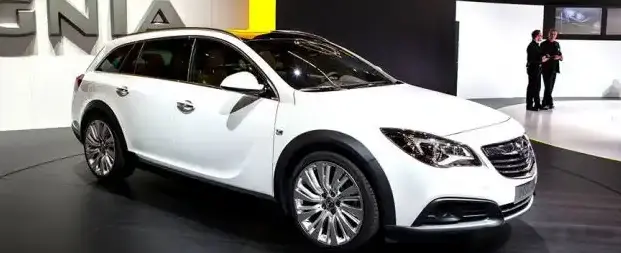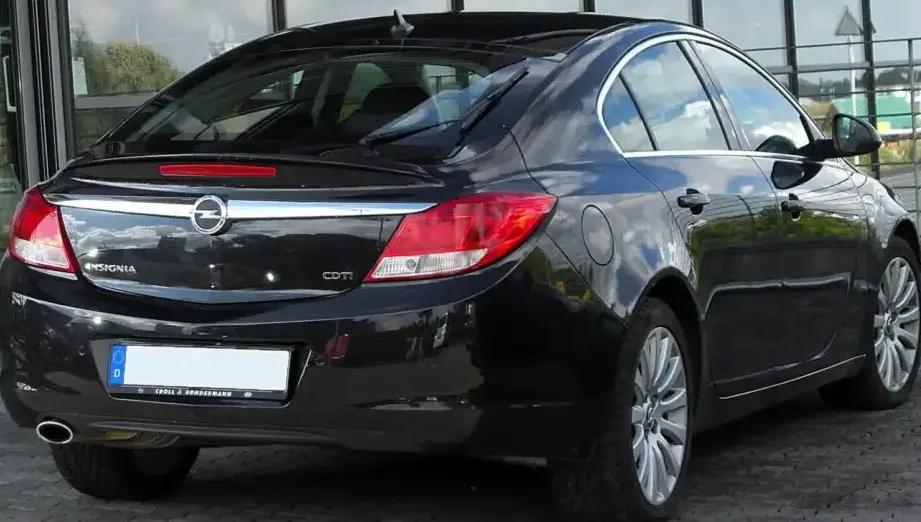
The Opel Insignia Hatchback (A) 1.6 Turbo, producing 180 horsepower, was a significant offering in the mid-size segment when it launched in November 2008 and continued through a production run ending in June 2013. Positioned as a mainstream variant within the first generation (A) Insignia range, it aimed to balance performance with fuel efficiency and affordability. The Insignia, as a whole, represented Opel’s attempt to move upmarket and compete with established players like the Ford Mondeo and Volkswagen Passat, offering a more stylish and technologically advanced package. This 1.6 Turbo model served as a key volume seller, appealing to buyers seeking a comfortable and well-equipped family car.
Technical Specifications
| Brand | Opel |
| Model | Insignia |
| Generation | Insignia Hatchback (A) |
| Type (Engine) | 1.6 Turbo (180 Hp) |
| Start of production | November, 2008 |
| End of production | June, 2013 |
| Powertrain Architecture | Internal Combustion engine |
| Body type | Hatchback |
| Seats | 5 |
| Doors | 5 |
| Fuel consumption (urban) | 9.7 l/100 km (24.2 US mpg) |
| Fuel consumption (extra urban) | 5.4 l/100 km (43.6 US mpg) |
| Fuel consumption (combined) | 7 l/100 km (33.6 US mpg) |
| CO2 emissions | 164 g/km |
| Fuel Type | Petrol (Gasoline) |
| Acceleration 0 – 100 km/h | 8.9 sec |
| Acceleration 0 – 62 mph | 8.9 sec |
| Acceleration 0 – 60 mph | 8.5 sec |
| Maximum speed | 225 km/h (139.81 mph) |
| Emission standard | Euro 5 |
| Weight-to-power ratio | 8.4 kg/Hp |
| Weight-to-torque ratio | 6.5 kg/Nm |
| Power | 180 Hp @ 5500 rpm |
| Torque | 230 Nm @ 2200-5500 rpm (169.64 lb.-ft.) |
| Engine layout | Front, Transverse |
| Engine Model/Code | A16LET |
| Engine displacement | 1598 cm3 (97.52 cu. in.) |
| Number of cylinders | 4 |
| Engine configuration | Inline |
| Cylinder Bore | 79 mm (3.11 in.) |
| Piston Stroke | 81.5 mm (3.21 in.) |
| Compression ratio | 8.8:1 |
| Number of valves per cylinder | 4 |
| Fuel injection system | Multi-port manifold injection |
| Engine aspiration | Turbocharger, Intercooler |
| Engine oil capacity | 4.5 l (4.76 US qt | 3.96 UK qt) |
| Coolant capacity | 5.6 l (5.92 US qt | 4.93 UK qt) |
| Kerb Weight | 1503 kg (3313.55 lbs.) |
| Max. weight | 2020 kg (4453.34 lbs.) |
| Max load | 517 kg (1139.79 lbs.) |
| Trunk (boot) space – minimum | 520 l (18.36 cu. ft.) |
| Trunk (boot) space – maximum | 1465 l (51.74 cu. ft.) |
| Fuel tank capacity | 70 l (18.49 US gal | 15.4 UK gal) |
| Length | 4830 mm (190.16 in.) |
| Width | 1858 mm (73.15 in.) |
| Height | 1498 mm (58.98 in.) |
| Wheelbase | 2737 mm (107.76 in.) |
| Front track | 1585 mm (62.4 in.) |
| Rear track | 1587 mm (62.48 in.) |
| Ride height (ground clearance) | 160 mm (6.3 in.) |
| Minimum turning circle | 11.4 m (37.4 ft.) |
| Drivetrain Architecture | Front wheel drive |
| Number of gears | 6 gears, manual transmission |
| Front brakes | Ventilated discs |
| Rear brakes | Disc |
| Assisting systems | ABS (Anti-lock braking system) |
| Tires size | 215/60 R16 |
| Wheel rims size | 16 |
Powertrain & Engine Architecture
The heart of this Insignia variant is the A16LET, a 1.6-liter turbocharged inline-four cylinder gasoline engine. This engine belongs to Opel’s ‘Family 1’ engine family, known for its compact dimensions and relatively lightweight construction. The A16LET utilizes multi-point fuel injection and a single turbocharger with an intercooler to boost power output. The turbocharger provides increased air intake, allowing for a higher compression ratio and more efficient combustion. The engine produces 180 horsepower at 5,500 rpm and 230 Nm (169.64 lb-ft) of torque between 2,200 and 5,500 rpm. The engine’s design prioritized a broad torque curve for improved drivability. The 6-speed manual transmission was the standard offering, providing a good balance between fuel economy and performance. While an automatic transmission was available, it wasn’t as common with this engine.
Driving Characteristics
The 1.6 Turbo Insignia offered a respectable driving experience, though it wasn’t intended to be a performance flagship. Acceleration from 0-60 mph took around 8.5 seconds, making it competitive within its class. The turbocharger provides a noticeable boost in power during acceleration, but there is some degree of turbo lag, particularly at lower engine speeds. The 6-speed manual transmission allows drivers to keep the engine in its optimal power band. Compared to the higher-output 2.0 Turbo models, the 1.6 Turbo felt less urgent in its acceleration, but it offered better fuel economy. The suspension tuning aimed for a comfortable ride, prioritizing smoothness over sporty handling. The steering was generally well-weighted, providing adequate feedback for everyday driving.
Equipment & Trim Levels
The 1.6 Turbo Insignia typically came equipped with a reasonable level of standard features. These included air conditioning, power windows, power mirrors, a CD/radio system, and alloy wheels. Higher trim levels, such as the ‘SE’ and ‘SRi’, added features like automatic climate control, parking sensors, cruise control, and upgraded interior trim. Interior upholstery was typically cloth, with leather options available on higher-spec models. Optional extras included a navigation system, a panoramic sunroof, and advanced safety features like adaptive cruise control.
Chassis & Braking
The Insignia Hatchback (A) utilized a front-wheel-drive platform with independent suspension at the front (MacPherson strut) and a semi-independent torsion beam setup at the rear. The front brakes were ventilated discs, providing good stopping power, while the rear brakes were solid discs. ABS (Anti-lock Braking System) was standard. The suspension was tuned for comfort, with relatively soft spring rates and dampers. Stabilizer bars were fitted to both the front and rear axles to reduce body roll during cornering. The weight distribution was fairly balanced, contributing to predictable handling.
Market Reception & Comparison
The Opel Insignia 1.6 Turbo was generally well-received by automotive critics. It was praised for its stylish design, spacious interior, and comfortable ride. The 1.6 Turbo engine was considered a good compromise between performance and fuel economy. However, some critics noted the presence of turbo lag and the slightly unrefined engine note. Compared to the 2.0 Turbo models, the 1.6 Turbo offered lower running costs but less outright performance. Against competitors like the Ford Mondeo and Volkswagen Passat, the Insignia offered a compelling package, particularly in terms of value for money. Fuel economy figures of around 33.6 US mpg combined were competitive for the segment.
Legacy
The A16LET engine, while not without its quirks, proved to be a relatively reliable unit when properly maintained. Common issues included occasional turbocharger failures and problems with the electronic throttle body. However, these issues were not widespread. Today, used examples of the Insignia 1.6 Turbo are readily available and represent an affordable entry point into the mid-size hatchback market. The car’s spacious interior and comfortable ride continue to appeal to buyers seeking a practical and reliable family car. The Insignia, in general, helped to elevate Opel’s brand image and establish it as a serious contender in the European mid-size segment.