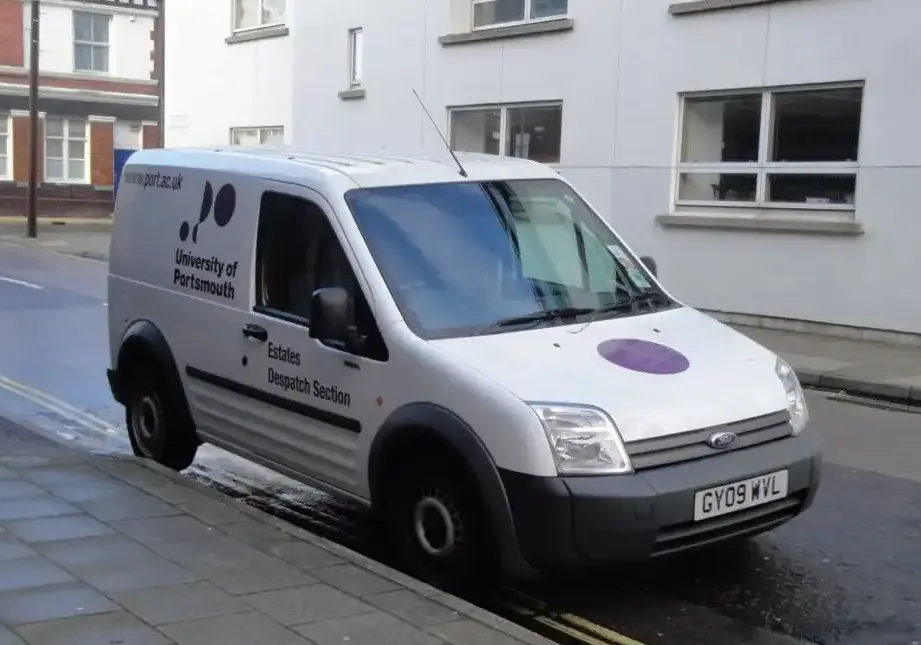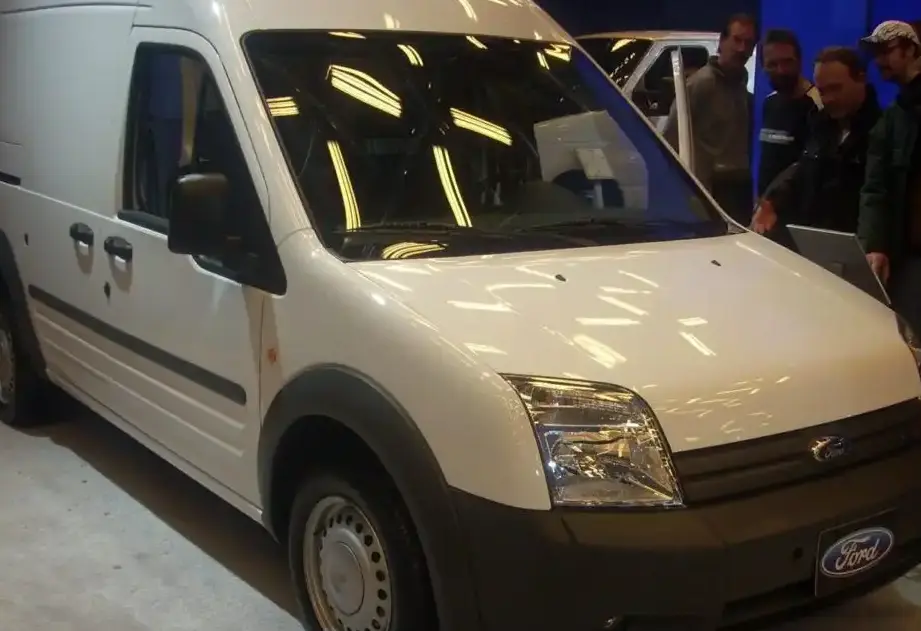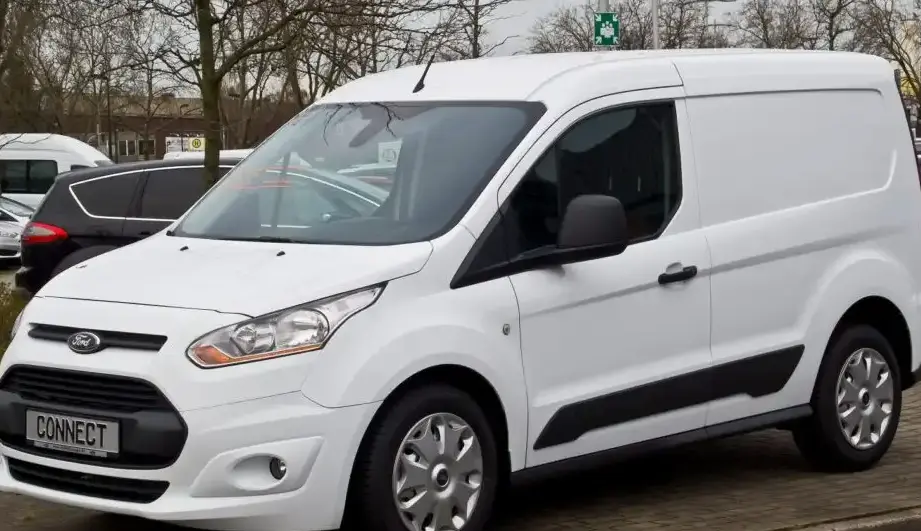
The Ford Transit Connect II Panel Van L1 2.5 (169 Hp) SelectShift represents a significant iteration in Ford’s commercial vehicle lineup, produced from 2013 to 2018. Positioned as a compact cargo and passenger van, the Transit Connect II aimed to bridge the gap between larger, full-size vans and smaller, less versatile options. This particular variant, equipped with the 2.5-liter Duratec engine and Ford’s SelectShift automatic transmission, was a popular choice for businesses and individuals seeking a balance of fuel efficiency, practicality, and ease of use. It was built on the global Ford C/MPV platform, also known as the 1HX0/A3 platform, shared with models like the Ford Focus. The L1 designation indicates the short wheelbase version, offering enhanced maneuverability in urban environments.
Technical Specifications
| Brand | Ford |
| Model | Transit Connect |
| Generation | Transit Connect II Panel Van L1 |
| Type (Engine) | 2.5 (169 Hp) SelectShift |
| Start of production | 2013 |
| End of production | 2018 |
| Powertrain Architecture | Internal Combustion engine |
| Body type | Minivan |
| Seats | 2 |
| Doors | 4-5 |
| Fuel consumption (urban) | 11.2-11.8 l/100 km (21 – 19.9 US mpg) |
| Fuel consumption (extra urban) | 8.1-8.7 l/100 km (29 – 27 US mpg) |
| Fuel consumption (combined) | 9.8-10.2 l/100 km (24 – 23.1 US mpg) |
| Fuel Type | Petrol (Gasoline) |
| Power | 169 Hp @ 6000 rpm |
| Torque | 232 Nm @ 4500 rpm (171.11 lb.-ft. @ 4500 rpm) |
| Engine layout | Front, Transverse |
| Engine Model/Code | Duratec 25 |
| Engine displacement | 2488 cm3 (151.83 cu. in.) |
| Number of cylinders | 4 |
| Engine configuration | Inline |
| Cylinder Bore | 89 mm (3.5 in.) |
| Piston Stroke | 100 mm (3.94 in.) |
| Compression ratio | 9.7:1 |
| Number of valves per cylinder | 4 |
| Fuel injection system | Multi-port manifold injection |
| Engine aspiration | Naturally aspirated engine |
| Valvetrain | DOHC, i-VCT |
| Engine oil capacity | 5.4 l (5.71 US qt | 4.75 UK qt) |
| Coolant capacity | 8 l (8.45 US qt | 7.04 UK qt) |
| Trunk (boot) space – minimum | 2630 l (92.88 cu. ft.) |
| Trunk (boot) space – maximum | 3700 l (130.66 cu. ft.) |
| Fuel tank capacity | 60 l (15.85 US gal | 13.2 UK gal) |
| Permitted trailer load with brakes (12%) | 907 kg (1999.59 lbs.) |
| Length | 4418 mm (173.94 in.) |
| Width | 1834 mm (72.2 in.) |
| Width with mirrors folded | 1966 mm (77.4 in.) |
| Width including mirrors | 2137 mm (84.13 in.) |
| Height | 1842 mm (72.52 in.) |
| Wheelbase | 2662 mm (104.8 in.) |
| Front track | 1560 mm (61.42 in.) |
| Rear track | 1567 mm (61.69 in.) |
| Front overhang | 878 mm (34.57 in.) |
| Rear overhang | 878 mm (34.57 in.) |
| Minimum turning circle | 11.7 m (38.39 ft.) |
| Drivetrain | Front wheel drive |
| Number of gears | 6 |
| Gearbox type | Automatic transmission SelectShift |
| Front suspension | Independent, McPherson with coil spring and anti-roll bar |
| Rear suspension | Coil spring, Torsion |
| Front brakes | Ventilated discs |
| Rear brakes | Disc |
| Steering type | Steering rack and pinion |
| Power steering | Electric |
| Tires size | 215/55 R16 |
| Wheel rims size | 6.5J x 16 |
Powertrain & Engine Architecture
The heart of the Transit Connect L1 2.5 SelectShift is the Ford Duratec 25 engine, a 2.5-liter inline-four cylinder powerplant. This engine, part of the Duratec family, utilizes multi-port fuel injection and a double overhead camshaft (DOHC) valvetrain with intake variable camshaft timing (i-VCT). The i-VCT system optimizes valve timing based on engine speed and load, improving both performance and fuel efficiency. The engine’s 9.7:1 compression ratio strikes a balance between power output and the ability to run on regular unleaded gasoline. Paired with this engine is Ford’s SelectShift 6-speed automatic transmission. This transmission isn’t a traditional automatic; it incorporates a torque converter but also allows for manual gear selection via a shift lever, offering drivers some control over gear changes. The SelectShift transmission was designed to provide smoother shifts and improved fuel economy compared to older automatic designs.
Driving Characteristics
The 169 horsepower and 171 lb-ft of torque produced by the 2.5-liter engine, when coupled with the SelectShift automatic, provided adequate, though not exhilarating, performance for the Transit Connect L1. Acceleration was sufficient for typical urban and highway driving, but fully loaded with cargo or passengers, the engine could feel strained, particularly when climbing hills. The automatic transmission’s gear ratios were tuned for fuel economy, resulting in a relatively conservative shift pattern. Compared to the available manual transmission, the automatic offered greater convenience, especially in stop-and-go traffic, but at the expense of some responsiveness. The manual transmission versions of the Transit Connect generally offered slightly better fuel economy and quicker acceleration.
Equipment & Trim Levels
The Transit Connect L1 2.5 SelectShift typically came standard with features such as air conditioning, power windows and locks, a basic audio system with AM/FM radio and auxiliary input, and steel wheels with wheel covers. Safety features included anti-lock brakes (ABS) and front airbags. Higher trim levels, such as the XLT, added features like alloy wheels, a more advanced audio system with a CD player and satellite radio compatibility, cruise control, and upgraded interior trim. Optional extras included a rearview camera, parking sensors, and a navigation system. Interior upholstery was typically cloth, with durable and practical materials chosen to withstand the demands of commercial use.
Chassis & Braking
The Transit Connect L1 utilized an independent McPherson strut front suspension and a semi-independent coil spring rear suspension. This setup provided a reasonably comfortable ride, although the rear suspension could become unsettled when the vehicle was heavily loaded. Front brakes were ventilated discs, providing good stopping power, while rear brakes were solid discs. The electric power steering offered light and easy steering, making maneuvering in tight spaces simple. The relatively lightweight construction of the Transit Connect contributed to its nimble handling characteristics.
Market Reception & Comparison
The Ford Transit Connect L1 2.5 SelectShift was generally well-received by critics and consumers alike. It was praised for its practicality, fuel efficiency, and relatively affordable price. However, some reviewers noted that the engine could feel underpowered when the vehicle was fully loaded, and the automatic transmission’s shift quality wasn’t always as smooth as some competitors. Compared to other compact vans like the Chevrolet City Express or the Nissan NV200, the Transit Connect offered a more refined driving experience and a more spacious cargo area. Fuel economy figures were competitive within its class, averaging around 24 mpg combined.
Legacy
The 2.5-liter Duratec engine and SelectShift transmission combination proved to be reasonably reliable in the Transit Connect. While not without its quirks, the powertrain generally held up well over time with proper maintenance. Common issues included occasional transmission shuddering and minor oil leaks. Today, used Transit Connect L1 2.5 SelectShift models represent a good value for those seeking a practical and affordable commercial vehicle. Their relatively simple mechanical design and readily available parts make them relatively easy and inexpensive to maintain. The Transit Connect helped establish Ford as a major player in the compact van segment, paving the way for future generations of the vehicle.