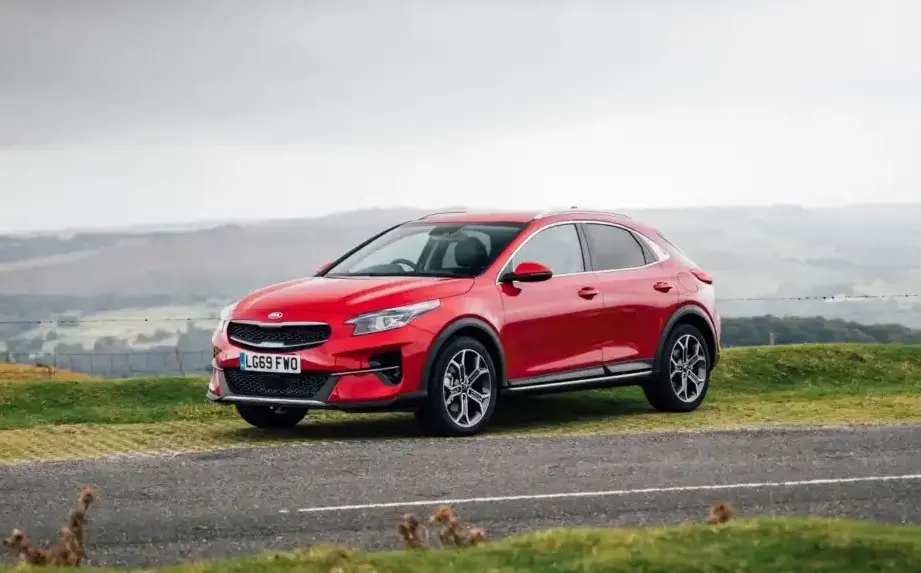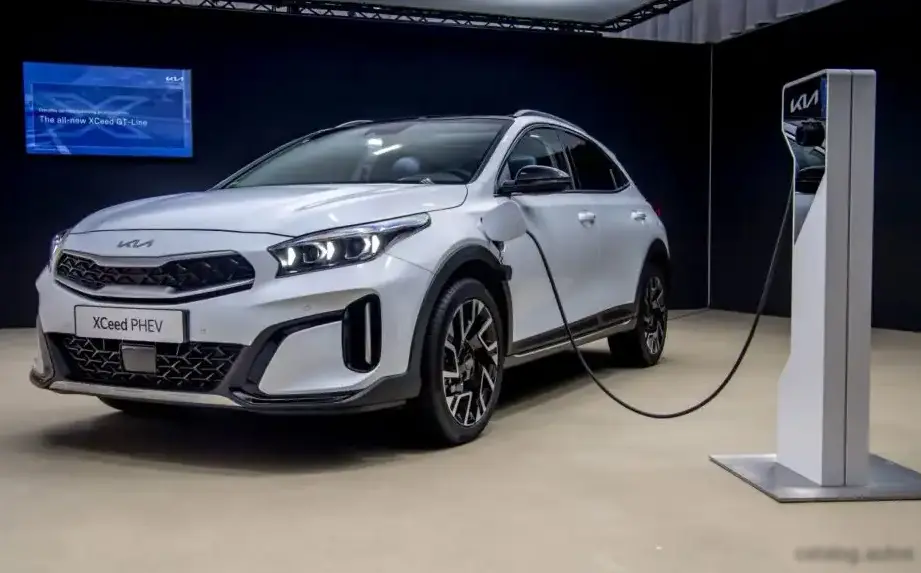
The Kia XCeed (facelift, introduced in July 2022 and produced through April 2024) 1.6 GDI Plug-in Hybrid DCT represents a significant step in Kia’s electrification strategy for the European market. Positioned as a mid-range offering within the XCeed lineup, this variant combined a gasoline engine with an electric motor and battery pack, offering both all-electric driving capability and the extended range of a traditional hybrid. It aimed to appeal to buyers seeking fuel efficiency and reduced emissions without compromising on practicality or driving experience. The XCeed itself is a compact crossover, designed to bridge the gap between traditional hatchbacks and larger SUVs, and the plug-in hybrid version further enhanced its appeal to environmentally conscious consumers.
Technical Specifications
| Brand | Kia |
| Model | XCeed |
| Generation | Xceed (facelift 2022) |
| Type (Engine) | 1.6 GDI (141 Hp) Plug-in Hybrid DCT |
| Start of production | July, 2022 |
| End of production | April, 2024 |
| Powertrain Architecture | PHEV (Plug-in Hybrid Electric Vehicle) |
| Body type | SUV, Crossover |
| Seats | 5 |
| Doors | 5 |
| Combined fuel consumption (WLTP) | 1.4-1.7 l/100 km (168 – 138.4 US mpg, 201.8 – 166.2 UK mpg, 71.4 – 58.8 km/l) |
| CO2 emissions (WLTP) | 32-38 g/km |
| Fuel consumption (NEDC, WLTP equivalent) | 1.2-1.3 l/100 km (196 – 180.9 US mpg, 235.4 – 217.3 UK mpg, 83.3 – 76.9 km/l) |
| CO2 emissions (NEDC, WLTP equivalent) | 29-31 g/km |
| Fuel Type | Petrol / electricity |
| Acceleration 0 – 100 km/h | 11 sec |
| Acceleration 0 – 62 mph | 11 sec |
| Acceleration 0 – 60 mph | 10.5 sec |
| Maximum speed | 193 km/h (119.92 mph) |
| Emission standard | Euro 6d |
| Weight-to-power ratio | 10.2 kg/Hp, 97.6 Hp/tonne |
| Weight-to-torque ratio | 5.4 kg/Nm, 183.5 Nm/tonne |
| Gross battery capacity | 8.9 kWh |
| Battery voltage | 360 V |
| Battery technology | Lithium-polymer (LiPo) |
| Battery weight | 117 kg (257.94 lbs.) |
| Battery location | Under the rear seats / Under the trunk |
| All-electric range (WLTP) | 42-48 km (26.1 – 29.83 mi) |
| All-electric range (NEDC, WLTP equivalent) | 54-58 km (33.55 – 36.04 mi) |
| Average Energy consumption (WLTP) | 12.3-13.2 kWh/100 km (19.79 – 21.24 kWh/100 mi, 170 – 159 MPGe, 8.1 – 7.6 km/kWh, 5.1 – 4.7 mi/kWh) |
| Average Energy consumption (NEDC, WLTP equivalent) | 10.7-11 kWh/100 km (17.22 – 17.7 kWh/100 mi, 196 – 190 MPGe, 9.3 – 9.1 km/kWh, 5.8 – 5.6 mi/kWh) |
| Max speed (electric) | 120 km/h (74.56 mph) |
| Electric motor power | 61 Hp @ 1798-2500 rpm |
| Electric motor Torque | 170 Nm @ 0-1798 rpm (125.39 lb.-ft. @ 0-1798 rpm) |
| Electric motor location | Between the combustion engine and the transmission |
| System power | 141 Hp @ 5700 rpm |
| System torque | 265 Nm @ 1000-2400 rpm (195.45 lb.-ft. @ 1000-2400 rpm) |
| Power | 105 Hp @ 5700 rpm |
| Torque | 147 Nm @ 4000 rpm (108.42 lb.-ft. @ 4000 rpm) |
| Engine layout | Front, Transverse |
| Engine Model/Code | Smartstream / G4LE |
| Engine displacement | 1580 cm3 (96.42 cu. in.) |
| Number of cylinders | 4 |
| Engine configuration | Inline |
| Cylinder Bore | 72 mm (2.83 in.) |
| Piston Stroke | 97 mm (3.82 in.) |
| Compression ratio | 13:1 |
| Number of valves per cylinder | 4 |
| Fuel injection system | Direct injection |
| Valvetrain | DOHC, Dual CVVT |
| Engine oil capacity | 3.8 l (4.02 US qt | 3.34 UK qt) |
| Coolant | 6.8 l (7.19 US qt | 5.98 UK qt) |
| Kerb Weight | 1444-1521 kg (3183.48 – 3353.23 lbs.) |
| Max. weight | 2030 kg (4475.38 lbs.) |
| Max load | 509-586 kg (1122.15 – 1291.91 lbs.) |
| Trunk (boot) space – minimum | 291 l (10.28 cu. ft.) |
| Trunk (boot) space – maximum | 1243 l (43.9 cu. ft.) |
| Fuel tank capacity | 37 l (9.77 US gal | 8.14 UK gal) |
| Max. roof load | 80 kg (176.37 lbs.) |
| Permitted trailer load with brakes (12%) | 1300 kg (2866.01 lbs.) |
| Permitted trailer load without brakes | 600 kg (1322.77 lbs.) |
| Permitted towbar download | 75 kg (165.35 lbs.) |
| Length | 4395 mm (173.03 in.) |
| Width | 1826 mm (71.89 in.) |
| Height | 1483-1495 mm (58.39 – 58.86 in.) |
| Wheelbase | 2650 mm (104.33 in.) |
| Front track | 1575-1585 mm (62.01 – 62.4 in.) |
| Rear (Back) track | 1573-1583 mm (61.93 – 62.32 in.) |
| Front overhang | 905 mm (35.63 in.) |
| Rear overhang | 840 mm (33.07 in.) |
| Minimum turning circle (turning diameter) | 10.6 m (34.78 ft.) |
| Drivetrain Architecture | The Internal combustion engine (ICE) and electric motor drive the front wheels of the car with the ability to work in full electric or mixed mode. |
| Drive wheel | Front wheel drive |
| Number of gears and type of gearbox | 6 gears, automatic transmission DCT |
| Front suspension | Independent type McPherson |
| Rear suspension | Independent multi-link spring suspension with stabilizer |
| Front brakes | Ventilated discs, 305×25 mm |
| Rear brakes | Disc, 284×10 mm |
| Tires size | 205/60 R16 92H; 235/45 R18 94V |
| Wheel rims size | 6.5J x 16 ET40; 7.5J x 18 ET45 |
INTRODUCTION
The Kia XCeed 1.6 GDI Plug-in Hybrid DCT, launched in 2022 as part of the model’s facelift, offered a compelling blend of practicality, efficiency, and technology. Built on the 1HX0/A3 platform shared with the Hyundai Kona and other Kia/Hyundai models, the XCeed aimed to provide a more stylish and versatile alternative to traditional compact hatchbacks. The plug-in hybrid variant specifically targeted buyers in Europe, where stricter emissions regulations and government incentives favored electrified vehicles. This trim level sat in the middle of the XCeed range, offering a balance between the more affordable non-hybrid models and the higher-specification trims.
Powertrain & Engine Architecture
At the heart of the XCeed PHEV lies Kia’s Smartstream 1.6-liter GDI (Gasoline Direct Injection) engine, designated the G4LE. This naturally aspirated four-cylinder engine produces 105 horsepower and 147 Nm of torque. The engine utilizes a direct injection system for improved efficiency and power delivery, along with a Dual Continuous Variable Valve Timing (CVVT) system to optimize valve timing based on driving conditions. Paired with the gasoline engine is a 61 horsepower electric motor, powered by an 8.9 kWh lithium-polymer battery pack. The battery is positioned under the rear seats and in the trunk, minimizing impact on passenger space. The combined system output is 141 horsepower and 265 Nm of torque. Power is delivered to the front wheels via a six-speed dual-clutch transmission (DCT), chosen for its quick and smooth gear changes. The DCT allows for efficient power transfer and contributes to the vehicle’s overall responsiveness.
Driving Characteristics
The XCeed 1.6 GDI Plug-in Hybrid DCT offers a refined and comfortable driving experience. In all-electric mode, the vehicle can travel between 42 and 48 kilometers (26.1 – 29.83 miles) on a single charge, making it suitable for daily commutes and short trips. The electric motor provides instant torque, resulting in brisk acceleration from a standstill. When the battery is depleted or requires assistance during more demanding driving situations, the gasoline engine seamlessly kicks in, providing a smooth transition. The DCT transmission contributes to responsive gear changes, although some drivers may notice a slight delay during low-speed maneuvers. Compared to the standard 1.0-liter turbocharged engine or the 1.6-liter non-hybrid versions, the plug-in hybrid offers significantly improved fuel economy and reduced emissions. However, the added weight of the battery pack and electric motor does result in a slightly slower 0-60 mph time of around 10.5 seconds.
Equipment & Trim Levels
The XCeed 1.6 GDI Plug-in Hybrid DCT typically came well-equipped as standard. Features included automatic climate control, a touchscreen infotainment system with Apple CarPlay and Android Auto compatibility, a rearview camera, and a suite of advanced driver-assistance systems (ADAS) such as lane-keeping assist, forward collision avoidance assist, and adaptive cruise control. Interior upholstery was typically cloth, with options for leather upgrades. Higher trim levels offered additional features such as a larger touchscreen display, a premium sound system, heated seats, and a panoramic sunroof. The dashboard layout was modern and user-friendly, with a focus on intuitive controls and a clean aesthetic.
Chassis & Braking
The XCeed’s chassis was tuned to provide a comfortable and balanced ride. The front suspension utilizes an independent McPherson strut setup, while the rear features an independent multi-link spring suspension with a stabilizer bar. This configuration helps to minimize body roll and provide stable handling. The braking system consists of ventilated discs on the front wheels and solid discs on the rear. Anti-lock Braking System (ABS) and Electronic Stability Control (ESC) are standard features, enhancing safety and control. The weight distribution of the plug-in hybrid variant, due to the battery pack’s placement, slightly alters the handling characteristics compared to the non-hybrid models, but the overall driving experience remains composed and predictable.
Market Reception & Comparison
The Kia XCeed 1.6 GDI Plug-in Hybrid DCT was generally well-received by automotive critics. Reviewers praised its fuel efficiency, comfortable ride, and generous standard equipment. The all-electric range was considered competitive within its segment, and the plug-in hybrid system offered a practical solution for reducing emissions. Compared to the non-hybrid XCeed models, the PHEV variant commanded a higher price tag, but the fuel savings and potential government incentives helped to offset the initial cost. Compared to other plug-in hybrid crossovers, such as the Toyota C-HR Plug-in Hybrid, the XCeed offered a more spacious interior and a more engaging driving experience. However, some critics noted that the gasoline engine could feel underpowered when combined with the weight of the battery pack.
Legacy
The Kia XCeed 1.6 GDI Plug-in Hybrid DCT represents an important step in Kia’s transition towards electrification. The powertrain, while not without its minor drawbacks, proved to be relatively reliable in early reports. On the used car market, these models continue to appeal to buyers seeking a fuel-efficient and environmentally friendly crossover. The combination of a comfortable ride, practical interior space, and advanced technology ensures that the XCeed PHEV remains a competitive option in the compact crossover segment. As battery technology continues to evolve, the XCeed’s plug-in hybrid system serves as a foundation for Kia’s future electrified vehicles.