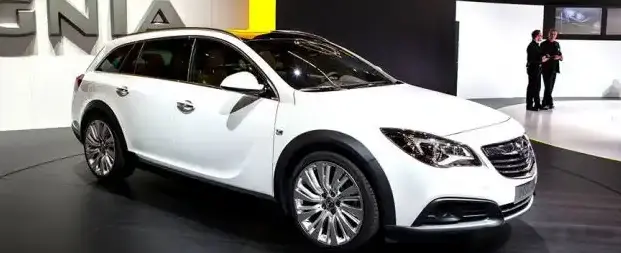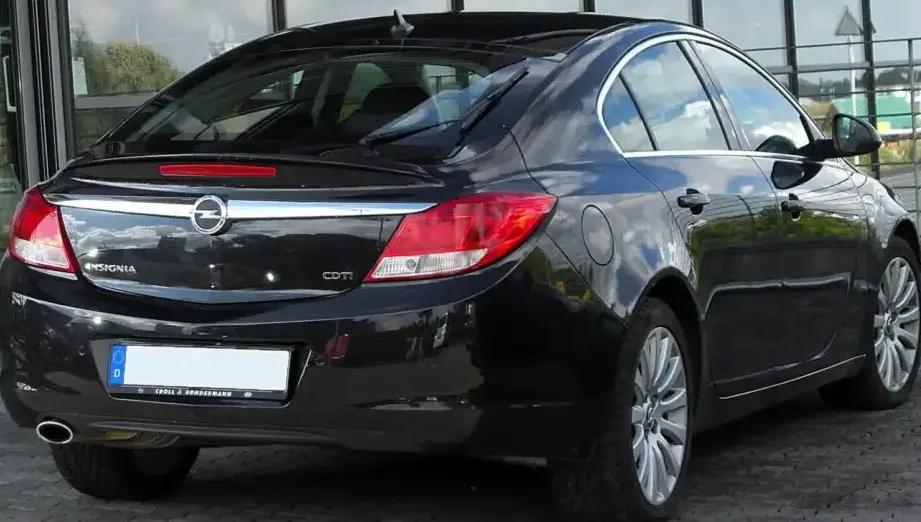
The Opel Insignia Hatchback (A) 1.6i, producing 115 horsepower, was a key variant in the initial lineup of the Insignia, launched in November 2008 and remaining in production until June 2012. Positioned as an entry-level offering within the first generation (A) Insignia range, it aimed to provide a balance of practicality, fuel efficiency, and affordability for the European market. The Insignia itself represented a significant step forward for Opel, replacing the Vectra and Signum models, and was built on the GM Epsilon II platform, also known internally as the 1HX0/A3 platform. This variant was particularly popular with buyers seeking a comfortable and spacious family hatchback without the higher running costs associated with larger engines.
Technical Specifications
| Brand | Opel |
| Model | Insignia |
| Generation | Insignia Hatchback (A) |
| Type (Engine) | 1.6i (115 Hp) |
| Start of production | November, 2008 |
| End of production | June, 2012 |
| Powertrain Architecture | Internal Combustion engine |
| Body type | Hatchback |
| Seats | 5 |
| Doors | 5 |
| Fuel consumption (urban) | 10.6 l/100 km (22.2 US mpg, 26.6 UK mpg, 9.4 km/l) |
| Fuel consumption (extra urban) | 5.9 l/100 km (39.9 US mpg, 47.9 UK mpg, 16.9 km/l) |
| Fuel consumption (combined) | 7.6 l/100 km (30.9 US mpg, 37.2 UK mpg, 13.2 km/l) |
| CO2 emissions | 179 g/km |
| Fuel Type | Petrol (Gasoline) |
| Acceleration 0 – 100 km/h | 12.9 sec |
| Acceleration 0 – 62 mph | 12.9 sec |
| Acceleration 0 – 60 mph | 12.3 sec |
| Maximum speed | 192 km/h (119.3 mph) |
| Emission standard | Euro 5 |
| Weight-to-power ratio | 12.8 kg/Hp, 78.2 Hp/tonne |
| Weight-to-torque ratio | 9.5 kg/Nm, 105.4 Nm/tonne |
| Power | 115 Hp @ 6000 rpm |
| Power per litre | 72 Hp/l |
| Torque | 155 Nm @ 4000 rpm (114.32 lb.-ft. @ 4000 rpm) |
| Engine layout | Front, Transverse |
| Engine Model/Code | A16XER |
| Engine displacement | 1598 cm3 (97.52 cu. in.) |
| Number of cylinders | 4 |
| Engine configuration | Inline |
| Cylinder Bore | 79 mm (3.11 in.) |
| Piston Stroke | 81.5 mm (3.21 in.) |
| Compression ratio | 10.8:1 |
| Number of valves per cylinder | 4 |
| Fuel injection system | Multi-port manifold injection |
| Engine aspiration | Naturally aspirated engine |
| Valvetrain | DOHC |
| Engine oil capacity | 4.5 l (4.76 US qt | 3.96 UK qt) |
| Coolant | 5.6 l (5.92 US qt | 4.93 UK qt) |
| Kerb Weight | 1470 kg (3240.8 lbs.) |
| Max. weight | 2020 kg (4453.34 lbs.) |
| Max load | 550 kg (1212.54 lbs.) |
| Trunk (boot) space – minimum | 520 l (18.36 cu. ft.) |
| Trunk (boot) space – maximum | 1465 l (51.74 cu. ft.) |
| Fuel tank capacity | 70 l (18.49 US gal | 15.4 UK gal) |
| Length | 4830 mm (190.16 in.) |
| Width | 1856 mm (73.07 in.) |
| Height | 1498 mm (58.98 in.) |
| Wheelbase | 2737 mm (107.76 in.) |
| Front track | 1585 mm (62.4 in.) |
| Rear (Back) track | 1587 mm (62.48 in.) |
| Ride height (ground clearance) | 160 mm (6.3 in.) |
| Minimum turning circle | 11.4 m (37.4 ft.) |
| Drivetrain Architecture | The Internal combustion engine (ICE) drives the front wheels of the vehicle. |
| Drive wheel | Front wheel drive |
| Number of gears and type of gearbox | 6 gears, manual transmission |
| Front brakes | Ventilated discs |
| Rear brakes | Disc |
| Assisting systems | ABS (Anti-lock braking system) |
| Tires size | 215/60 R16 |
| Wheel rims size | 16 |
Powertrain & Engine Architecture
The heart of the Insignia 1.6i was the A16XER engine, a 1.6-liter (1598 cc) inline-four cylinder petrol engine. This engine was part of Opel’s ‘Family 1’ engine family, known for its relatively simple design and focus on fuel efficiency. It featured a dual overhead camshaft (DOHC) valvetrain with four valves per cylinder, and utilized multi-point fuel injection. The A16XER produced 115 horsepower at 6000 rpm and 155 Nm (114 lb-ft) of torque at 4000 rpm. The engine’s design prioritized smooth operation and acceptable performance for everyday driving rather than outright speed. The standard transmission for this variant was a six-speed manual gearbox, although a six-speed automatic transmission was also available as an option. The automatic transmission, while offering convenience, did slightly impact fuel economy and acceleration compared to the manual.
Driving Characteristics
The 1.6i automatic Insignia offered a comfortable, if not particularly sporty, driving experience. Acceleration from 0-60 mph took around 12.3 seconds, and top speed was 119.3 mph. The engine felt adequate for typical commuting and highway cruising, but could feel strained when fully loaded or attempting brisk overtaking maneuvers. The automatic transmission was tuned for smooth shifts and fuel efficiency, sometimes at the expense of responsiveness. Compared to the more powerful 1.8-liter and 2.0-liter turbocharged versions of the Insignia, the 1.6i felt noticeably slower. However, it offered a more relaxed and economical driving experience, making it a popular choice for drivers prioritizing comfort and fuel costs.
Equipment & Trim Levels
The 1.6i Insignia typically came equipped with a reasonable level of standard features, including air conditioning, electric front windows, a CD/radio system, and ABS brakes. Higher trim levels, such as ‘Excite’ and ‘Sport’, added features like alloy wheels, cruise control, rear parking sensors, and upgraded interior trim. Interior upholstery was typically cloth, with options for leather available on higher-spec models. The dashboard layout was generally functional and well-designed, although the materials used were not as premium as those found in some competitor vehicles.
Chassis & Braking
The Insignia’s chassis was designed to provide a comfortable ride and stable handling. The front suspension utilized MacPherson struts, while the rear suspension employed a multi-link setup. The 1.6i variant typically featured ventilated front disc brakes and solid disc brakes at the rear. ABS (Anti-lock Braking System) was standard. The suspension tuning was geared towards comfort, resulting in a relatively soft ride quality. Stabilizer bars were fitted front and rear to reduce body roll during cornering, but the 1.6i’s lighter weight compared to higher-powered models meant that body roll was less pronounced.
Market Reception & Comparison
The Insignia 1.6i was generally well-received by automotive critics as a practical and affordable family hatchback. It was praised for its spacious interior, comfortable ride, and reasonable fuel economy. However, some critics noted that the engine lacked the punch of its turbocharged counterparts. Compared to rivals like the Ford Mondeo and Volkswagen Passat, the Insignia 1.6i offered a competitive package in terms of price and features. Fuel economy was comparable to other 1.6-liter petrol engines in the segment, and reliability was generally good, although some owners reported minor issues with the electronic systems.
Legacy
The Opel Insignia 1.6i (A) remains a relatively common sight on European roads today. The A16XER engine is generally considered to be a reliable unit, although regular maintenance is essential to prevent issues. The availability of spare parts is good, and the relatively simple engine design makes it relatively easy to repair. In the used car market, the 1.6i Insignia represents a good value proposition for buyers seeking a spacious and comfortable family hatchback at an affordable price. While not the most exciting car to drive, it offers a practical and dependable transportation solution.