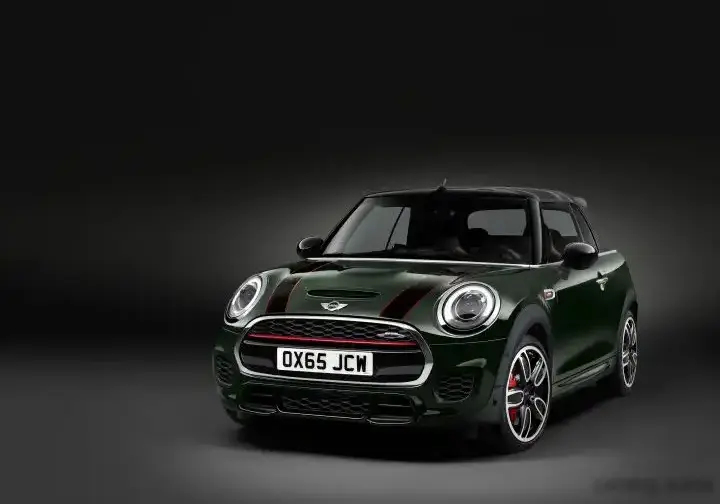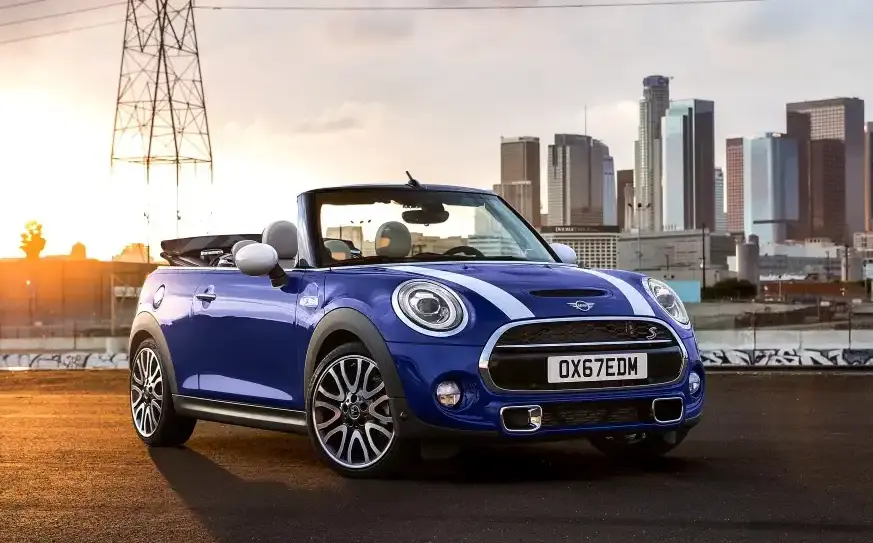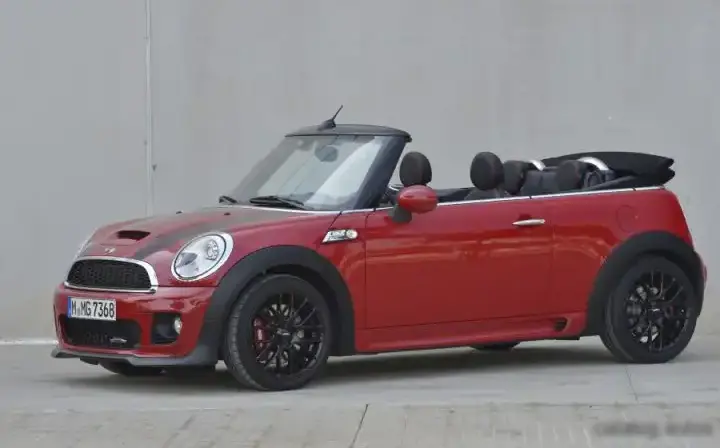
The Mini Convertible John Cooper Works (JCW) 1.6, produced from March 2009 to February 2010, represented the performance pinnacle of the R57 Convertible generation. Positioned as the flagship trim, it offered a significantly more engaging driving experience than the standard Cooper or Cooper S models. This variant was a key part of Mini’s strategy to offer a genuinely sporty open-top experience, appealing to enthusiasts seeking a premium, fun-to-drive convertible. It built upon the success of the R56 JCW hatchback, bringing the same performance ethos to the convertible body style.
Technical Specifications
| Brand | Mini |
| Model | Convertible |
| Generation | Convertible (R57) |
| Type (Engine) | JCW 1.6 (211 Hp) |
| Start of production | March, 2009 |
| End of production | February, 2010 |
| Powertrain Architecture | Internal Combustion engine |
| Body type | Cabriolet |
| Seats | 4 |
| Doors | 2 |
| Fuel consumption (urban) | 9.6 l/100 km (24.5 US mpg) |
| Fuel consumption (extra urban) | 5.9 l/100 km (39.9 US mpg) |
| Fuel consumption (combined) | 7.3 l/100 km (32.2 US mpg) |
| CO2 emissions | 169 g/km |
| Fuel Type | Petrol (Gasoline) |
| Acceleration 0 – 100 km/h | 6.9 sec |
| Acceleration 0 – 62 mph | 6.9 sec |
| Acceleration 0 – 60 mph | 6.6 sec |
| Maximum speed | 182 km/h (113.09 mph) |
| Emission standard | Euro 5 |
| Weight-to-power ratio | 5.8 kg/Hp |
| Weight-to-torque ratio | 4.4 kg/Nm |
| Power | 211 Hp @ 6000 rpm |
| Torque | 280 Nm @ 1850-5600 rpm (206.52 lb.-ft.) |
| Engine layout | Front, Transverse |
| Engine Model/Code | N18B16C |
| Engine displacement | 1598 cm3 (97.52 cu. in.) |
| Number of cylinders | 4 |
| Engine configuration | Inline |
| Cylinder Bore | 77 mm (3.03 in.) |
| Piston Stroke | 85.8 mm (3.38 in.) |
| Compression ratio | 10:1 |
| Number of valves per cylinder | 4 |
| Fuel injection system | Direct injection |
| Engine aspiration | Turbocharger, Intercooler |
| Engine oil capacity | 4.2 l (4.44 US qt | 3.7 UK qt) |
| Coolant | 5.2 l (5.49 US qt | 4.58 UK qt) |
| Kerb Weight | 1230 kg (2711.69 lbs.) |
| Max. weight | 1660 kg (3659.67 lbs.) |
| Max load | 430 kg (947.99 lbs.) |
| Trunk (boot) space – minimum | 125 l (4.41 cu. ft.) |
| Trunk (boot) space – maximum | 660 l (23.31 cu. ft.) |
| Fuel tank capacity | 50 l (13.21 US gal | 11 UK gal) |
| Length | 3714 mm (146.22 in.) |
| Width | 1683 mm (66.26 in.) |
| Height | 1414 mm (55.67 in.) |
| Wheelbase | 2467 mm (97.13 in.) |
| Front track | 1453 mm (57.2 in.) |
| Rear (Back) track | 1461 mm (57.52 in.) |
| Ride height (ground clearance) | 138 mm (5.43 in.) |
| Minimum turning circle | 10.7 m (35.1 ft.) |
| Drivetrain Architecture | Front wheel drive |
| Number of gears | 6 gears, manual transmission |
| Front suspension | Independent, type McPherson with coil spring and anti-roll bar |
| Rear suspension | Semi-independent, coil spring |
| Front brakes | Ventilated discs |
| Rear brakes | Disc |
| Assisting systems | ABS (Anti-lock braking system) |
| Steering type | Steering rack and pinion |
| Tires size | 205/45 R17 84W |
| Wheel rims size | 7J x 17 LM |
Powertrain & Engine Architecture
The heart of the JCW Convertible was the N18B16C 1.6-liter turbocharged inline-four engine. This engine was a significant upgrade over the standard Cooper’s naturally aspirated engine and even the Cooper S’s supercharged unit. The N18 featured direct fuel injection, a twin-scroll turbocharger, and an intercooler, allowing it to produce 211 horsepower at 6000 rpm and 280 Nm (206.52 lb-ft) of torque between 1850 and 5600 rpm. This engine was a member of the BMW/PSA Prince engine family, known for its responsiveness and tunability. The engine’s control unit was specifically calibrated for the JCW model, optimizing performance and throttle response. The standard transmission was a Getrag six-speed manual, providing precise shifts and enhancing the driving experience. While an automatic transmission was available in other R57 models, it was not offered with the JCW variant, emphasizing the sporty nature of the car.
Driving Characteristics
The JCW Convertible offered a noticeably sharper driving experience compared to other R57 variants. The increased power and torque, combined with the precise manual transmission, resulted in brisk acceleration – 0 to 60 mph in approximately 6.6 seconds and a top speed of 182 km/h (113 mph). The chassis was tuned to handle the increased power, with stiffer springs and dampers, and a more responsive steering feel. While the R57’s semi-independent rear suspension wasn’t as sophisticated as a fully independent setup, it provided adequate control and stability for spirited driving. The JCW’s weight-to-power ratio of 5.8 kg/hp contributed to its agile handling. Compared to the Cooper S Convertible, the JCW felt significantly more powerful and engaging, offering a more rewarding driving experience. The manual transmission was crucial to this experience, allowing drivers to fully exploit the engine’s powerband.
Equipment & Trim Levels
The JCW Convertible came standard with a comprehensive list of features, reflecting its premium positioning. Standard equipment included sport seats, a JCW-specific steering wheel, unique exterior styling cues (including a more aggressive front bumper, side skirts, and rear diffuser), and 17-inch alloy wheels. Interior trim options included leather upholstery and various color combinations. Optional extras included a Harman Kardon sound system, navigation system, and automatic climate control. The JCW trim was distinguished by its exclusive badging, both inside and outside the vehicle. The focus was on providing a sporty and luxurious experience, with a clear emphasis on performance-oriented features.
Chassis & Braking
The JCW Convertible utilized a McPherson strut front suspension and a semi-independent coil spring rear suspension. The front suspension featured a thicker anti-roll bar compared to other R57 models, reducing body roll during cornering. The braking system consisted of ventilated discs at the front and solid discs at the rear, providing adequate stopping power. ABS (Anti-lock Braking System) was standard. The chassis was reinforced in key areas to handle the increased power and torque, improving rigidity and handling. The tires were 205/45 R17, providing a good balance of grip and ride comfort.
Market Reception & Comparison
The JCW Convertible was generally well-received by automotive critics, who praised its performance, handling, and overall driving experience. It was often lauded as the most fun-to-drive version of the R57 Convertible. Fuel economy was reasonable for a performance car, averaging around 32.2 US mpg in combined driving. However, some critics noted that the semi-independent rear suspension wasn’t as refined as a fully independent setup. Compared to the Cooper S Convertible, the JCW offered a significant performance upgrade, but at a higher price point. The JCW was positioned as a direct competitor to other premium compact convertibles, such as the Audi TT Roadster and BMW Z4.
Legacy
The N18 engine, while generally reliable, can be susceptible to timing chain wear if not properly maintained. Regular oil changes with high-quality oil are crucial for longevity. The turbocharger is also a potential area of concern, requiring careful monitoring. Today, the JCW Convertible remains a desirable used car, particularly among Mini enthusiasts. Its combination of performance, style, and open-top fun makes it a compelling option for those seeking a unique and engaging driving experience. Well-maintained examples command a premium in the used car market, reflecting their rarity and desirability.