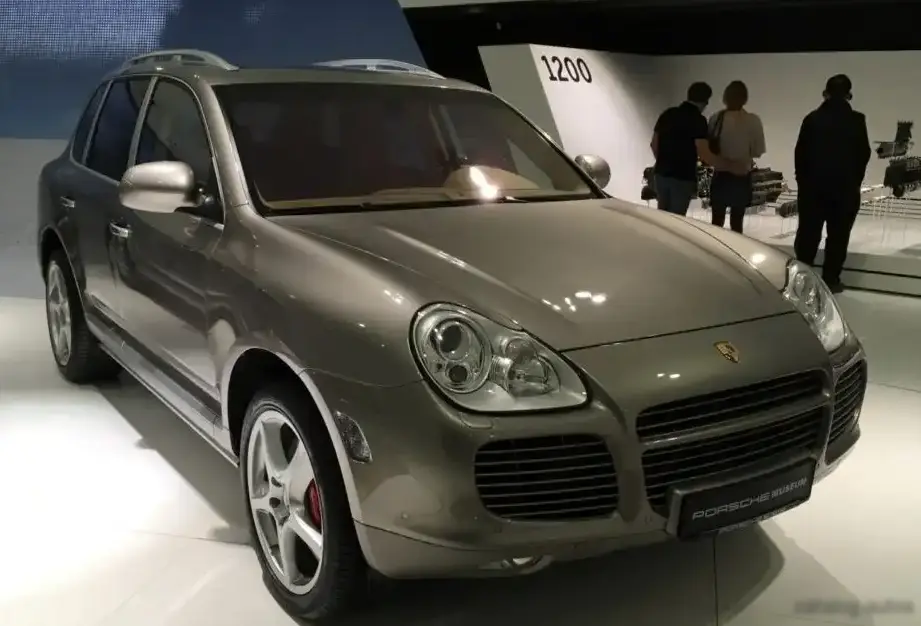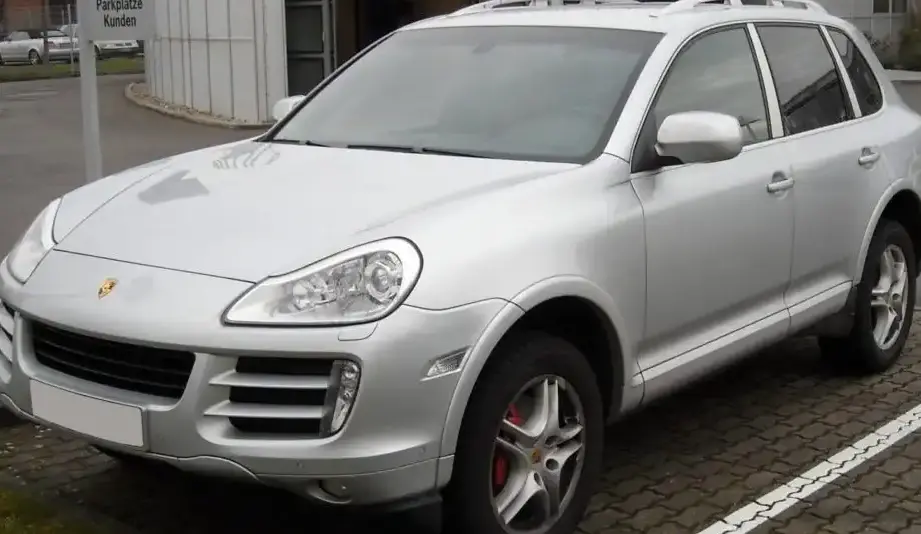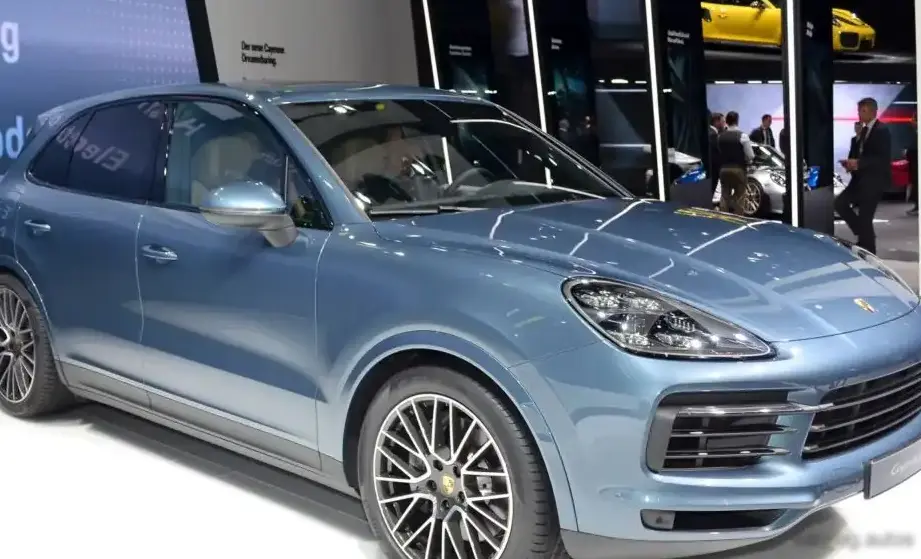
The Porsche Cayenne III 3.0 V6 E-Hybrid Tiptronic S, produced from 2018 to 2020, represents Porsche’s foray into plug-in hybrid technology within the third generation of the popular Cayenne SUV (9YA chassis). This variant occupied a premium position in the Cayenne lineup, offering a blend of performance, efficiency, and luxury features. It was designed to appeal to buyers seeking a high-performance SUV with reduced emissions and the capability of all-electric driving for shorter commutes. The E-Hybrid model was positioned above the base Cayenne and Cayenne S in terms of complexity and price, but below the performance-focused Turbo and Turbo S E-Hybrid models.
Technical Specifications
| Brand | Porsche |
| Model | Cayenne |
| Generation | Cayenne III |
| Type (Engine) | 3.0 V6 (462 Hp) E-Hybrid Tiptronic S |
| Start of production | 2018 |
| End of production | 2020 |
| Powertrain Architecture | PHEV (Plug-in Hybrid Electric Vehicle) |
| Body type | SUV |
| Seats | 5 |
| Doors | 5 |
| Fuel consumption (combined) | 3.2-3.4 l/100 km (73.5 – 69.2 US mpg, 88.3 – 83.1 UK mpg, 31.3 – 29.4 km/l) |
| CO2 emissions | 72-78 g/km |
| Fuel Type | Petrol / electricity |
| Acceleration 0 – 100 km/h | 5 sec |
| Acceleration 0 – 62 mph | 5 sec |
| Acceleration 0 – 60 mph | 4.8 sec |
| Acceleration 0 – 200 km/h | 19.1 sec |
| Maximum speed | 253 km/h (157.21 mph) |
| Emission standard | Euro 6 |
| Weight-to-power ratio | 5 kg/Hp, 201.3 Hp/tonne |
| Weight-to-torque ratio | 3.3 kg/Nm, 305 Nm/tonne |
| Gross battery capacity | 14.1 kWh |
| Battery technology | Lithium-ion (Li-Ion) |
| Battery weight | 138 kg (304.24 lbs) |
| Battery location | Under the trunk |
| All-electric range | 44 km (27.34 mi) |
| Average Energy consumption | 20.6-20.9 kWh/100 km (33.15 – 33.64 kWh/100 mi, 102 – 100 MPGe, 4.9 – 4.8 km/kWh, 3 – 3 mi/kWh) |
| Max speed (electric) | 135 km/h (83.89 mph) |
| Electric motor power | 136 Hp @ 2800 rpm |
| Electric motor Torque | 400 Nm @ 100-2300 rpm (295.02 lb.-ft. @ 100-2300 rpm) |
| Electric motor location | Between the combustion engine and the transmission |
| System power | 462 Hp @ 5250-6400 rpm |
| System torque | 700 Nm @ 1000-3750 rpm (516.29 lb.-ft. @ 1000-3750 rpm) |
| Internal combustion engine power | 340 Hp @ 5300-6400 rpm |
| Power per litre | 113.5 Hp/l |
| Internal combustion engine torque | 450 Nm @ 1340-5300 rpm (331.9 lb.-ft. @ 1340-5300 rpm) |
| Maximum engine speed | 6500 rpm |
| Engine layout | Front, Longitudinal |
| Engine Model/Code | DCBE, M.DCBE |
| Engine displacement | 2995 cm3 (182.77 cu. in.) |
| Number of cylinders | 6 |
| Engine configuration | V-engine |
| Cylinder Bore | 84.5 mm (3.33 in.) |
| Piston Stroke | 89 mm (3.5 in.) |
| Compression ratio | 11.2:1 |
| Number of valves per cylinder | 4 |
| Fuel injection system | Direct injection |
| Engine aspiration | Turbocharger, Intercooler |
| Valvetrain | DOHC |
| Engine oil capacity | 7.2 l (7.61 US qt | 6.34 UK qt) |
| Kerb Weight | 2295 kg (5059.61 lbs) |
| Max. weight | 3030 kg (6680.01 lbs) |
| Max load | 735 kg (1620.4 lbs) |
| Trunk (boot) space – minimum | 645 l (22.78 cu. ft.) |
| Trunk (boot) space – maximum | 1610 l (56.86 cu. ft.) |
| Fuel tank capacity | 75 l (19.81 US gal | 16.5 UK gal) |
| Max. roof load | 100 kg (220.46 lbs) |
| Permitted trailer load with brakes (12%) | 3500 kg (7716.18 lbs) |
| Length | 4918 mm (193.62 in.) |
| Width | 1983 mm (78.07 in.) |
| Width including mirrors | 2194 mm (86.38 in.) |
| Height | 1696 mm (66.77 in.) |
| Wheelbase | 2895 mm (113.98 in.) |
| Front track | 1680 mm (66.14 in.) |
| Rear (Back) track | 1673 mm (65.87 in.) |
| Ride height (ground clearance) | 210 mm (8.27 in.) |
| Drag coefficient (Cd) | 0.34 |
| Minimum turning circle | 11.5 m (37.73 ft.) |
| Approach angle | 25.2° |
| Departure angle | 22.1° |
| Ramp-over angle | 18.7° |
| Wading depth | 250 mm (9.84 in.) |
| Drivetrain Architecture | The Internal combustion engine (ICE) and the electric motor permanently drive the four wheels of the car with the ability to work in full electric or mixed mode. |
| Drive wheel | All wheel drive (4×4) |
| Number of gears and type of gearbox | 8 gears, automatic transmission Tiptronic S |
| Front suspension | Independent multi-link suspension |
| Rear suspension | Independent multi-link suspension |
| Front brakes | Ventilated discs, 360×36 mm |
| Rear brakes | Ventilated discs, 358×28 mm |
| Steering type | Steering rack and pinion |
| Power steering | Electric Steering |
| Tires size | Front wheel tires: 255/55 R19 Rear wheel tires: 275/50 R19 |
| Wheel rims size | Front wheel rims: 8.5J x 19 Rear wheel rims: 9.5J x 19 |
INTRODUCTION
The Porsche Cayenne III 3.0 V6 E-Hybrid Tiptronic S, launched in 2018 as part of the third-generation Cayenne (9YA) series, marked a significant step in Porsche’s commitment to electrification. Built on the Volkswagen Group’s MLB Evo platform (shared with the Audi Q7 and Bentley Bentayga), the Cayenne III offered a substantial upgrade in technology, refinement, and performance compared to its predecessor. The E-Hybrid variant combined a 3.0-liter turbocharged V6 gasoline engine with an electric motor and a 14.1 kWh lithium-ion battery pack, delivering a combined output of 462 horsepower and 516 lb-ft of torque. This model aimed to provide a balance between the traditional Porsche driving experience and the benefits of electric propulsion, including reduced emissions and the ability to drive in all-electric mode.
Powertrain & Engine Architecture
At the heart of the Cayenne E-Hybrid lies the DCBE engine, a 2,995 cc turbocharged V6 producing 340 hp and 331.9 lb-ft of torque. This engine utilizes direct fuel injection and a single twin-scroll turbocharger for enhanced responsiveness and efficiency. The electric motor, integrated between the engine and the eight-speed Tiptronic S automatic transmission, contributes an additional 136 hp and 295 lb-ft of torque. The transmission itself is a sophisticated unit with paddle shifters and optimized gear ratios for both performance and fuel economy. The 14.1 kWh lithium-ion battery is positioned under the trunk floor, minimizing impact on passenger space. The hybrid system intelligently manages the power delivery between the engine and the electric motor, allowing for all-electric driving, combined operation, and regenerative braking to recharge the battery.
Driving Characteristics
The Cayenne E-Hybrid Tiptronic S delivers a unique driving experience. In all-electric mode, it offers near-silent operation and a range of up to 27 miles (NEDC), sufficient for many daily commutes. When the engine and electric motor work in tandem, the combined output provides brisk acceleration – 0 to 60 mph in approximately 4.8 seconds. The Tiptronic S transmission provides smooth and quick gear changes, while the all-wheel-drive system ensures excellent traction in various conditions. Compared to the non-hybrid Cayenne models, the E-Hybrid feels slightly heavier due to the battery pack, but the instant torque from the electric motor compensates for this, providing strong off-the-line acceleration. The steering is precise and well-weighted, typical of Porsche vehicles, and the suspension offers a comfortable yet controlled ride.
Equipment & Trim Levels
The Cayenne E-Hybrid Tiptronic S came standard with a comprehensive list of features, including Porsche Active Suspension Management (PASM), a touchscreen infotainment system with navigation, leather upholstery, heated front seats, and a power liftgate. Optional extras included adaptive cruise control, a panoramic sunroof, upgraded audio systems (such as Bose or Burmester), and various customization options through Porsche’s “Personalization Plus” program. Interior trim options ranged from standard leather to more luxurious Alcantara and carbon fiber accents. The E-Hybrid also featured specific displays within the instrument cluster to monitor battery charge, electric range, and energy flow.
Chassis & Braking
The Cayenne E-Hybrid utilizes an independent multi-link suspension system at both the front and rear axles, providing a comfortable and controlled ride. The suspension is tuned to handle the added weight of the battery pack without compromising handling. The braking system consists of ventilated discs on all four wheels, providing ample stopping power. Porsche’s Surface Coated Brake (PSCB) with tungsten carbide was available as an option, offering improved fade resistance and reduced brake dust. The E-Hybrid also incorporates regenerative braking, which helps to recharge the battery during deceleration.
Market Reception & Comparison
The Cayenne E-Hybrid was generally well-received by automotive critics, who praised its blend of performance, efficiency, and luxury. It was seen as a compelling alternative to traditional gasoline-powered SUVs, particularly for buyers concerned about environmental impact. Compared to the base Cayenne and Cayenne S, the E-Hybrid offered lower emissions and the ability to drive in all-electric mode, but it came at a higher price. Fuel economy was significantly improved, with combined figures ranging from 3.2 to 3.4 l/100 km. Reliability reports have been generally positive, although the complexity of the hybrid system does introduce potential maintenance concerns compared to simpler gasoline-only models.
Legacy
The Porsche Cayenne III 3.0 V6 E-Hybrid Tiptronic S represents an important milestone in Porsche’s electrification strategy. It demonstrated the brand’s ability to integrate hybrid technology into its high-performance vehicles without sacrificing the driving experience. While the third-generation Cayenne has been superseded by the fourth generation, the E-Hybrid variant remains a desirable option in the used car market, offering a blend of performance, efficiency, and luxury. The powertrain, while complex, has proven to be relatively reliable, and the availability of parts and service support remains good. As the automotive industry continues to shift towards electrification, the Cayenne E-Hybrid serves as a precursor to Porsche’s fully electric models, such as the Taycan.