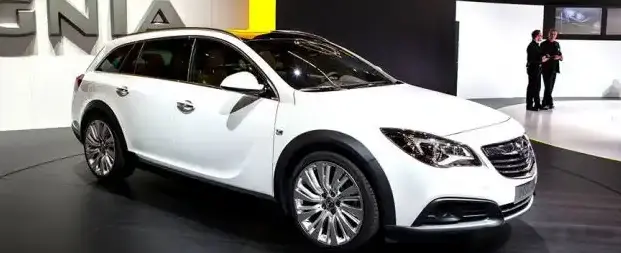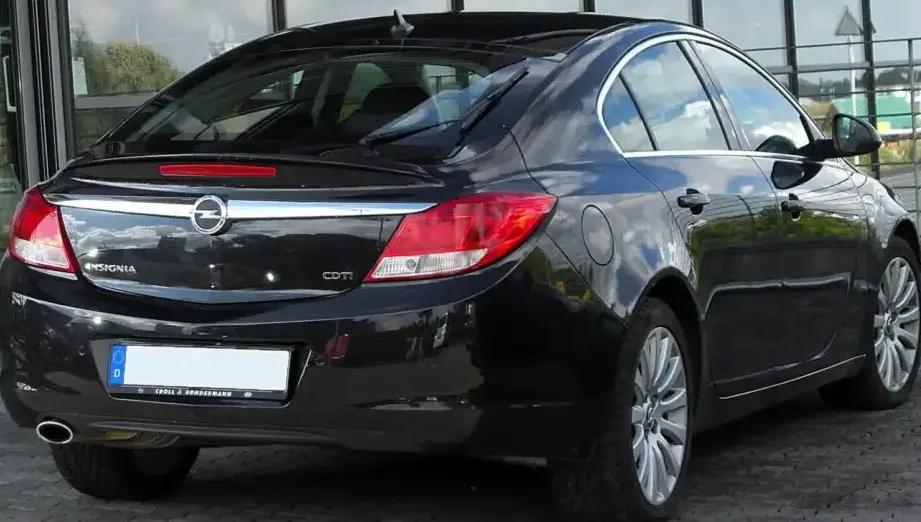
The Opel Insignia Hatchback (A) 1.8i, producing 140 horsepower, was a key variant in the initial lineup of the Insignia, launched in November 2008 and remaining in production until June 2011. Representing a mid-range offering within the first generation (A) Insignia range, it aimed to balance affordability with reasonable performance and equipment levels. The Insignia itself was a significant model for Opel, intended to replace the Vectra and Signum, and compete with established rivals like the Ford Mondeo, Volkswagen Passat, and Peugeot 407. This 1.8-liter variant was particularly important in European markets where fuel economy and cost of ownership were primary considerations for family car buyers.
Technical Specifications
| Brand | Opel |
| Model | Insignia |
| Generation | Insignia Hatchback (A) |
| Type (Engine) | 1.8i (140 Hp) |
| Start of production | November, 2008 |
| End of production | June, 2011 |
| Powertrain Architecture | Internal Combustion engine |
| Body type | Hatchback |
| Seats | 5 |
| Doors | 5 |
| Fuel consumption (urban) | 10.8 l/100 km (21.8 US mpg, 26.2 UK mpg, 9.3 km/l) |
| Fuel consumption (extra urban) | 5.8 l/100 km (40.6 US mpg, 48.7 UK mpg, 17.2 km/l) |
| Fuel consumption (combined) | 7.6 l/100 km (30.9 US mpg, 37.2 UK mpg, 13.2 km/l) |
| CO2 emissions | 169 g/km |
| Fuel Type | Petrol (Gasoline) |
| Acceleration 0 – 100 km/h | 11.9 sec |
| Acceleration 0 – 62 mph | 11.9 sec |
| Acceleration 0 – 60 mph | 11.3 sec |
| Maximum speed | 206 km/h (128 mph) |
| Emission standard | Euro 5 |
| Weight-to-power ratio | 10.5 kg/Hp, 95.2 Hp/tonne |
| Weight-to-torque ratio | 8.4 kg/Nm, 119 Nm/tonne |
| Power | 140 Hp @ 6300 rpm |
| Power per litre | 78 Hp/l |
| Torque | 175 Nm @ 3800 rpm (129.07 lb.-ft. @ 3800 rpm) |
| Engine layout | Front, Transverse |
| Engine Model/Code | A18XER |
| Engine displacement | 1796 cm3 (109.6 cu. in.) |
| Number of cylinders | 4 |
| Engine configuration | Inline |
| Cylinder Bore | 80.5 mm (3.17 in.) |
| Piston Stroke | 88.2 mm (3.47 in.) |
| Compression ratio | 10.5:1 |
| Number of valves per cylinder | 4 |
| Fuel injection system | Multi-port manifold injection |
| Engine aspiration | Naturally aspirated engine |
| Valvetrain | DOHC |
| Engine oil capacity | 4.5 l (4.76 US qt | 3.96 UK qt) |
| Coolant | 5.6 l (5.92 US qt | 4.93 UK qt) |
| Kerb Weight | 1470 kg (3240.8 lbs.) |
| Max. weight | 2020 kg (4453.34 lbs.) |
| Max load | 550 kg (1212.54 lbs.) |
| Trunk (boot) space – minimum | 520 l (18.36 cu. ft.) |
| Trunk (boot) space – maximum | 1465 l (51.74 cu. ft.) |
| Fuel tank capacity | 70 l (18.49 US gal | 15.4 UK gal) |
| Length | 4830 mm (190.16 in.) |
| Width | 1856 mm (73.07 in.) |
| Height | 1498 mm (58.98 in.) |
| Wheelbase | 2737 mm (107.76 in.) |
| Front track | 1585 mm (62.4 in.) |
| Rear (Back) track | 1587 mm (62.48 in.) |
| Ride height (ground clearance) | 160 mm (6.3 in.) |
| Drivetrain Architecture | The Internal combustion engine (ICE) drives the front wheels of the vehicle. |
| Drive wheel | Front wheel drive |
| Number of gears and type of gearbox | 6 gears, manual transmission |
| Front brakes | Ventilated discs |
| Rear brakes | Disc |
| Assisting systems | ABS (Anti-lock braking system) |
| Tires size | 215/60 R16 |
| Wheel rims size | 16 |
INTRODUCTION
The Opel Insignia A, launched in 2008, represented a significant step forward for Opel in the mid-size segment. The 1.8i variant, powered by the A18XER engine, was positioned as a practical and accessible entry point into the Insignia range. It offered a balance between fuel efficiency, reasonable performance, and a comfortable driving experience. This model aimed to appeal to families and individuals seeking a spacious and well-equipped hatchback without the higher price tag of the more powerful engine options, such as the 2.0 Turbo or the diesel variants.
Powertrain & Engine Architecture
The heart of the Insignia 1.8i is the A18XER engine, a 1.8-liter (1796 cc) inline-four cylinder petrol engine. This engine belongs to Opel’s ‘Family 1’ engine family, known for its relatively simple and robust design. It features a dual overhead camshaft (DOHC) valvetrain with four valves per cylinder, contributing to its decent power output. Fuel delivery is managed by a multi-port fuel injection system, providing precise fuel metering for optimal combustion. The engine produces 140 horsepower at 6300 rpm and 175 Nm (129 lb-ft) of torque at 3800 rpm. The engine’s design prioritized fuel efficiency and smooth operation over outright performance. The standard transmission for this variant was a six-speed manual gearbox, although a six-speed automatic transmission was also available as an option, albeit less common. The automatic transmission was a traditional torque converter type, prioritizing comfort and ease of use over sporty responsiveness.
Driving Characteristics
The Insignia 1.8i, particularly with the manual transmission, offered a reasonably engaging driving experience. While not a sports car, the engine provided adequate power for everyday driving and overtaking maneuvers. The six-speed gearbox allowed for efficient cruising on the highway, while the relatively low weight (1470 kg) helped to maintain acceptable acceleration. The automatic transmission, while smooth, did slightly diminish performance due to its inherent efficiency losses. Gear ratios were tuned for a balance between fuel economy and usability, with a focus on providing sufficient torque in the mid-range for comfortable driving. Compared to the more powerful 2.0 Turbo models, the 1.8i felt noticeably less responsive, especially at higher speeds. However, it offered a more refined and less stressed driving experience, particularly in urban environments.
Equipment & Trim Levels
The Insignia 1.8i typically came equipped with a respectable level of standard features. These included air conditioning, electric front windows, a CD/radio system, and ABS brakes. Higher trim levels, such as ‘Edition’ or ‘Sport’, added features like alloy wheels, cruise control, a multi-function steering wheel, and upgraded interior trim. Interior upholstery was typically cloth, with options for leather available on higher-spec models. Optional extras included a sunroof, parking sensors, and a more advanced infotainment system. The dashboard layout was modern for its time, with a focus on ergonomics and ease of use.
Chassis & Braking
The Insignia A featured a MacPherson strut front suspension and a multi-link rear suspension, providing a comfortable and controlled ride. The suspension was tuned to prioritize comfort over sporty handling, making it well-suited for long journeys. Braking duties were handled by ventilated discs at the front and solid discs at the rear. ABS (Anti-lock Braking System) was standard, enhancing safety and stability during braking. The 1.8i models typically featured smaller wheels (16 or 17 inches) compared to the higher-performance variants, contributing to a more comfortable ride quality.
Market Reception & Comparison
The Insignia 1.8i was generally well-received by automotive critics as a practical and well-rounded family car. It was praised for its spacious interior, comfortable ride, and reasonable fuel economy. However, some critics noted that the engine lacked the punch of its rivals and that the handling wasn’t as sharp as some other cars in the segment. Compared to the 2.0 Turbo models, the 1.8i offered significantly better fuel economy but at the expense of performance. The diesel variants provided even better fuel economy but were typically more expensive to purchase. In terms of reliability, the A18XER engine proved to be generally reliable, although regular maintenance was essential to prevent issues such as timing chain wear.
Legacy
The Opel Insignia A 1.8i remains a relatively common sight on used car markets today. The A18XER engine is known for its durability, provided it has been properly maintained. Parts availability is generally good, and maintenance costs are reasonable. While it may not offer the same level of performance or prestige as some of its rivals, the Insignia 1.8i represents a solid and dependable choice for buyers seeking a spacious and affordable family hatchback. Its blend of practicality, comfort, and reasonable running costs has ensured its continued popularity in the used car market.